
A hemorrhagic stroke is typically the most deadly and debilitating form of stroke, occurring in nearly two million people every year. Historically, it’s been treated by allowing the brain to bleed until hemorrhaging has subsided, leaving few recovery options for patients. About half of the individuals who suffer a hemorrhagic stroke die within 30 days.
But that could be changing—all thanks to a leading-edge stroke treatment that’s giving patients new hope.
After several years of the ENRICH (Early MiNimally-invasive Removal of ICH) trial, neurosurgeons were able to show positive results with improved outcomes for hemorrhagic stroke patients, and the results were shared at the 2023 American Association of Neurological Surgeons (AANS) annual meeting. The results were presented by representatives from Emory University and the NICO Corporation. Four current Goodman Campbell physicians, led by Dr. Charles G. Kulwin, participated in the trial. It involved 300 stroke patients at 37 treatment centers across the United States.
During the trial, the BrainPath device—a tool used to help surgeons get to the site of bleeding—carefully moved through the delicate folds and fibers of the brain. The BrainPath gently shifts the tissue to create a path to the site of the bleeding. Once there, the Myriad device, an automated suction and resection tool, can remove clotting.
These results were part of a stroke treatment trial in which surgeons hoped to improve the standard of care for hemorrhagic strokes beyond just waiting out the bleed.
“Goodman Campbell was one of the earliest sites and one of the largest contributors to the study,” said Dr. Kulwin. “Our hope is that this will finally take a difficult problem … and provide solid evidence that there is a correct way to manage it surgically.”
“Only a quarter of survivors get back to independence in the months following the stroke. A safe and effective way of operating on a hemorrhage by minimally invasive means has the potential to change the way we give care and save lives.”
We are proud to be part of this historical moment in stroke treatment, and we look forward to using this method to help save and improve the lives of our patients. We also look forward to continuing to find new, innovative ways to advance the field of neurosurgery. You can read more about the clinical trial here.
Goodman Campbell started way back in 1972, with the incorporation of the Indianapolis Neurosurgical Group established by Drs. Julius Goodman and John Russell.
Since then, we’ve pioneered new techniques in Indiana, such as the first microscopic discectomy, the first intracranial tumor embolization, and the first endoscopic placement of a VP shunt.
We’ve transformed ourselves by adding new disciplines—like interventional stroke care, minimally-invasive spinal surgery, interventional pain management, physical therapy, research, and education. We’ve steadily grown both our practice and our reputation, and we’ve never once looked back.
That is, until now.
This year, Goodman Campbell is turning 50 years old. Reaching that milestone has made us pause and reflect on our first half-century—and we could use your help documenting it.
If you’ve got photos, we’d love to see them. If you’ve got cards or notes, we’ll be glad to read them. If you have recordings, we’d be thrilled to hear them. If you’ve got videos, we can’t wait to watch them. Basically, if you’ve got anything at all that will help us expand our historical archives, we’ll be grateful for your assistance.
Visit our 50th Anniversary page now to submit your digitized photos or videos—or just to type in a favorite memory.
Don’t have access to a scanner? We’re still interested in what you have to share. Give us a call at 317.396.1300, and we’ll do what we can to make your Goodman Campbell memories last forever.
Until last August, Kelli McLaughlin of Carmel was living her life like normal. She was raising her four children with her husband, Ryan, volunteering for different causes, and managing two locations of her boutique shop, Clothes With a Cause, which donates proceeds to different charities throughout the year.
That month, Kelli started noticing odd, neurological symptoms and sensations in her body. She took a trip to the ER in early September and doctors didn’t find anything then. She returned later that month with her husband on their anniversary, because the sensations she was experiencing were very strong and interfering with normal tasks.
The sensations would be diagnosed as focal seizures, so brain scans were taken and they revealed Kelli had a tumor. Goodman Campbell neurosurgeon Dr. Troy Payner was assigned to Kelli’s case, and after close examination and tests, he delivered the news that she had glioblastoma, a rare brain cancer with no known cure. Ironically, Dr. Payner treated her father for several meningiomas 16 years ago.
“It took me about a month to wrap my head around my new situation. I was in complete disbelief because there were no warning signs whatsoever,” said Kelli. “But Dr. Payner and I instantly hit it off—I liked him when I met him years ago, and I like him now! My entire care team has been wonderful; they are great advocates and have helped me navigate every aspect of this process.”
Glioblastoma, a cancerous and incurable brain tumor, occurs in 3 out of 100,000 United States citizens annually. The median age of those diagnosed is 64.
Goodman Campbell treats roughly 50 cases each year. Symptoms and their severity vary with each person, but in general they include: headaches, seizures, nausea/vomiting, difficulty with speech, blurry vision, weakness on one side, confusion, or lethargy—more on signs, symptoms, and treatments here.
“Glioblastoma is the most common primary tumor to occur in the brain and it’s unfortunately cancerous. Despite tremendous research being done, we don’t have a cure. The goal of all treatments is to control the tumor as long as possible,” said Dr. Payner.
After the initial removal of the tumor, Kelli elected to start chemotherapy and radiation treatments, and wears an FDA-approved cap that helps slow tumor cells from replicating. Dr. Payner describes her as “an extremely ambitious woman who has an unflappable positive mental attitude.” Kathy Butz, a nurse on her care team, says that Kelli is very involved in her health care decisions, is open about her disease, and has a service-oriented heart.
“I don’t want to quit, I want to live. I’m committed to tackling this head-on, because I don’t see any other options,” Kelli said. “I feel like my purpose here is to make this place better than I found it, and help the next family that experiences something like this.”
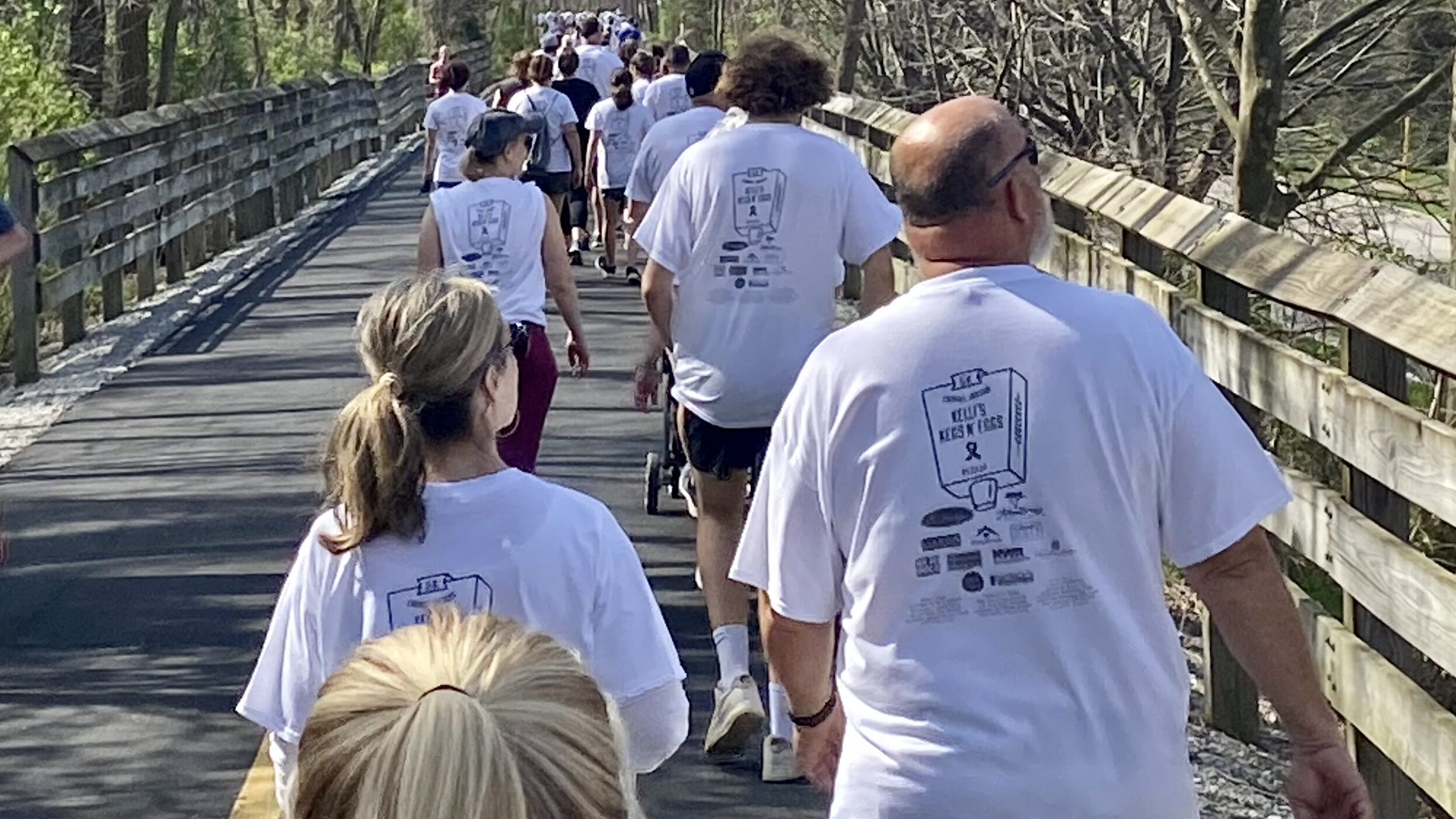
All of that shows in Kelli’s drive to help her community, despite her diagnosis and side effects from treatments. Along with her support network of friends and family, she recently organized the first “Kegs ‘N Eggs 5K” fundraising event. In addition to raising awareness for this disease, they successfully collected over $50,000 to help connect families going through a similar situation to available resources and treatments.
“I am so thankful for the great turnout and beautiful weather we had for the First Annual Kelli’s Kegs N Eggs 5K! Glioblastoma research is one of the most under-funded of all cancers, and it is my goal to change this,” said Kelli. “We want to raise awareness of this horrible disease and raise funds to ensure that other families do not have to suffer this terrible blow as we had to. It can be done and I firmly believe that there is a cure on the horizon.”

November 9, 2020
Jay and his family live in Indianapolis in a house that’s been in the family for several generations. Though his kids have grown, Jay looks back on a life in which sports and physical activity—whether on his own, with friends or with his wife and kids—have played a huge role.
Being active has been important not only physically and socially for Jay, but also mentally. When he’s not able get out and move regularly, it takes an emotional toll. “I need to be active, or I’m no fun to be around,” he said.
Because he’s been so active, he’s had his share of injuries; After battling back trouble on and off for years, Jay had gone six years with no significant problems when suddenly, while sitting on the sofa with his dog Agnes, his right leg went numb, became weak and wouldn’t wake back up.
He sought help from Dr. Mobasser at Goodman Campbell. “Dr. Mobasser sent me for an MRI and X-rays of my back to assess my spine,” Jay said. “It was a wreck. He said I needed to have this surgery, as I was developing nerve damage in my right leg. Dr. Mobasser made it clear that my condition was irreversible without surgery and would continue to get progressively worse. I was facing the rest of my life with a brace on my foot.”
Dr. Mobasser fused five vertebrae and freed up all the nerves being compressed at each of these levels. Having had some experience with knee surgeries, Jay was expecting a tough recovery, and Dr. Mobasser himself warned Jay that the recovery process from a multi-level lumbar spine surgery could be extremely difficult for the first few post-operative months.
His experience, however, was anything but difficult. “I feel incredibly lucky,” Jay said. “I never really had any pain. I sat right up and walked to a chair; I was walking the halls that same afternoon.”
He was in the hospital for less than two days. “The follow-up was great,” Jay said, “though it turned out I didn’t need it. They called once a week, just to make sure I was doing okay, and the next time I saw Dr. Mobasser was at my one-month checkup.”

“I’m back to living a normal life,” Jay said. “I’m biking, I’m walking, I’m playing with the dog. But you know, beyond that, it’s all the little things. Sleeping through the night. Getting dressed without having to contort myself. Even now, more than a year later, I’ll find myself doing something that used to be painful or difficult or impossible before the surgery, and it’s just such a relief to have that part of my life back. I credit Dr. Mobasser and Goodman Campbell with making that happen.”
Living with chronic pain can feel like an ongoing cycle, especially when treatments only offer temporary relief. At Goodman Campbell, we approach this differently. Our interventional pain management services focus on identifying and treating the structural source of pain, helping patients explore non-opioid alternatives for chronic back and nerve pain that are designed for lasting results.
For many patients dealing with chronic back pain, nerve-related symptoms, or ongoing discomfort, the goal isn’t just short-term pain relief. Rather, it’s finding a sustainable way to manage chronic pain without relying on oral medications. Through advanced, minimally invasive techniques, we help patients regain function, restore mobility, and move forward with confidence.
What Does “Interventional” Mean for Chronic Back and Nerve Pain?
Interventional care is built around a simple but important idea: Treat the source of pain, not just the sensation.
In many cases, chronic pain conditions stem from physical issues such as compressed nerves, inflamed tissue, or degenerative changes in the spine. These structural problems send signals through the nervous system, ultimately reaching the brain as pain. Interventional treatments are designed to interrupt or correct those pain signals at their origin.
Using image-guided, minimally invasive techniques, we can precisely target the area causing discomfort, whether that’s a nerve root, joint, or disc. This approach allows us to deliver effective pain management that addresses both acute and chronic pain, including subacute pain, without relying on oral medication-based solutions.
Good candidates often include patients who:
- Have chronic low back pain or back pain that hasn’t improved with conservative care.
- Seek chronic back pain treatment without opioids.
- Would like to avoid or delay surgery while still pursuing meaningful relief.
How Is Interventional Care Different From General Pain Management?
Traditional approaches often focus on managing symptoms broadly. Interventional care takes a more precise path.
Our interventional team uses targeted procedures to identify and treat what is physically causing the pain, whether that’s nerve compression, inflammation, or joint dysfunction. This is especially important for patients whose pain has persisted despite prior treatment attempts.
At Goodman Campbell, this care is guided by interventional pain management physicians who specialize in conditions of the spine. This depth of expertise allows us to evaluate complex spine conditions more thoroughly and identify root causes that may otherwise go unrecognized or undertreated.
What Non-Opioid Interventional Treatments Are Available for Chronic Back Pain?
When patients ask about non-opioid treatment options for acute and chronic back pain, they’re often looking for clarity: What actually works?
Our approach centers on minimally invasive procedures that target the source of pain and help restore function. These include:
- Nerve blocks for back pain
- Epidural steroid injections for back pain
- Radiofrequency ablation spine procedures
- Spinal cord stimulation
Each option is carefully selected based on your condition, symptoms, and long-term goals. These are not one-size-fits-all treatments. They are tailored solutions designed to help relieve chronic pain or acute pain and improve quality of life.
What Is Radiofrequency Ablation and How Does It Disrupt Pain Signals?
Radiofrequency ablation (RFA) is a highly targeted procedure used to treat certain types of chronic back pain, particularly those related to joint or nerve irritation.
During RFA, controlled electrical energy is applied to specific nerve fibers responsible for transmitting pain. This energy disrupts the nerve’s ability to send pain signals through the central nervous system, effectively reducing the sensation of pain.
RFA is commonly used for:
- Facet joint-related back pain
- Persistent nerve pain treatment situations involving ongoing discomfort
- Conditions involving localized inflammation
Because the procedure focuses on the exact nerves causing symptoms, it can provide longer-lasting pain control compared to more generalized approaches. Relief may last for months, and in some cases, longer, making it a valuable option for patients seeking non-opioid pain treatment.
When Is Spinal Cord Stimulation the Right Option for Nerve Pain?
For patients with persistent or complex nerve pain, spinal cord stimulation (SCS) can offer a longer-term solution.
This technology involves placing a small device near the spinal cord that delivers gentle electrical signals. These signals modify how pain is perceived before it reaches the brain, helping reduce the intensity of symptoms.
SCS is often considered for:
- Sciatica or nerve compression
- Chronic pain following prior spine procedures
- Conditions where other treatment options have not provided sufficient relief
Unlike temporary interventions, spinal cord stimulation is designed as an ongoing therapy — one that can significantly improve daily comfort and function for the right patient.
How Do Nerve Blocks and Injections Help Manage Chronic Pain at the Source?
Targeted injections and nerve blocks for back pain are among the most commonly used nerve pain treatment options, and for good reason: They are designed to treat pain at its source, not broadly across the body.
Using advanced imaging, our team guides treatment to the exact location of the structural issue, whether that’s a compressed nerve from a herniated disc, inflammation from spinal stenosis, irritation causing muscle spasms, or nerve-related symptoms such as sciatica. This level of precision ensures that care is delivered exactly where the problem exists within the spine and surrounding tissues.
These treatments can:
- Reduce inflammation
- Interrupt pain signals
- Provide short-term pain relief that supports longer-term recovery
Because they are delivered with pinpoint accuracy, these interventions do more than temporarily relieve symptoms. They directly target the underlying cause of pain, helping patients manage pain in a more meaningful, lasting way.
When Is Minimally Invasive Surgery the Right Next Step for Back Pain Relief?
While many patients find relief through interventional care, there are times when a structural issue requires a more direct solution.
Conditions such as severe disc herniation or significant nerve compression may not fully respond to procedures alone. In these cases, minimally invasive spine treatment may provide a more definitive path forward.
One example is microdiscectomy, a targeted procedure used in herniated disc treatment to remove the portion of the disc pressing on a nerve. This approach is designed to:
- Relieve pressure on affected nerves
- Restore function
- Provide durable, long-term relief
Importantly, surgery is very rarely our first recommendation. But when it is the right option, it often delivers the most effective and lasting outcome, especially for patients who first explored alternatives for sciatica treatment without surgery but ultimately need a structural correction.
What Role Does Physical Therapy Play in a Non-Opioid Pain Management Plan?
Interventional care as a non-opioid option for chronic back and nerve pain works best as part of a comprehensive strategy.
In many cases, interventional pain management goes hand in hand with physician therapy for chronic back pain, exercise therapy, and guided physical activity. An integrated approach helps strengthen the body, improve mobility, and reduce the likelihood of recurrence.
Rather than focusing solely on the episode of pain, physical therapy addresses how the body moves and functions, helping patients build resilience over time.
For many patients, this combination of interventional procedures and movement-based therapy form the foundation of a sustainable, non-opioid treatment approach.
How Do We Build the Right Pain Management Plan for Each Patient?
Every patient’s experience with pain is different. That’s why our process is built around careful evaluation and individualized care.
We begin with a thorough review of your medical history, imaging, and symptoms. From there, our team develops a tailored pain management plan that prioritizes:
- The option that is the least invasive yet still effective
- Long-term outcomes, not temporary fixes
- Addressing the root cause of pain
Because we treat everything from common degenerative conditions to the most complex spine cases, we’re able to adapt our approach to each patient’s needs. Our outcomes data and clinical experience inform every recommendation, ensuring that each step is purposeful and grounded in evidence.
Just as importantly, our patients have direct access to their care team. We believe that communication matters, and understanding your options is a key part of achieving meaningful relief.
Take the Next Step Toward Lasting Pain Relief
If you’ve been living with chronic pain or are experiencing acute pain that is impacting your quality of life, exploring non-opioid options can be an important step toward finding real, lasting relief.
Learn more about interventional pain management Indiana treatment options at Goodman Campbell and schedule a consultation. We’re here to help you move forward with clarity, confidence, and a plan built around you.
For many people living with chronic low back pain, the experience is frustratingly familiar: imaging shows “degenerative changes,” physical therapy hasn’t provided lasting relief, and no one has clearly explained what’s actually causing the pain. You may have been told your MRI shows issues with discs, joints, or general “wear and tear,” but without a clear connection between those findings and your symptoms, it can feel like you’re stuck managing pain without a real plan forward.
One increasingly recognized source is vertebrogenic pain, a specific type of back pain that originates within the spine itself, not the muscles or discs. For many patients, this explains why treatments aimed at muscles or discs haven’t provided lasting relief.
At Goodman Campbell Brain and Spine, we frequently see patients with vertebrogenic low back pain who have been searching for answers for months or even years. Many come to us after trying multiple rounds of conservative care, often feeling uncertain about what their diagnosis really means or whether surgery is their only option. The good news is that this condition is now better understood, opening the door to more precise diagnosis, clearer explanations of symptoms, and treatment options that focus on the root cause rather than simply managing pain.
What Is Vertebrogenic Pain?
Vertebrogenic pain is a form of chronic low back pain that originates from damage to the vertebral endplates. These are thin, nerve-rich layers of bone that sit between the vertebrae and the spinal discs.
These endplates are plentiful in nerves, particularly the basivertebral nerve, which transmits pain signals from inside the vertebrae. When the endplates become damaged, often due to everyday wear and tear, they can become inflamed and sensitized. Over time, this leads to persistent pain signals that traditional treatments may not address.
This is a relatively newer clinical concept, but it has significantly changed how specialists approach patients with chronic back pain that hasn’t responded to conventional care.
How Is Vertebrogenic Pain Different From Disc Pain or Muscle Pain?
Not all back pain comes from the same source, as demonstrated in the following variations:
- Disc-related pain typically involves herniation or degeneration that may compress nearby nerves.
- Muscle pain is more surface-level and often improves with rest or physical therapy.
- Vertebrogenic pain, by contrast, originates within the vertebral bone itself, specifically the endplates and basivertebral nerve.
Because of this, vertebrogenic pain often does not respond to treatments that target discs, joints, or muscles. It’s also possible to have disc degeneration and vertebrogenic pain at the same time, but they are distinct pain generators requiring different strategies.
What Causes Vertebrogenic Pain?
The most common cause is gradual degeneration from everyday wear and tear on the spine.
As spinal discs lose hydration and height over time, more mechanical stress is transferred to the adjacent vertebral endplates. This can lead to:
- Micro-damage within the endplates
- Ongoing inflammation
- Sensitization of the basivertebral nerve
- Persistent pain signals
Contributing factors may include repetitive loading, prolonged sitting, poor posture, or a prior back injury. Because the onset is often gradual, vertebrogenic low back pain is frequently mistaken for general disc degeneration or nonspecific chronic back pain.
What Are the Symptoms of Vertebrogenic Pain?
Vertebrogenic pain has a distinct pattern, which includes:
- A deep, aching, or burning pain in the lower back along the midline of the spine
- Minimal or no radiating pain into the legs
- A dull, constant baseline discomfort with occasional flares
Many patients notice that symptoms worsen with:
- Prolonged sitting
- Bending forward
- Transitioning from sitting to standing
- Physical activity
The absence of leg pain is an important clue, helping distinguish vertebrogenic pain from nerve compression or disc herniation.
Why Does Vertebronic Pain Get Worse When You Sit or Bend Forward?
Sitting and forward bending increase pressure on the front portion of the spine, particularly the vertebral bodies and endplates.
When these structures are damaged and inflamed, this added load intensifies the pain signals being transmitted through the basivertebral nerve. This positional pattern is clinically important and helps differentiate vertebrogenic pain from other causes, such as facet joint or sacroiliac joint pain.
How Is Vertebrogenic Pain Diagnosed?
A clear vertebrogenic low back pain diagnosis requires more than imaging alone; rather, it requires correlation between symptoms and findings.
The process typically includes:
- A detailed medical history and physical exam
- Evaluation of movement patterns, especially flexion-based pain
- Imaging, most commonly an MRI for back pain
The key imaging finding is Modic changes on MRI. These are signal changes in the vertebral endplates and nearby bone marrow that indicate inflammation or degeneration.
Important points to note include the following:
- No blood test can diagnose vertebrogenic pain.
- X-rays alone are not sufficient.
- Other causes (disc herniation, joint pain, etc.) must be ruled out.
This is where specialist evaluation becomes critical. Our team focuses on identifying the true pain generator before recommending any treatment.
What Do Modic Changes on an MRI Mean for Your Diagnosis?
Modic changes are MRI findings that reflect changes in the vertebral endplates and surrounding bone.
There are two common types:
- Type 1: Active inflammation
- Type 2: Fatty degeneration
When Modic changes align with a patient’s symptoms, they strongly suggest that the vertebral endplates, not the discs or joints, are the primary source of pain.
That said, not everyone with Modic changes will have vertebrogenic pain. This is why clinical context matters, and why working with a back pain specialist who understands these nuances is so important.
What Are the Treatment Options for Vertebrogenic Pain?
Treatment follows a stepwise approach, with a focus on helping patients find relief by addressing the underlying cause, not masking symptoms.
Conservative Care
Initial approaches may include:
- Targeted physical therapy focused on spinal support and stability
- Activity modification to reduce stress on the spine
For some patients, these strategies are enough. However, if symptoms persist for at least six months, more advanced options may be considered.
Interventional Approaches
When conservative care falls short, interventional pain management services become an important next step within comprehensive interventional spine care.
These treatments focus on the nerve pathways responsible for pain, not on structural compression. They can help to confirm diagnosis and reduce pain signals, but they do not remove compression from discs or nerves. If you’re considering this route, it helps to understand what to expect afterward, including potential side effects.
When Is Basivertebral Nerve Ablation the Right Option?
For patients with confirmed vertebrogenic pain, one of the most targeted options is basivertebral nerve ablation, commonly known as the Intracept® procedure.
This is a minimally invasive spine treatment in which radiofrequency energy is used to interrupt the basivertebral nerve inside the affected vertebra. By stopping the transmission of pain signals, many patients experience meaningful and lasting relief.
Key points about Intracept® include the following:
- It is an FDA-cleared spine treatment.
- It is performed as an outpatient procedure.
- It does not alter spinal structure or remove compression (in contrast to spinal fusion), instead addressing the nerve-level source of pain.
- It is specifically designed for vertebrogenic low back pain.
Typical candidates include patients who:
- Have chronic low back pain lasting at least six months
- Show Modic changes on MRI
- Have not improved with conservative care
When Does Vertebrogenic Pain Require Neurosurgical Evaluation?
Vertebrogenic pain itself does not require surgery. However, some patients also have structural issues such as disc herniation, instability, or nerve compression that may require surgical consideration. A minimally invasive spine procedure called Intracept® can be an alternative course of action.
In these cases, a neurosurgeon for back pain plays a critical role.
At Goodman Campbell, our neurosurgeons receive more extensive and specialized training in the brain, spine, and nervous system than any other type of specialist, including orthopedic surgeons. This allows us to collaborate with our interventional pain management physicians to evaluate both interventional and surgical pathways with precision.
If structural pathology is present, procedures such as microdiscectomy may be appropriate, not for vertebrogenic pain itself, but for coexisting conditions involving discs or nerves.
A More Complete Path to Diagnosis and Relief
One of the biggest challenges in chronic low back pain is uncertainty, particularly when it comes to not knowing what’s causing your symptoms or what to do next.
Our approach at Goodman Campbell is different. We prioritize:
- Accurate, root-cause diagnosis
- Clear explanations of what your MRI actually means
- Access to interventional pain management and neurosurgical spine expertise
- Direct communication with your care team
- Prompt, accessible scheduling
As a global leader in treating spine conditions and an epicenter of neurosurgery training and spine innovation in the United States, we’re equipped to treat both straightforward and complex cases, all in one place.
Take the Next Step
If you’ve been living with chronic back pain and still don’t have clear answers, it may be time for a more specialized evaluation.
Request an appointment to see a spine specialist who can help you better understand your diagnosis and explore the right treatment options for you.
For many adults living with chronic pain or experiencing acute pain, exploring interventional pain management services can feel like a big step. It’s natural to have questions, especially about what to expect after a procedure and whether side effects will impact daily life. Our goal is to provide clear, honest answers so patients can move forward with confidence.
What Is Interventional Pain Management?
Interventional pain management focuses on identifying and treating the underlying cause of pain using targeted, minimally invasive procedures, rather than simply masking symptoms.
Our interventional pain management team offers a range of interventional pain procedures, including epidural steroid injections (such as cervical epidural steroid injections, lumbar epidural steroid injections, and transforaminal epidural steroid injections), facet joint injections, medial branch nerve blocks, radiofrequency ablation, peripheral nerve blocks, peripheral nerve stimulation, the Intracept® Procedure, spinal cord stimulation, and other interventional spine procedures.
These minimally invasive procedures are designed to interrupt pain signals, reduce inflammation, and restore function. They often provide effective pain relief without the need for more invasive procedures like spine surgery.
What Side Effects Are Most Common After Interventional Pain Procedures?
Most side effects of interventional pain management are mild and temporary. Because these procedures are minimally invasive (and performed on an outpatient basis), immediate adverse events are typically limited and short-lived.
Patients often return home the same day and resume normal activities within a short period. While every case is different, the overall risk profile is low. This is especially true when procedures are performed by an experienced neurosurgical team.
What Should Patients Expect Right After a Procedure?
After interventional pain procedures, it’s common to experience temporary, localized effects near the treatment area. These may include:
- Mild soreness or bruising at the injection site
- Temporary numbness or weakness due to the local anesthetic
- Slight changes in blood pressure, including vasovagal reactions
- A brief increase in discomfort before longer-lasting pain relief begins
These responses are expected and typically resolve quickly as the body adjusts following the procedure.
Are There Less Common Risks Patients Should Know About?
While uncommon, more serious adverse effects can occur. These may include infection, bleeding into soft tissue, nerve irritation, epidural hematoma, or allergic reactions to a local anesthetic or contrast material.
These adverse events are rare, and careful attention to risk factors helps minimize them. Our team at Goodman Campbell performs a thorough physical exam, reviews each patient’s history, and uses imaging guidance to ensure precise treatment delivery. When performed by experienced spine specialists, interventional pain procedures are considered safe and well-tolerated.
How Does Our Team Help Reduce These Risks?
At Goodman Campbell, patients have access to a world-class, comprehensive team of spine specialists, right here in Indiana. Our interventional pain management physicians and neurosurgeons have highly specialized training in the spinal cord, nerve pathways, and pain signals; training that goes beyond what is typically included in orthopedic programs.
We use imaging-guided precision, individualized care plans, thorough pre-procedure physical exams, and close follow-up to reduce risk and improve outcomes. This level of expertise allows us to treat both simple and complex spine conditions with confidence and accuracy, while also providing direct access to our care team throughout the process.
Do Interventional Pain Procedures Provide Long-Lasting Relief?
While results vary by procedure and individual, many patients experience longer-lasting pain relief compared to conservative pain management approaches. Because interventional pain management treats the underlying cause of pain rather than simply masking pain signals, outcomes tend to be more durable and meaningful over time.
Relief may last for months, and in some cases longer, depending on the procedure. Treatments such as spinal cord stimulation or radiofrequency ablation can provide extended benefits, often helping patients avoid or delay spine surgery. When interventional techniques alone are not sufficient, our interventional pain management physicians collaborate with our neurosurgical team to determine whether a surgical approach is the most appropriate next step to fully address the condition.
When Should You Talk to Someone About Interventional Pain Management?
Interventional pain management may be appropriate for those living with chronic pain, especially neck pain or back pain, that hasn’t improved with conservative care. If you’re unsure whether your symptoms have reached that point, our guide on when to seek interventional pain management walks through how pain levels are measured and what patterns signal it’s time for a specialist evaluation.
When pain begins to interfere with daily life, work, or mobility, it may be time to explore options that focus on the root cause and long-term function.
To learn more or take the next step, we encourage you to schedule a consultation.
Many people living with back/spine pain struggle with a simple question: Is my pain serious enough to see a specialist?
When discomfort comes and goes, or slowly becomes part of daily life, it can be difficult to judge what your symptoms mean. Understanding pain levels and when to seek interventional pain management services can help you move from uncertainty toward relief and a clearer plan for addressing the root cause of your symptoms.
How Do Pain Levels Work and What Does Your Pain Score Really Tell You?
The pain scale of 1 to 10 helps physicians understand how symptoms affect daily life. While everyone experiences pain differently, the scale provides a reference point for discussing symptoms and monitoring progress. A higher score doesn’t tell the entire story, but it does help to measure pain levels, track patterns, and guide next steps.
What Is the Difference Between Mild, Moderate, and Severe Pain?
Pain is commonly grouped into three categories:
- Mild pain is noticeable but manageable. You may feel discomfort with certain movements, but you can still complete most tasks.
- Moderate pain begins interfering with normal routines. Activities such as sleeping comfortably, concentrating at work, or exercising may become more difficult.
- Severe pain significantly limits activity. This level of back pain severity can make standing, walking, or sitting difficult and often signals the need for medical evaluation.
What Is the Difference Between Acute Pain and Chronic Pain?
Pain is also classified based on duration:
- Acute pain usually develops suddenly and improves as the body heals, such as from a strain or other injury.
- Chronic pain, however, is often defined as lasting three months or longer. Persistent symptoms may indicate a structural issue within the spine, such as nerve compression or degenerative changes. In these situations, effective chronic back pain treatment focuses on identifying and addressing the source of the problem rather than simply waiting for symptoms to resolve.
When Does Persistent Pain Signal It’s Time To See a Specialist?
Many people wonder when to see a doctor for back pain. If symptoms continue for several weeks, repeatedly return, or begin interfering with daily activities, it is reasonable to seek professional evaluation.
You don’t need to wait until pain becomes extreme to consult a spine pain specialist like those at Goodman Campbell. Early evaluation often allows physicians to identify the source of symptoms sooner and recommend targeted treatment options.
What Are the Signs That Conservative Treatments Are No Longer Enough?
Some spine conditions improve with time, rest, or physical therapy. However, certain patterns suggest it may be time to consider interventional pain management.
Pain that radiates into the arm or leg, worsens with standing or walking, or repeatedly disrupts sleep may indicate nerve involvement. When symptoms continue despite conservative care, further evaluation can help determine whether targeted procedures may provide relief.
How Does Unmanaged Pain Affect Your Daily Life and Quality of Life?
Ongoing pain rarely affects only one part of life. It can disrupt sleep, reduce mobility, and make everyday responsibilities more difficult.
Over time, these limitations may affect work, family life, and well-being. When symptoms begin limiting normal activity, it becomes more important to identify the root cause and work to restore function rather than simply trying to suppress symptoms.
What Are Interventional Pain Treatments and How Do They Work?
Interventional treatments target the source of pain with precision. These procedures are designed to calm irritated nerves, reduce inflammation, and help confirm which structures are responsible for symptoms.
Because these procedures use advanced imaging guidance and minimally invasive techniques to precisely target the source of pain, they are performed on an outpatient basis and do not require hospitalization. If you’re weighing your options, it helps to understand the side effects of interventional pain management, most are mild and temporary, but knowing what to expect can make the decision easier.
What Do Interventional Pain Specialists Actually Do?
At Goodman Campbell, our interventional team of care providers evaluates spine-related pain, identifies the underlying issue, and recommends appropriate treatment.
Depending on the diagnosis, options may include a nerve block spine procedure, epidural steroid injection, radiofrequency ablation, spinal cord stimulation, or other techniques designed to address specific pain sources. When surgical treatment becomes the best path forward, Goodman Campbell patients will see one of our neurosurgeons, who perform procedures such as microdiscectomy alongside other minimally invasive interventional options.
What Is the Difference Between Nerve Blocks, Spinal Injections, and Other Minimally Invasive Procedures?
Each procedure serves a different purpose. Some reduce inflammation around irritated nerves, others interrupt pain signaling, and some help confirm which structure is responsible for symptoms.
In certain cases, a patient’s treatment may also include surgical options such as microdiscectomy, which relieves nerve compression through a small incision.
Why Does It Matter That Your Interventional Care Team Collaborates With Neurosurgeons?
Having your interventional pain management physician connected to a team that offers exemplary neurosurgery services is important because your condition may require treatment beyond pain management. At Goodman Campbell, if surgery is recommended, your interventional pain management physician can work collaboratively with your neurosurgeon to provide you with the most comprehensive, seamless care.
How Do We Help You Find Lasting Relief at Goodman Campbell?
As a global leader in brain and spine care and a national epicenter of neurosurgery training and research, we provide advanced spine care for both simple and complex spine conditions. From diagnostic imaging to interventional pain management to neurosurgery services, Goodman Campbell patients are expertly cared for during every step of their healing.
At Goodman Campbell, patients have access to one of the most accomplished spine teams in the world, right here in Indiana, along with treatment decisions guided by extensive outcome data and clinical research. Learn more about our pain management treatment options today.
Kate Hannon and Aidan Rezner reflect on a year of research, learning, collaboration, and growth as part of the Goodman Campbell Brain and Spine Gap Year Student Program.
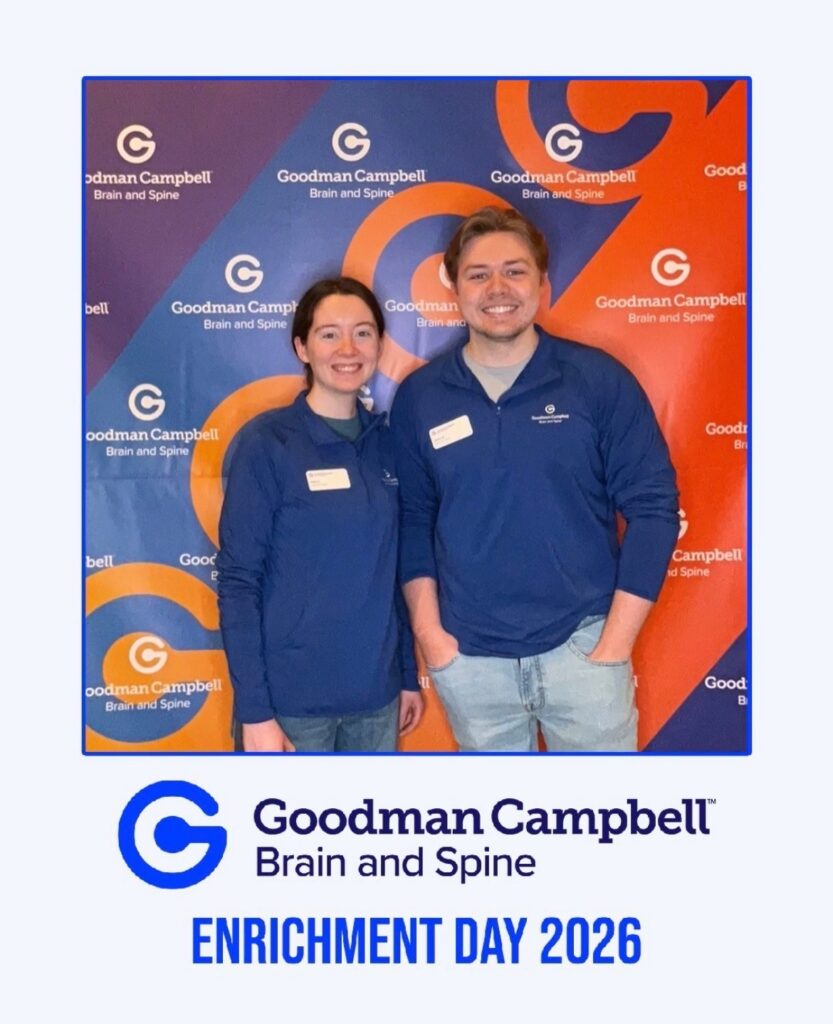
For the second year of the GCBS Gap Year Student Program, we once again had the privilege of working alongside two exceptional future physicians: Kate Hannon and Aidan Rezner. What began as an opportunity for aspiring medical students has quickly become an impactful part of our organization. From presenting at national conferences to gaining hands-on exposure to patient care and neurosurgery, Kate and Aidan embraced every opportunity with curiosity, compassion, and professionalism. We are excited to share more about their journeys, experiences, and future plans as they reflect on their time at Goodman Campbell Brain and Spine. We sat down to reflect on their experience this year and asked each of them the following questions.
Have you always been interested in the medical field?
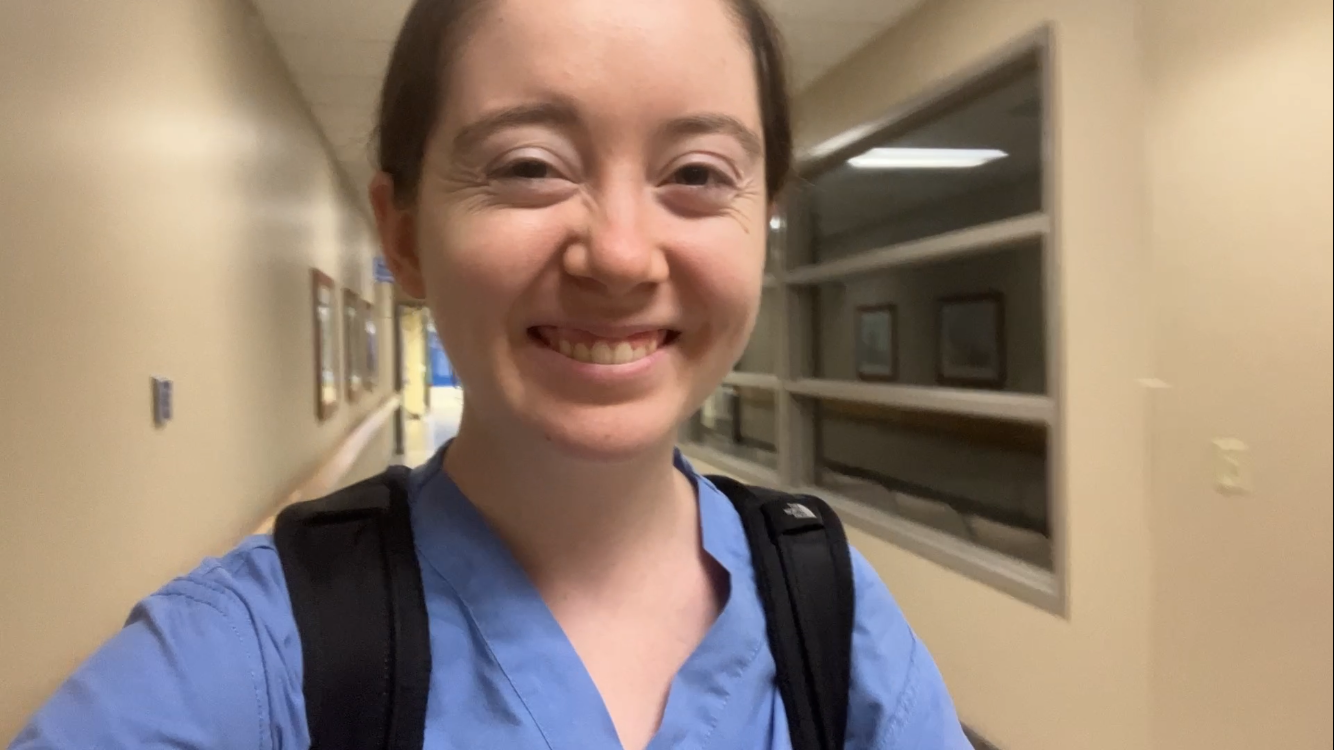
Kate
“I wouldn’t say I’ve always been interested in the medical field, but I started to develop a bit of a fascination in middle school, around the time when two of my grandparents were suffering from dementia and I got a first-hand look into medicine and caregiving. Late in high school was when I began seriously considering a career in medicine. It’s a long and challenging road, but I couldn’t see myself in any other field.”
Aidan
“As far back as I can remember, I’ve always wanted to be a doctor, though it’s hard to pinpoint exactly where that passion began. While no one in my family works in medicine — my mom is a high school teacher and my dad is a bartender — I’ve always been fascinated by the human body and how it works. I still remember learning about the excretory system in fifth grade and thinking it was the coolest thing I had ever studied. Over time, that curiosity evolved into a deeper appreciation for medicine as a profession uniquely centered on helping others through some of their most vulnerable moments. The opportunity to walk alongside patients in their health journey and help them regain their fullest selves is something I find incredibly meaningful, and I would be honored to be part of that work in the future.”
What areas of medicine interest you most?
Kate
“For several years, I’ve been most interested in pediatric oncology. There are lots of specialties I have yet to explore, though, so I’m keeping an open mind and I look forward to learning more.”
Aidan
“One of my first mentors in medicine was a gerontologist. I first met her in high school when I was delivering groceries as part of a shopping service I started during the pandemic, and she opened my world to the great need for doctors interested in geriatric medicine and the care of the aging population. I have spent much of my undergraduate career hoping to better understand the unique privilege of caring for older adults, and it is a mission I hope to continue in my career as a physician. I would love to work in the treatment and care of Alzheimer’s disease and related dementias. That work perhaps lends itself most neatly to neurology, but ultimately I am open to any specialty where I feel I can best fulfill my mission of upholding dignity and best possible outcomes in the elderly population.”
What goals did you have prior to starting your gap year?
Aidan
“I am incredibly grateful to have taken a gap year as I feel my knowledge about medicine, research, and surgical care has grown exponentially. In my time at Notre Dame, my research focused on qualitative studies involving personhood at the end of life.
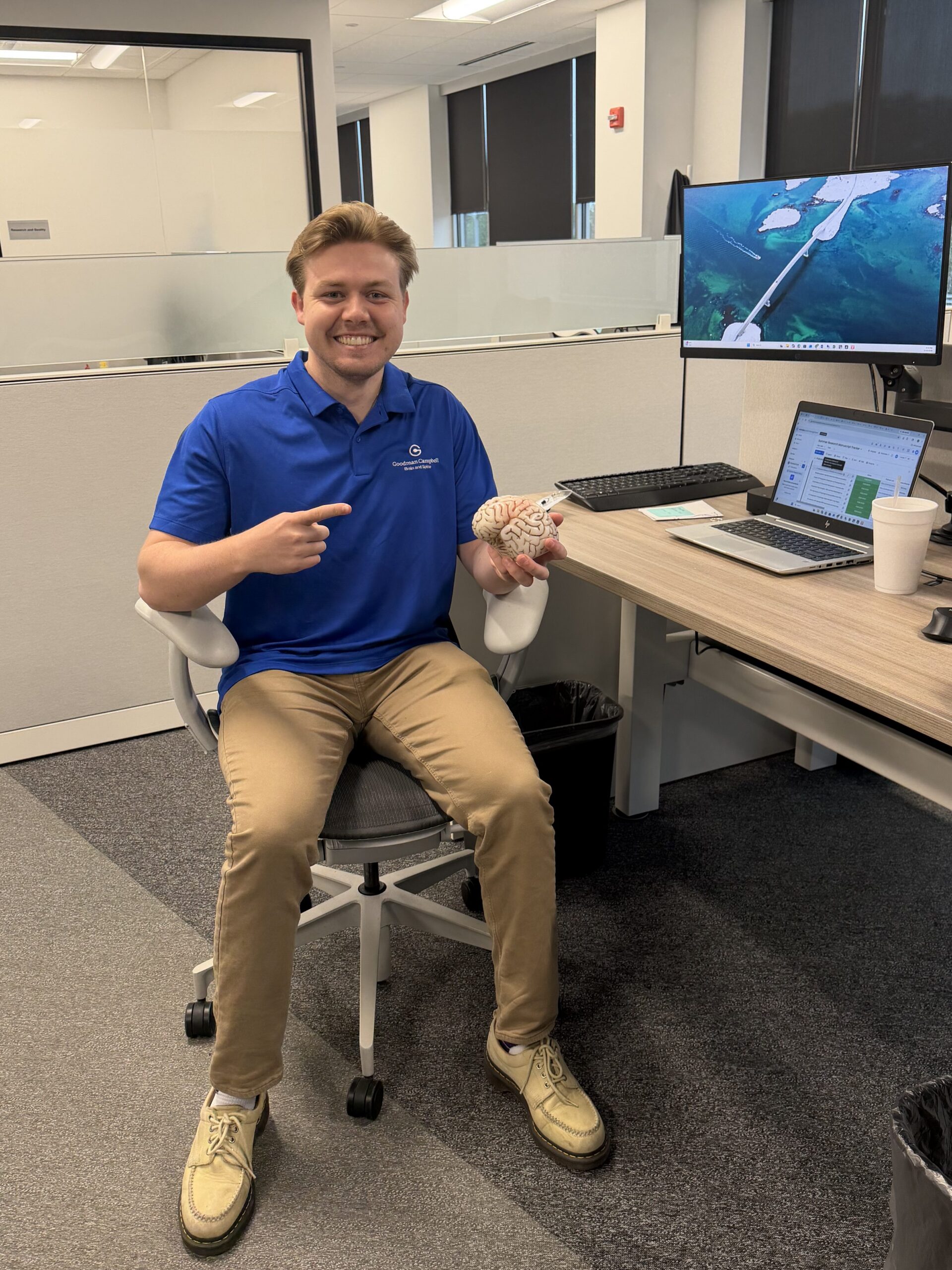
That work was deeply meaningful, and I wanted to supplement it with insight into neurosurgery as well as quantitative research involving patient outcomes. Being able to shadow physicians during complex cases and hear about their rationale behind surgical choice has been deeply informative and I will take that knowledge with me into my schooling. The ability to perform complex statistics and write clinical manuscripts has been an added benefit and one that I am so appreciative to have learned.”
Kate
“Medical school applications are focused on having the highest quality and quantity of experiences that you can at the time of application. Without a gap year, you need to squeeze those into your first three years of college, which isn’t easy. I’ve picked up so many more examples that contribute to my “Why Medicine?” between the summer before senior year of college and now, and a gap year allowed me to highlight those experiences in my application.”
Why did you apply to the GCBS Gap Year Student Program?
Aidan
“Initially, I was drawn to Goodman Campbell because the field of neurosurgery felt like a new and exciting opportunity. Being close to my brother and girlfriend at Notre Dame was an added benefit too! Now, I believe GCBS is perhaps the most seamless and professional organization that I have ever been a part of. Working with physicians that care so deeply about their patients has filled me with motivation and gratitude. I believe GCBS is deeply committed to patient care and has shaped the kind of doctor I want to be: highly competent and placing the patient at the forefront of every decision. Truthfully, I did not know what I was walking into when I accepted this role, but I am so glad I did!”
Kate
“The GCBS Gap Year Student Program was one of several advertised to Notre Dame pre-med students, and right off the bat I was excited by how it would allow me to live within driving distance of my family in the Chicago area. I’m so happy that I ended up here, because all of the people and the overall culture at GCBS is incredible.”
What have you accomplished during your time here?
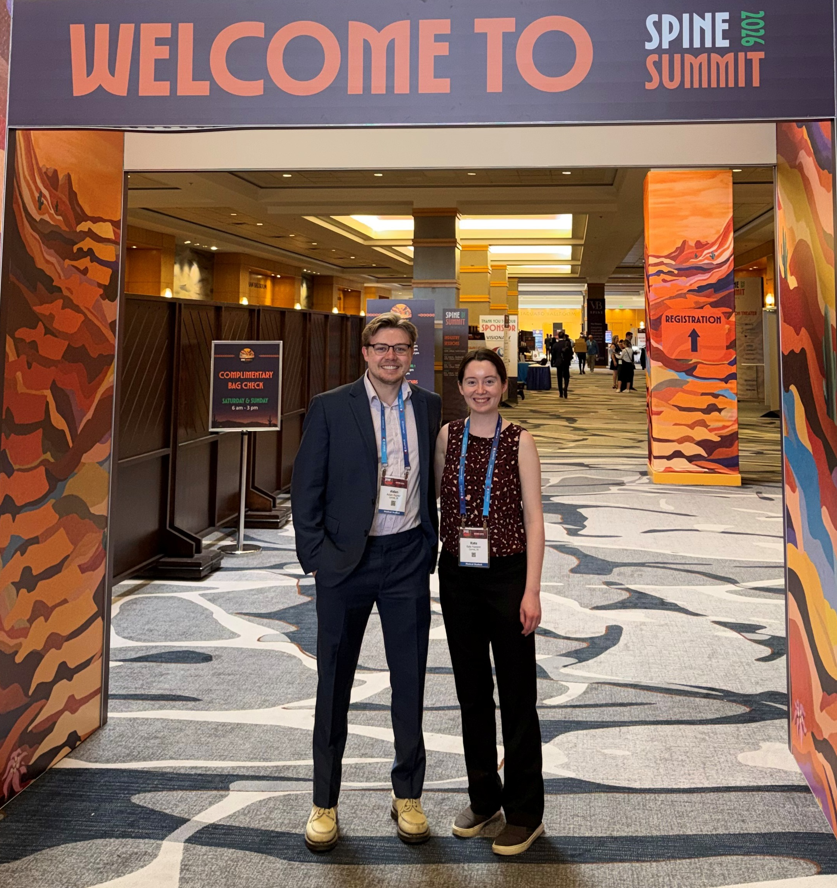
Kate
“My designated project which started during the summer and was accepted for publication in March, looked at the relationship between cervical spine surgery for adjacent segment disease (in other words, having a second neck surgery above or below an existing fusion) and swallowing difficulties after surgery.
Another big project was a collaboration with the Spine CORE™ group and investigated factors contributing to delayed changes in patient surgical satisfaction.
- Other dysphagia manuscripts included looking at:
- smoking
- blood thinners
- bone morphogenetic protein
- Outcome related manuscripts included:
- outpatients vs. inpatients
- elderly vs. younger patients
- primary surgery vs. lumbar adjacent segment disease revision
- durotomies in various lumbar surgical techniques
I also helped handle manuscript revisions for past summer interns who are busy with medical school. It’s all a group effort, and I am so grateful to Aidan, Dr. Eric Potts, Dr. Vince Alentado, all of the other surgeons, Heather Cero, Rachel Sheets, Kathy Flint, and the previous interns who have played a huge role in all of these projects.”
Aidan
“This is a difficult question to answer, there are so many! I believe we are at over 35+ accepted abstracts and manuscripts for the year. I have contributed to projects ranging from satisfaction rates at 5 years postoperatively to investigating the role of preoperative smoking on outcomes following spine surgery.
Perhaps the project I am most proud of is our paper concerning 2-year outcomes in patients 75 and older following ACDF that was recently accepted to JNS Spine. Bridging my interest in geriatric medicine with neurosurgery had always been one of my goals when I entered this program, and I am so thankful I was able to lead/contribute to a project that establishes beneficial outcomes for older adults who have met health optimized clearance for surgery, particularly in an age group where conservative care strategies tend to be the established norm.”
What is your favorite memory during your time at GCBS?
Kate
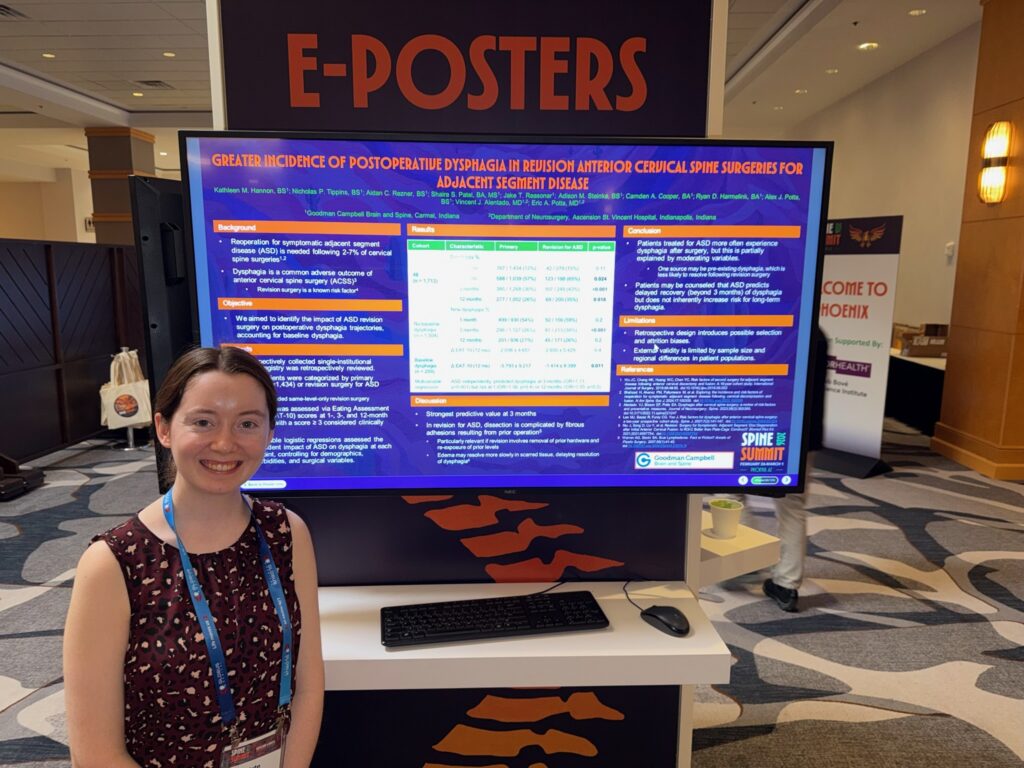
“Spine Summit! It was a lot of fun to reunite with some of the summer interns, cheer each other on as we presented our work, and also hear from countless neurosurgeons whose names I’d previously just read in papers.”
Aidan
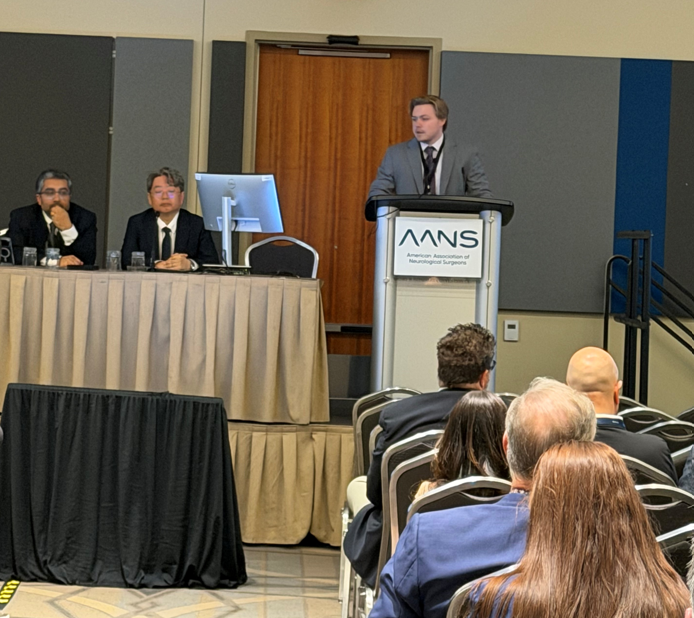
“It has to be the conferences! Being able to watch the other research students present their hard work at national neurosurgery conferences has been such a joy. Spine Summit in Phoenix this year was especially fun as a large number of medical students from the summer research program attended. It was great getting to know everybody a little bit better outside of work while also hearing from other neurosurgeons around the world about advancements in the field. We practiced our presentations around a fire outside the hotel lobby one night, and everyone was so supportive in providing affirmations and constructive feedback. It was such an incredible bonding event.”
What are your future plans once completing your gap year?
Kate
“I’ll be starting medical school at Indiana University in the fall!”
Aidan
“I am applying to medical school this upcoming cycle, so I hope to be with GCBS a bit longer. I plan to stick around to help onboard the new gap year interns and then transition into either a clinic facing role or help out in the research division. I loved my time here so much that I decided to stick around for a little bit longer.”
What do you enjoy doing when you are not working?
Aidan
Kate
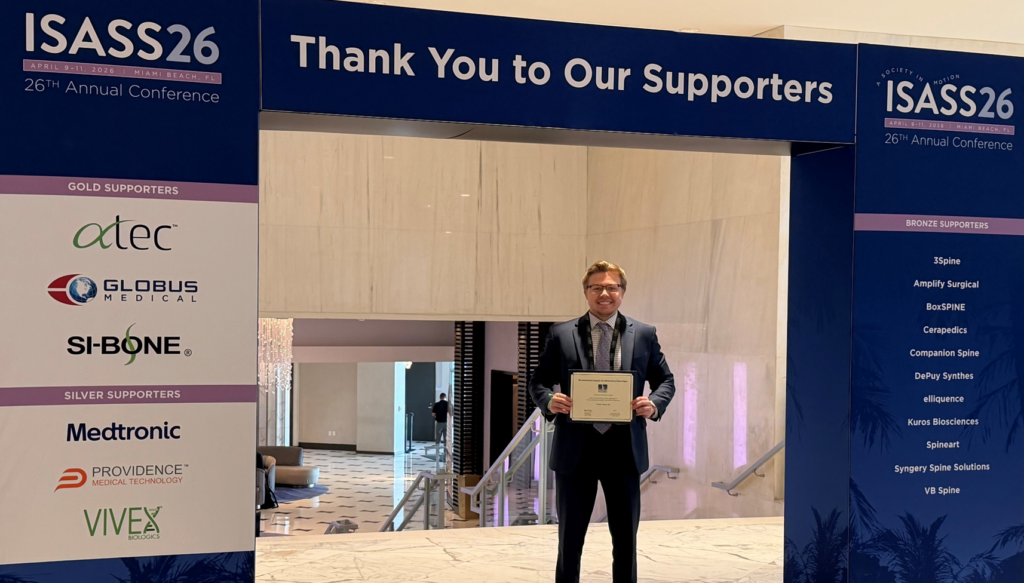
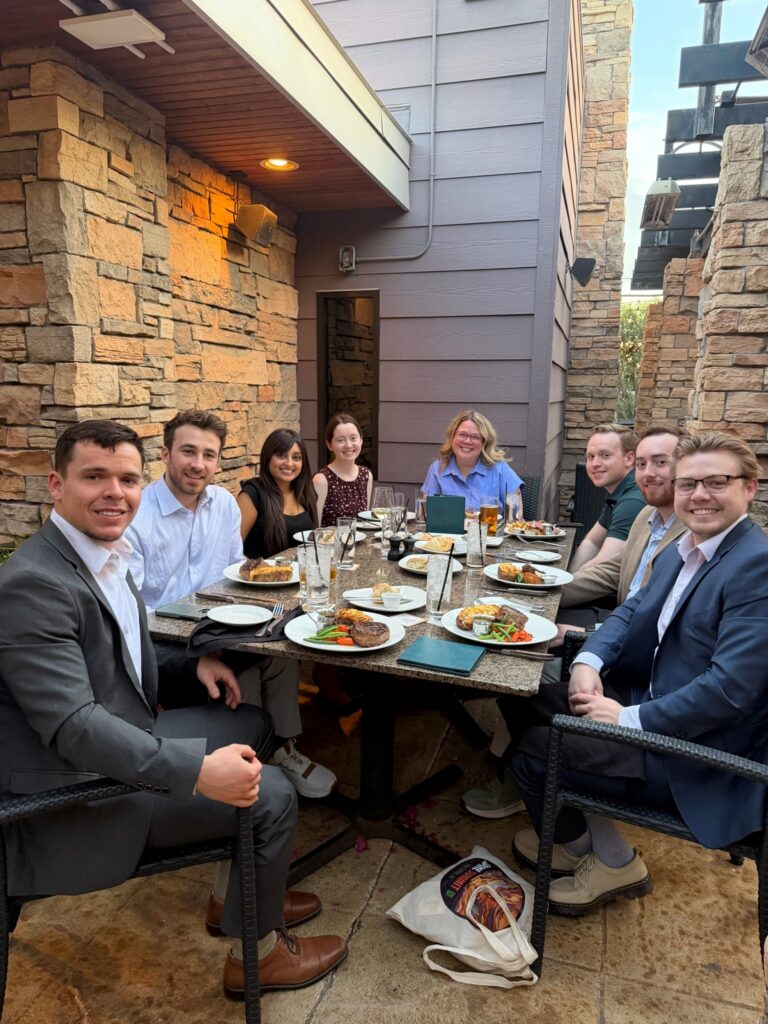
“Outside of work, I have picked up Peloton riding (my apartment supplies one!) and more recently film! My girlfriend loves movies and has a subscription at AMC, so we have seen more movies in the past year than perhaps my whole life. I truly did not know what I was missing and I am so happy to be close to her so we can go to the theatre often.”
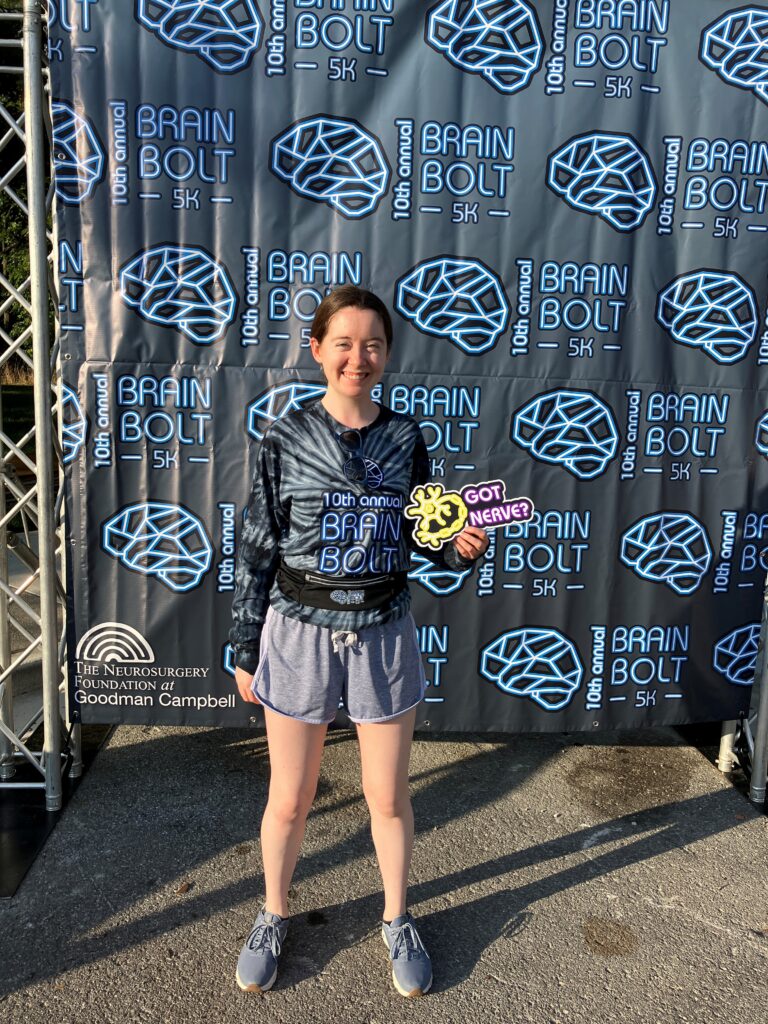
“My apartment is super close to the Monon Trail, and I love to go for walks there every day after work while listening to music or calling my friends and family. In the fall, you’ll find me anxiously watching Notre Dame football games every weekend. I also have a lot of fun volunteering at a local food pantry one evening a week!”
Would you recommend the GCBS Gap Year Student Program to future students and why?
Aidan
“I absolutely would. I firmly believe that there is no program in the country that will provide the level of preparation and experience in clinical research that this job has. I honestly had no clue how important research is for determining entry into residency programs (spoiler: it is) and now I am walking out of this year with enough contributions to be competitive in just about any field. My CV has nearly tripled in length and it is all thanks to the wonderful physicians, Heather Cero (Goodman Campbell Director of Clinical Research) and Rachel Sheets (Goodman Campbell Quality Manager), for encouraging us to take the lead on projects and drive them to completion. I remember Dr. Alentado describing our registry data as the strongest in the country and I stand behind him on that statement fully. GCBS does an exceptional job with this program. I am also so thankful for my gap year partner, Kate, who has been a devoted colleague in this work and deserves all of the credit in the world. She is a rockstar!”
Kate
“Absolutely! I went into this program without fully understanding just how important published research is, not only to medical school applications but also — perhaps more importantly — to applications for residency down the road. There is nowhere else where you will have access to such high-quality data, making the research we do so successful and meaningful. Outside of research, there are so many built-in opportunities to learn from the experts here, such as shadowing, observing weekly case meetings, and attending educational lectures geared toward neurosurgery residents.”
What is something interesting about yourself that many people may not know?
Kate
“My go-to fun fact is that I’m a synesthete, which means each letter and number has an “assigned” color. I see these in my mind’s eye whenever I hear, read, or think of words. Synesthesia was actually the topic of my senior thesis in college! In case you were curious, here are my colors for GCBS:”

Aidan
“My Dad’s family lineage is Australian and he is the youngest of 10 so I have a huge family! I am from California, so it is always nice to go home and see my many aunts, uncles, and cousins.”
Thank you Kate and Aidan for all of the hard work and enthusiasm you brought in each day. Your passion for medicine, dedication to learning, and commitment to improving patient outcomes made this another incredibly successful year for the program.
In 2025, Goodman Campbell published more than 60 research papers, a record-breaking number for the practice for one year. Although Goodman Campbell physicians may not often discuss their commitment to academics and research during patient appointments, that dedication influences every aspect of the care they provide.
“Publishing research helps shape how clinical care is delivered, evaluated and improved,” says Heather Cero, Director of Research at Goodman Campbell. “It helps clinicians choose treatments proven to be safe and effective based on evidence and leads to advances in the field that are applied to patient care and can improve outcomes.” Research at Goodman Campbell reaches across specialties, touching nearly all of their patient populations.
Neurosurgeon Eric Potts, MD, credits two major factors for reaching their 2025 milestone: “Really great data that allows us to ask the important questions, and engaged and enthusiastic students, who we have had since the start of these programs. This provides us momentum to continue researching and asking questions.”
“I really enjoy how enthusiastic these students are. It energizes our culture and makes the work fun,” says Dr. Potts. “I love teaching them how to ask meaningful questions and analyze data, and it’s rewarding to watch gap-year students mature, evolve, and ultimately develop their own research ideas. They leave with a deep appreciation for research and publication, stronger CVs, and a solid foundation for success in medical school and beyond.”
Nicholas Tippins was one such student. After graduating from the University of Notre Dame with a bachelor’s degree in neuroscience and behavior in 2024, the Carmel, Ind., native knew he wanted to study medicine, but he was also interested in taking a break from academia. Tippins has an interest in spine research and so he applied for and was accepted into Goodman Campbell’s gap year fellowship program in 2024.
In addition to engaging in case-based learning with colleagues in weekly spine and tumor meetings and shadowing physicians in the operating room, Tippins dove head first into research. During his first year, he pored over a set of X-ray measurements of cervical and lumbar spine for more than 1,000 patients, helped write research abstracts, revised manuscripts, and developed stats. “I’m really good at stats,” Tippins admits.
He worked on an abstract project to look for correlations between dysphasia and readmission rates, which ended when it was discovered that only two patients were readmitted during the year studied. That’s often how research happens. A question or prompt is posed and research is done to discover if answering the question can lead to valuable insights; sometimes it just doesn’t.
Tippins brought with him a background in computer science and a passion for coding. He found more efficient ways to needle out discrepancies in Excel spreadsheets or pinpoint impossible values on surveys. He ended up writing code to automate his research process.
Working with the research students is personal for neurosurgeon Vincent Alentado, MD. “I remember being in their position and benefiting from mentors who invested their time and created real opportunities,” he says. Alentado started with little formal research experience, but was willing to work hard. Today as a mentor, he passes on the research skills he learned as a student.
“We focus on providing the tools, structure, and support they need to grow as clinical researchers, while encouraging them to take ownership of their work. What’s most rewarding is how quickly they develop — seeing their critical thinking, collaboration, and problem-solving skills take shape over a short period of time is both impressive and motivating,” Alentado says.
Soon enough, Tippins was developing his own questions and pitching project ideas to the physicians. He enjoyed his gap year so much, and contributed so much to Goodman Campbell, that he stayed for an extra summer to help onboard eight new interns. He met with each one on one, hosted dedicated lecture sessions and taught them coding for research.
Tippins set goals to help ensure the summer interns had the opportunity to secure authorship on publications. This is important because it makes you a better clinician and more competitive when you’re applying to medical school.
Most importantly, research and publication moves neurological innovation forward. Goodman Campbell neurosurgeons rarely have downtime during their workdays to dedicate to research because there is always something to be done, but they make time.
“Research is incredibly important,” Dr. Alentado says. “Our field evolves rapidly, and staying involved in research helps ensure we’re not just using current techniques, but critically understanding and improving them. Many of the conditions we treat still have imperfect outcomes, and advancing care depends on answering nuanced questions to optimize outcomes.”
Goodman Campbell has its own patient-reported outcomes database containing information from an impressive 80% of patients on how well they are faring two years following surgery. Such a robust record makes it easier to ask and answer important questions.
Dr. Alentado says one of the most important and common questions he hears from patients is, “What are the chances this surgery will make me better?” Outcomes data allows Goodman Campbell physicians to answer this question with a high level of accuracy based on their collective expertise.
“Other surgeons are relying on anecdotal experience, which is always going to be subject to significant bias. By systematically tracking and studying our results, we’re also held to a higher standard — identifying areas for improvement, understanding the drivers of suboptimal outcomes, and refining our approaches in real time,” Alentado says.
At Goodman Campbell, a commitment to research is embedded in their culture. Their work is recognized nationally, with faculty leading neurosurgical journals and serving on editorial boards and professional committees. In this way, they are not only continuous students of their own practice, but also active contributors to the advancement of neurosurgery — helping to shape the standards of care for patients around the world.
Nicholas Tippins finished his first year in medical school at Indiana University School of Medicine in May 2026. His experience at Goodman Campbell taught him a few things to prepare him for the lengthy med-school path. “Discipline and autonomy — self-directed learning is critical to survive medical school,” he says. Tippins will return to Goodman Campbell in the summer of 2026 to continue mentoring the new class of research students.
Learn more about Goodman Campbell’s commitment to research and our current clinical trials.
Through the centuries, humans have adjusted their bodies to accommodate all kinds of new trends and technologies. Unfortunately, bending ourselves into unnatural shapes leads to aches and pains. Today, our phones, tablets and laptops are the main culprits, resulting in a nagging pain often referred to as “tech neck.”
Paul Page, MD, a neurosurgeon and spine specialist at Goodman Campbell, describes tech neck as an overuse syndrome caused by repetitive stress on the neck when looking downward at our devices.
“The human head weighs 10-12 pounds, and the more aggressive the angle at which you hold your head to scroll or type, the more stress you put on your neck,” Dr. Page says.
Ignoring symptoms of tech neck hasn’t been shown to lead to more serious conditions, but it can worsen existing ones. When you consistently put stress on the neck by looking down, it builds up muscle tension and can create a knot at the base of the neck. This is often referred to as Dowager’s hump or kyphosis, and poor posture while using devices can exacerbate the bulge and make it more prominent.
Treating tech neck symptoms
To treat tech neck, you don’t need spine surgery. Instead, adopt some simple, healthy habits. Dr. Page recommends taking frequent breaks from devices and noticing how you hold your head, aiming to keep it in alignment with the rest of your body. Be intentional about workplace ergonomics and posture.
Make use of the 20-20-20 rule created to reduce eye strain — it can also help with neck strain. Take a rest break at least every 20 minutes by looking away at a distance of at least 20 feet for 20 seconds.
With more of her clients working from home and improvising workstations, Katherine Behrens, PT, at Goodman Campbell says she has seen an increase in laptop- and smartphone-related symptoms over the last several years. But this latest version of tech neck isn’t as bad as past versions.
“I would say the era of the phone on the shoulder was a lot worse than ‘text neck’ because it was asymmetrical,” she says. “The era of ‘head banging’ rave concerts was by far the worst era — not much explanation needed as to why.”
Professions that require prolonged poor posture are known to have a greater incidence of neck issues. The clients Behrens see with the worst neck pain include hairstylists, dentists and dental assistants, people doing prolonged computer work, painters, and race car drivers.
Exercises to manage neck pain
If you have tech neck symptoms, Behrens recommends several exercises to help alleviate the pain.
Cervical Retraction or Chin Tuck: While seated, slowly draw your head back so that your ears line up with your shoulders. (Hold for 1 second, repeating throughout the day.)
Scalene Stretch: Place your hands overlapping on your breast bone. Next, tilt your head upwards and away from the affected side until a gentle stretch is felt along the front side of your neck. (Hold for 20 seconds, repeating 3 times daily.)
Wall Posture: Stand with your heels up against a wall. Attempt to get your heels, buttock, shoulders, and head to touch the wall at the same time. (Hold for 30 seconds.)
Wall Snow Angel: Begin standing against a wall with your elbows abducted to 90 degrees and shoulder blades retracted (pulled in and down) and cervical spine in a chin tuck. Without shrugging your shoulders, slide bent arms up the wall as if making a snow angel. Return to the starting position without allowing your shoulder blades to protract. (Repeat 10 times.)
If your symptoms worsen or persist for 2-4 weeks, consider seeing a medical professional. A medical examination is recommended if the pain radiates or you experience a tingling sensation. And if you see changes in your bowel or bladder function, request an appointment as soon as possible.
“There are a million and one reasons to have neck pain,” Dr. Page points out. Let’s try to manage at least one.
Is it time to see a professional for your neck pain? Request an appointment today at Goodman Campbell.

Life can throw you a curveball, or in the case of former Indiana Miss Basketball and WNBA player Vicki Hall, it can hit you with a series of stealthy crossovers that show you, in Hall’s words “just how fragile but also how powerful the human body can be.” It’s difficult to fathom, but between 2018 and 2025, Hall experienced three ischemic strokes.
“Each one changed me, physically and emotionally, and forced me to rebuild not only my strength but also my sense of purpose,” she says. Today, she wants to use her experience for good. “I want to contribute to society. That’s what life is all about.”
Krishna Amuluru, MD, is the Goodman Campbell interventional neuroradiologist who treated Hall after her most recent stroke in 2025. He and Molly Matthews, DNP, FNP-C, credit Hall’s motivation and discipline, especially as a former professional athlete, for how well she has recovered and how much she will likely continue to progress.
A career built around basketball
Hall was born with a genetic disorder called Lamin A/C that weakens the heart and leads to AFib, an irregular heartbeat that increases the risk of stroke. Her father passed away when he was just 46. “It’s a miracle that I’m talking to you,” she says.
In spite of her genes, as a young woman, Hall accumulated 1,725 points playing basketball at Brebeuf High School in Indianapolis and was named National Player of the Year by Parade Magazine in 1988. She went on to excel at the University of Texas at Austin from 1988-1993 — where she’s in UT’s Hall of Honor.
She won gold as part of the 1990 FIBA World Championship for Women and the 1990 Goodwill Games with the American women’s basketball team. And in 2000, she joined the Women’s National Basketball Association, playing for the Cleveland Rockers, Indiana Fever and Los Angeles Sparks.
As Hall bounded up and down the court, no one watching or trying to keep her from the basket would have guessed she was playing with a weakened heart. She was playing to win. Her WNBA career included 61 games up to 2002 and 255 points. Hall was inducted into the Indiana Basketball Hall of Fame in 2013.
After her career as a player came to an end, she transitioned into coaching, first as an assistant at Miami University and then the University of Toledo before returning to her home state in 2018 to be the head coach at Indiana State University.
Hall had her first stroke when she was working in Terre Haute. She was in the middle of a conversation and suddenly found herself unable to talk. Then she tried to lift her right hand, but it wouldn’t move. Hall’s symptoms lasted two minutes and then they were over. Doctors diagnosed the episode as a stroke, and there were no long-lasting impacts.
When a position on the coaching staff at the Indiana Fever came up in 2021, Hall took it. She coached the WNBA team for two years and was inducted into the Indiana Sports Hall of Fame in 2023.
Hall’s second stroke came a year later, again without warning. She was in her kitchen and accidentally slid a plate off the counter. When she tried to pick it up, she couldn’t. Her partner, Kerri Wilhelm, was there, and when Hall tried to speak, her words were slurred. Wilhelm quickly called 911, which was exactly the right thing to do.
Seeking medical care fast is paramount with stroke. Every minute a large vessel stroke goes untreated, millions of brain cells are lost. The longer the brain goes without blood flow, the greater the risk of permanent damage. How long it takes to get treatment directly impacts how much function a patient can recover. Following her second stroke, Hall had difficulty with balance and walking, but she was able to recover and get back to the life she loved relatively easily.
The 911 call and a complex surgery
“My other strokes were kind of a walk in the park,” Hall says as she begins to tell the story of her third stroke on Nov. 11, 2025, exactly one year from the date of her second one. The day started off like any other. Hall and Wilhelm chatted at home before Wilhelm left to run an errand. Hall was just clearing her phone of notifications when she realized something felt weird.
“Kerrie came back and asked if I was OK, and I couldn’t respond. Nothing came out,” Hall recalls. Wilhelm again dialed 911.
As her speech faltered, her understanding of what happened next remained intact. Firemen arrived first, paramedics assessed her, and she was put into an ambulance. They asked her questions that she wanted to answer, but she could only say “No” and “You Know.” By the time she got to the emergency department at Ascension St. Vincent Hospital in Indianapolis, she was no longer in control of her right hand, and other symptoms were worsening. She recalls nurses saying the doctor was seven minutes out.
Dr. Amuluru and Matthews quickly evaluated Hall’s symptoms and neuro/physical exam. Because her symptoms included difficulty speaking, weakness, and facial droop, they called for a noncontrast head CT to rule out bleeding, followed by vascular imaging (CTA) to evaluate the blood vessels and assess for any narrowing or occlusion.
They diagnosed Hall with an acute ischemic stroke. The source of the clot was cardioembolic, meaning it originated from the heart — specifically related to her known atrial fibrillation — and then traveled to the brain.
“In Vicki’s case, imaging showed a blockage in her left middle cerebral artery M2 branch with a large area of brain that could still be saved, which made her a strong candidate for intervention,” Dr. Amurulu says.
He decided the most effective intervention to open up Hall’s left MCA was a minimally invasive thrombectomy. This procedure’s goal is to reopen the blocked artery as quickly and as safely as possible to save brain tissue and reduce long-term disability.
“We enter through a small artery in the wrist or groin and guide a catheter up to the blocked artery in the brain using real-time X-ray imaging. Once we reach the clot, we use specialized devices to remove it, thus restoring blood flow,” Dr. Amurulu says.
Without a thrombectomy, Hall’s ability to speak would have likely been severely impaired, and the right side of her body could have been permanently weakened. In some cases, large strokes like Hall’s are life threatening.
It’s a complex procedure requiring the navigation of very small catheters and wires through equally small, delicate blood vessels in the brain. Every patient’s anatomy is different, and the clot itself can vary in size, location, and composition. In general, patients are asleep under general anesthesia for these procedures to avoid any movement while devices are being navigated within the brain.
There are also risks, such as vessel injury and/or bleeding, so it requires a skilled team of special radiology technicians, nurses, and advanced imaging technology to perform safely and effectively.
“I’m fortunate that Dr. Amuluru is very talented at what he does. A lot of people might not have tried to intercede and do the thrombectomy, but he did. He had the knowledge and understanding to not go any further,” Hall says, referring to the risks. “It speaks to his skill, and professionalism.”
Living like an athlete accelerated recovery
Six hours after surgery, Hall could tap letters on a tablet with her thumb, but it was difficult. The stroke had impaired her ability to spell. She spent a week in the hospital, walking the halls as part of her rehab. She asked for a pen and paper for communication and sent messages to people with her phone. Talking for long periods still drains her energy.
Once she was discharged, she adopted a routine of physical, occupational, and speech therapy appointments. With this third stroke, Hall had to shift into a different gear physically and mentally.
“As athletes you’re taught to bulldog your way through it, but with stroke, you can’t do that because when you do, it hits you right back and you go backward,” she says. Hall learned that recovery isn’t a straight path. It’s made of small victories — walking a little farther, speaking a little more clearly, staying patient with herself on the tough days.
Dr. Amuluru and Matthews agree that Vicki’s overall health and fitness likely played a significant role in her recovery, which isn’t a surprise. Physically active patients with few underlying health issues have been shown to have better baseline brain resilience and recover more quickly with rehabilitation than other patients.
Matthews credits Hall’s attitude as well. “Her motivation and discipline, especially as a former professional athlete, made a huge difference in how well she has recovered thus far and how much she will likely continue to recover over the course of the year. She also has an amazing support system which is crucial for patients recovering from any neurologic event that impacts functional and cognitive abilities,” Mathews says, referring to Wilhelm.
“I’ve been healing in levels,” says Hall, who is 56 and recovering well. She completed her outpatient rehab and continues to work on balance and fine motor skills. Replying to emails, and opening jars and medication bottles are no longer goals. She’s steadily increased her stamina to 10,000 steps a day — minimum — and lifts weights three times a week.
If she could send a message to people, it would be to learn the signs of stroke and take to heart that it can impact anyone, regardless of how fit or young they are. Every 40 seconds, someone in the United States has a stroke, and every 3 minutes and 14 seconds, someone dies of stroke, according to the National Center for Health Statistics. Your fast action can save lives and livelihoods.
“Vicki’s story highlights the importance of recognizing symptoms early, seeking emergency care, and staying compliant with medications, especially for conditions like atrial fibrillation, which can increase stroke risk,” Dr. Amuluru says. “Her recovery shows what is possible when rapid treatment, advanced technology, and patient determination all come together.”
Recovery hasn’t been a walk in the park. “Aphasia has been the most challenging. I still struggle to keep up with my brain when in conversation.” At times, she will still stutter, mildly slur her words, or struggle to find the appropriate words. “It is also harder to converse with people I don’t know,” she says, so she does the hard stuff to keep improving, like admitting to strangers that she has had a stroke and needs them to be patient with her. She is also planning to join Toastmasters, a club that helps people with public speaking.
“It’s hard to not be able to talk. It’s hard to not be able to walk, and it kind of makes you want to give up. But you can’t, and if I can help a couple people see that, it’s worth it,” she says. “It’s humbling, and you face discrimination, and it knocks people down and makes you not want to fight. But with determination, faith, and the right support, progress happens.”
When asked where she’ll be on Nov. 11, 2026 — the unlikely anniversary of her second and third strokes — Hall joked that she’d be standing in the parking lot at the hospital, or maybe throwing a party.
Stroke is one of the most devastating diseases a patient can experience. Learn how to identify common symptoms.
What Does “Interventional Pain Management” Actually Mean?
Interventional pain management refers to a group of minimally invasive procedures designed to treat pain at its source rather than relying solely on oral medications to reduce symptoms. These interventional pain management procedures focus on the nerves, joints and spine structures that generate pain signals.
An interventional pain management specialist uses minimally invasive techniques and image guidance to precisely target areas in order to reduce inflammation, interrupt pain signals, and improve function.. These procedures may include nerve blocks, epidural steroid injections, medial branch blocks, trigger point injections, or joint injections.
Unlike surgery, these treatments don’t require large incisions or long recovery periods. They also differ from oral medication-based approaches in that the medication is delivered in a targeted way directly to the affected area rather than systemically. For many patients experiencing chronic pain conditions, this approach can help reduce pain and improve mobility without the need for major surgery.
How Is It Different From Just Taking Pain Medication?
Many pain medications can temporarily reduce discomfort, but they often don’t address the underlying cause of the pain.
Interventional pain management procedures focus on blocking pain signals at their source. In many cases, injections or nerve treatments help block pain signals traveling from irritated nerves or joints. A nerve block, for example, can interrupt the signals traveling through irritated nerves. An injection into an inflamed facet joint may reduce inflammation that contributes to spine pain or joint pain.
Because these techniques target the source of pain rather than covering it up, they may help patients manage chronic pain with less reliance on oral medications. This can be particularly valuable for people who want alternatives to prolonged use of opioids/anti-inflammatory drugs.
Does Interventional Pain Management Have an Age Requirement?
No. Interventional pain care is not based on age. It is based on the type of condition you have and how much your symptoms affect your quality of life.
Adults of many ages may benefit from these treatments. Conditions such as disc herniation, spinal stenosis, sciatica, peripheral neuropathy, joint pain, nerve pain, and complex regional pain syndrome can affect people in their 30s, 40s, and beyond.
At Goodman Campbell, our interventional pain management physicians evaluate each patient individually, treating both simple and complex spine conditions. If a patient’s condition suggests the need for surgical evaluation, an interventional pain management physician would refer them to one of our neurosurgeons, collaborating across areas of expertise to ensure the appropriate next steps in care are taken. Such cases include conditions like significant nerve compression, neurologic changes, or structural instability.
What if My Pain Has Been Going on for More Than Three Months?
Doctors often describe pain in three main categories.
- Acute pain is short-term and usually improves as an injury heals.
- Subacute pain refers to pain lasting several weeks or months.
- Chronic pain generally lasts longer than three months and may persist even after the original injury has improved.
Persistent pain is one of the clearest signs that further evaluation may be helpful. When symptoms continue despite physical therapy or other conservative treatments, these techniques may offer a targeted way to reduce inflammation and improve function.
Can Younger Adults With Disc Herniation or Nerve Pain Qualify?
Yes. Many adults in their 30s and 40s experience nerve pain, back pain, or spine-related leg pain caused by disc herniation or spinal stenosis. Workplace injuries, sports injuries, and degenerative changes can all contribute to these problems.
Eligibility for treatment depends on factors including the diagnosis and how symptoms affect daily life. If your condition is interfering with sleep, work, or normal activity, an interventional pain management doctor can help determine the most appropriate treatment options.
What Procedures Do Interventional Pain Management Specialists Use?
A wide range of procedures may be used depending on the underlying cause of symptoms.
Common options include:
- Epidural steroid injections to reduce inflammation around irritated spinal nerves
- Nerve blocks and medial branch blocks to interrupt pain signals
- Facet joint injections or joint injections for spine and joint pain
- Trigger point injections for muscle-related pain
- Radiofrequency lesioning to quiet irritated nerves
- Spinal cord stimulators, which deliver gentle electrical signals to the spinal cord to modify pain transmission
These procedures are selected based on your diagnosis; one approach does not fit every patient.
At Goodman Campbell, patients have access to a range of interventional pain procedures under one roof, including epidural steroid injections, nerve blocks, radiofrequency lesioning, spinal cord stimulator trials, facet joint injections, the Intracept® Procedure, and more.
When Is It Time to See an Interventional Pain Management Doctor?
If conservative treatments such as oral medication or physical therapy have not provided long-term relief, it may be time to consult an interventional pain management specialist.
You may also consider how your pain is impacting everyday activities. Is it preventing you from carrying out hobbies or living your life to the fullest? If so, a consultation with an interventional pain management specialist — like those at Goodman Campbell — can put you on a path to healing.
What Happens When Physical Therapy and Conservative Treatments Fall Short?
If conservative treatments such as medication or physical therapy have not provided long-term relief, it may be time to consult a pain management specialist.
You may also benefit from evaluation if pain is affecting work, sleep, or everyday activity. A consultation allows an interventional pain management specialist to identify the underlying cause and recommend appropriate pain management methods. Request an appointment to get started.