Pregnancy can be a magical period in your life. But bringing a tiny human into the world requires your body to go through a lot of changes, some of which aren’t so magical. Along with morning sickness and fatigue, many pregnant women will experience sciatic nerve pain, making it difficult to sleep, walk, or even sit comfortably.
Sciatica is a common issue pregnant women face at some point during their pregnancy, In fact, about 50% of pregnant women suffer from lower back pain during their pregnancies or during the postpartum period. But not all sciatic pain has the same cause. While most cases are temporary and related to pregnancy changes, some women experience symptoms from an underlying spine condition, such as a herniated disc, that requires medical attention. Let’s explore what causes sciatic nerve pain during pregnancy, how to find relief, and when you should seek specialized care.
What Causes Sciatic Nerve Pain During Pregnancy?
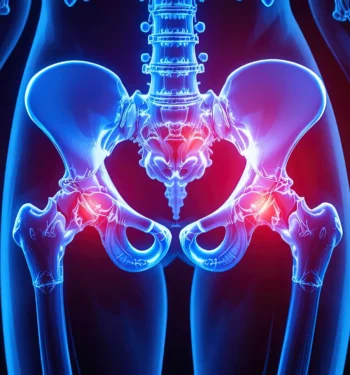
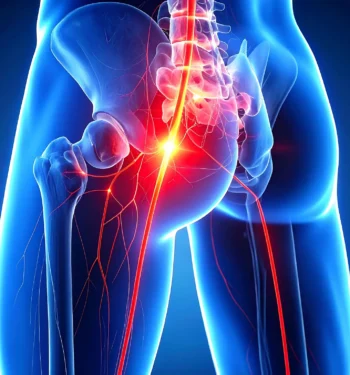
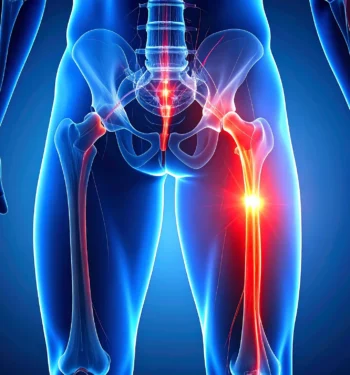
Pregnancy sciatica typically happens when your growing uterus puts pressure on the sciatic nerve, which runs from your lower back through your hips and down each leg. As your baby grows, the increased weight and shifting center of gravity can compress this nerve, causing shooting pain, tingling, or numbness that radiates down one or both legs.
Common causes of sciatic nerve pain during pregnancy include:
- Uterine pressure on the sciatic nerve: As the baby grows, the uterus presses directly on the sciatic nerve, producing shooting pain that travels down the leg — the most common driver of chronic pain during pregnancy.
- Relaxin hormone and ligament loosening: Your body produces the hormone relaxin to loosen pelvic ligaments for delivery, but this can reduce lumbar stability and contribute to sciatic nerve pain in pregnant women.
- Piriformis muscle tightening: The piriformis muscle deep in the buttock can tighten due to postural changes during pregnancy, compressing the sciatic nerve and causing legs burning sensation or radiating sciatic pain.
- Postural changes and center-of-gravity shift: As the belly grows, pregnant women shift their posture to compensate, increasing spinal cord and nerve pressure in the lumbar region and worsening sciatica symptoms.
- Underlying herniated disc or spinal stenosis: Some pregnant women experience more severe sciatic nerve pain because pregnancy reveals or aggravates a pre-existing spine condition, producing chronic pain during pregnancy that goes beyond normal pregnancy pressure.
How Early Can Sciatica Start in Pregnancy?
Sciatic nerve pain most commonly begins in the second or third trimester when the baby’s size puts more pressure on the sciatic nerve in pregnant women. However, some women notice sciatica symptoms as early as the first trimester, particularly if they had lower back issues before becoming pregnant.
What Helps Sciatic Nerve Pain During Pregnancy?
Several at-home approaches can help relieve pain and ease sciatic nerve pain during pregnancy. Before adding any new movement to your routine, consult your obstetrician. Gentle stretching exercises targeting the lower back and hips, including prenatal yoga, can be effective. Swimming may also provide excellent relief because the water supports your weight and takes pressure off the sciatic nerve.
Talk to your doctor about applying warm compresses to your lower back for 15–20 minutes at a time. Physical therapy designed for pregnancy can teach proper body mechanics to relieve pain and strengthen your spine’s supporting muscles. Using a pregnancy support belt helps by redistributing your baby’s weight. Avoid prolonged standing, heavy lifting, and activities that twist your spine or increase sciatic nerve pain.
How To Sleep With Sciatica in Pregnancy?
Sleeping with sciatic pain during pregnancy requires strategic positioning. Sleep on your left side with a pillow between your knees to keep your hips aligned and reduce strain. Place another pillow under your belly for support as your pregnancy progresses. A firm mattress helps prevent sciatic nerve pain by maintaining proper spinal alignment.
For detailed guidance on sleeping positions for sciatica relief, see our article on how to sleep with sciatica.
A firm mattress helps prevent nerve pain by maintaining proper spinal alignment. If you wake up with increased pain, try drawing your knees up toward your chest, which can open space in your spine and temporarily relieve sciatic nerve pain.
What Are the Best Exercises to Relieve Sciatic Pain During Pregnancy?
For pregnant women experiencing sciatic nerve pain, gentle movement and targeted exercises are among the most effective ways to easing sciatic nerve pain and managing sciatica symptoms. Always obtain approval from your obstetrician before starting any new exercise routine during pregnancy.
Piriformis Stretch
The piriformis stretch directly targets the piriformis muscle, which is a common cause of sciatic nerve pain in pregnant women. Lie on your back (or in a supported side position later in pregnancy), cross your right ankle over your left knee, and gently pull your left thigh toward your chest. Hold for 20–30 seconds. This stretch helps easing sciatic nerve pain by releasing tension from the piriformis muscle.
Cat-Cow Stretch
Begin on your hands and knees in a tabletop position. Inhale as you arch your back (Cow), then exhale and round your spine upward (Cat). Cycle through these poses 10–15 times. This gentle movement relieve pain in the lower back, reduces pressure on the spinal cord, and is one of the most recommended exercises for sciatica symptoms in pregnant women.
Seated Hip Flexor Stretch
Sit on a chair and cross one ankle over the opposite knee. Gently lean forward, keeping your back straight, until you feel a stretch in your outer hip. Hold for 20–30 seconds per side. This stretch targets the piriformis muscle and surrounding hip flexors, helping to relieve pain from sciatic nerve pain caused by tightness in pregnant women.
Prenatal Yoga Child’s Pose
From a kneeling position, widen your knees to accommodate your belly and sink your hips back toward your heels. Extend your arms forward along the floor and rest your forehead down. Hold for 30–60 seconds. This pose gently decompresses the spinal cord and lumbar area, providing easing sciatic nerve pain benefits and reducing sciatica symptoms for pregnant women.
Gentle Walking
Short, regular walks help relieve pain by improving circulation, reducing sciatic nerve pain-related stiffness, and maintaining the muscle tone that supports your lumbar spine. Aim for 10–20 minutes at a comfortable pace. Gentle walking is widely recommended for managing sciatica symptoms and chronic pain during pregnancy without overloading the body.
For additional gentle movement options that complement these exercises, see our 5 simple spinal stenosis exercises — many of which are also safe for pregnant women managing sciatic nerve pain.
How Do I Know if My Sciatic Pain Is Normal or Something More Serious?
Normal pregnancy sciatic pain typically improves with rest and position changes. While uncomfortable, it shouldn’t prevent you from performing basic daily tasks or progressively worsen. If you find that your sciatica symptoms are progressively worsening, consult with your obstetrician about seeing a top spine specialist.
More serious symptoms include severe pain that doesn’t respond to position changes, numbness or weakness in your leg that’s getting worse, difficulty controlling your bladder or bowels, or pain that’s consistent and unrelenting. If you had back pain before pregnancy that’s now dramatically worse, this could indicate a condition like a herniated disc or spinal stenosis being aggravated by pregnancy.
Can a Herniated Disc Cause Sciatica During Pregnancy?
Yes. While most pregnancy sciatic nerve pain results from uterine pressure, a herniated disc can also cause sciatica symptoms in pregnant women. When the soft inner material pushes through its outer layer, it can press directly on nerve roots and cause shooting pain that produces severe sciatic pain and legs burning sensation. Herniated disc symptoms are usually more severe and persistent, and they don’t change with the positional adjustments that typically help pregnancy-related sciatica. At Goodman Campbell, our team works hand in hand to determine whether your sciatica symptoms stem from pregnancy changes or an underlying condition.
When Should I See a Spine Specialist for Sciatic Pain During Pregnancy?
You should consult a spine specialist if your sciatica pain is severe enough to interfere with walking, sleeping, or daily activities despite trying conservative relief methods. A sudden onset of severe sciatic nerve pain, numbness spreading down your leg, or any loss of strength warrants immediate evaluation.
While it is rare, “saddle anesthesia”—numbness in your inner thighs, buttocks, or genital area—or any changes in bladder or bowel function could indicate serious nerve compression requiring urgent attention.
For pregnant women and postpartum patients seeking the most effective relief approaches, our guide on the most successful treatment for sciatica covers the full range of options for managing sciatic nerve pain.
Will Sciatic Nerve Pain Go Away After Delivery?
For most pregnant women, sciatic nerve pain resolves within weeks to a few months after delivery as pressure on the sciatic nerve disappears and the body returns to its pre-pregnancy alignment. Once hormones stabilize, the ligaments that loosened during pregnancy will tighten again, improving spinal cord stability and easing sciatic nerve pain.
Postpartum sciatica that lingers beyond the first few months may indicate that pregnancy revealed or worsened an existing spine condition.
What if My Sciatica Doesn’t Improve After Pregnancy?
If your sciatic pain persists beyond three months postpartum, it’s time to investigate whether an underlying spine condition is causing your sciatica symptoms. Continuing sciatic nerve pain after delivery suggests the problem wasn’t just pregnancy pressure — there may be structural changes in your spine requiring evaluation and treatment.
Expert Sciatica Treatment Indiana Patients Trust
If you’re pregnant or recently had a baby and your sciatic nerve pain isn’t improving or you’re concerned about persistent symptoms, consult with your obstetrician and ask about the spine specialists at Goodman Campbell. As a global leader in brain and spine care, we provide sciatica treatment that Indiana patients and families can access without traveling far from home. Our neurosurgeons and specialists have extensive training and are here for you during this special time. Contact us to get started on the road to relief from sciatica pain.