If you’re experiencing knee pain that won’t go away despite rest, ice, and typical treatments, your spine might be the real culprit. Many patients are surprised to learn that their persistent knee pain is actually sciatica-caused knee pain, a condition that often originates in the lower back but can send sharp pain radiating down to the knee.As many as 40% of Americans will experience sciatica at some point in their lives, and it is one of the most common causes of nerve-related pain.
Can Sciatica Cause Knee Pain?
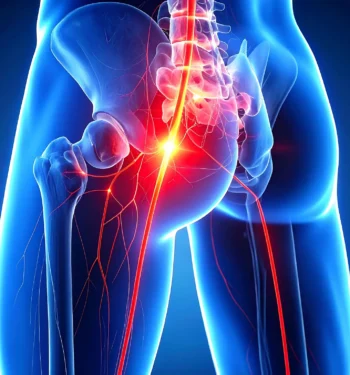
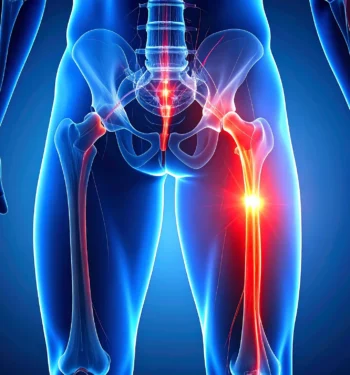
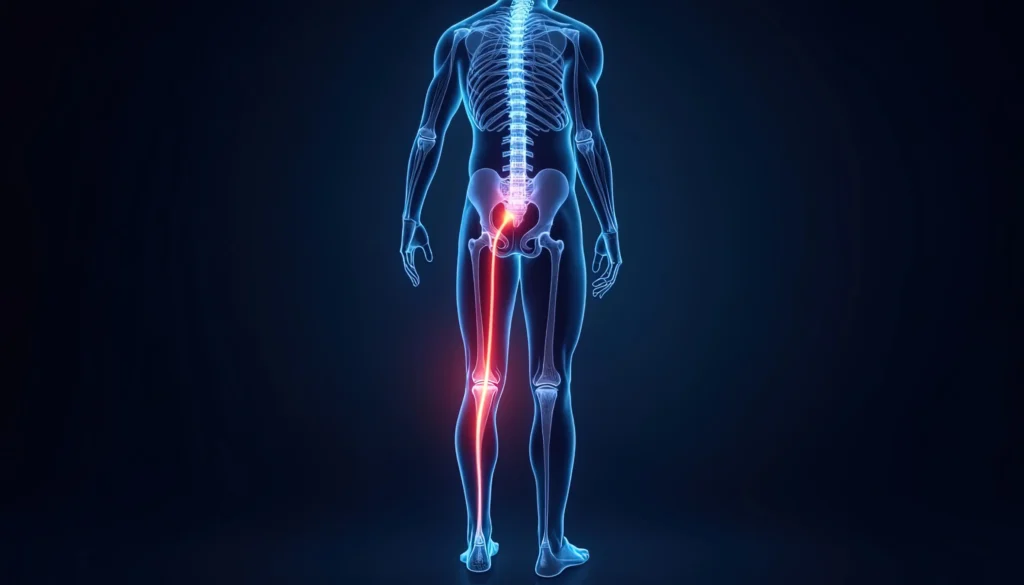
Yes, can sciatica cause knee pain? Absolutely. The sciatic nerve is formed by nerve roots in the lower spine and begins in the pelvis, then runs through the buttocks and down each leg, passing near the knee. When the nerve roots become compressed or irritated in your spine, it can send sciatica pain signals anywhere along its path, including your knee. This is referred pain, you feel knee pain even though the source of the problem is in your lower back.
This explains why many patients with sciatica knee pain experience knee weakness, a dull ache around the knee, or even knee buckling without any actual injury to the knee joints themselves.
How Does Sciatica Cause Pain in the Knee?
When something compresses the nerve roots in your lower spine, it disrupts the normal function of the entire sciatic nerve path, creating sciatica pain that radiates down your affected leg and can produce significant sciatica knee pain.
What Is the Sciatic Nerve and How Does It Connect to the Knee?
The sciatic nerve forms from five nerve roots that exit your spinal canal in the lower back. These roots merge to create a thick nerve that travels down the back of your thigh and branches into smaller nerves including the peroneal nerve, which wraps around your knee. This is why sciatic nerve pain stemming from nerve compression in your spine can directly affect how your knee feels and functions.
Why Does Nerve Compression in Your Lower Back Cause Knee Pain?
When a herniated disc or bone spur compresses the nerve roots in your lower back, it creates inflammation and disrupts normal sciatic nerve signaling. Your brain interprets these disrupted signals as knee pain because the same nerve pathway serves both areas. The compression can also interfere with your muscles’ ability to properly support your knee, leading to muscle weakness and sciatica knee pain instability.
What Part of Your Knee Hurts With Sciatica?
Sciatica knee pain typically affects the outer side or back of the knee. Most patients report a dull ache behind the knee, burning or tingling along the outer knee, or sharp pain that shoots through the back of the leg. With sciatic pain, the discomfort feels like it’s traveling through your knee rather than originating there, a key indicator that sciatica cause knee pain rather than a local knee injury is responsible.
How Do You Know if Your Knee Pain Comes From Your Spine?
Several signs suggest your knee pain may stem from your spine. First, sciatica knee pain typically accompanies other sciatica pain symptoms: lower back discomfort, buttock pain, or tingling that travels down your leg. Second, the knee pain relief often comes when you lie down and the pain worsens with prolonged sitting.
If rest, ice, and nonprescription medication haven’t helped your knee pain after a few weeks, your spine deserves closer examination. An accurate diagnosis to identify any sciatic nerve compression will require a thorough neurological examination and imaging studies of your lower back.
What Causes Sciatica-Related Knee Pain?
Multiple spinal conditions can compress the nerve roots that form the sciatic nerve and lead to sciatica knee pain.
Can a Herniated Disc Cause Knee Pain?
Yes, a herniated disc is one of the most common causes of sciatica pain that leads to knee pain. When the soft inner material of a spinal disc pushes through its tough outer layer, it can press against the nerve roots that form your sciatic nerve, creating inflammation and disrupting sciatic nerve pain signaling down to your knee. Other spinal conditions include spinal stenosis (narrowing of the spinal canal) which can also produce significant sciatica knee pain, along with spondylolisthesis and bone spurs.
Can Tight Hamstrings Lead to Sciatica and Knee Pain?
Tight hamstrings can contribute to sciatica pain and knee pain, but they’re rarely the primary cause. When hamstring muscles become excessively tight, they can alter spinal alignment, potentially increasing pressure on your sciatic nerve. However, hamstring tightness is often a symptom of sciatic nerve pain rather than the cause.
How Do I Get Rid of Knee Pain From Sciatica?
Effective treatment must address the nerve root compression in your spine rather than focusing solely on your knee. Initial approaches may include pain medications, as recommended by your healthcare provider. A physical therapist can teach you exercises that reduce pain by improving spinal alignment, and proper posture training helps relieve pressure on the affected nerve root.
Many patients improve with these conservative medical treatments over several weeks. However, if your sciatica pain and knee pain worsen or don’t improve, surgical intervention may be necessary.
At Goodman Campbell, our neurosurgeons collaborate with interventional pain management specialists to treat both simple and complex spine conditions. Our extensive training on the entire nervous system gives us deep insight into how nerve compression affects your entire leg function.
For patients wondering whether their sciatica pain will resolve on its own, see our article examining the question: Will sciatica go away without treatment?
Treatment Options for Sciatica-Related Knee Pain
Effectively addressing sciatica-related knee pain requires targeting the source of sciatic nerve compression rather than treating the knee in isolation. The right approach depends on factors including the severity of nerve compression and how long the sciatica knee pain has persisted.
- Physical therapy: Physical therapy is one of the most effective first-line treatments for sciatica knee pain. A therapist can design targeted exercises to relieve knee pain by reducing pressure on the sciatic nerve, strengthening core and hip muscles, and correcting postural imbalances that aggravate sciatica pain.
- Stretching and exercise: Specific stretches targeting the piriformis, hamstrings, and lower back muscles can provide knee pain relief by reducing tension along the sciatic nerve pathway. Consistent gentle movement is more effective than bed rest for sciatic pain recovery.
- Anti-inflammatory medications: Some pain medications can reduce inflammation around the compressed nerve roots, providing short-term knee pain relief, while physical therapy and conservative care address the underlying cause of sciatica pain.
- Epidural steroid injections: For persistent sciatica knee pain, targeted injections can reduce inflammation directly around the compressed sciatic nerve root, providing weeks to months of knee pain relief and allowing rehabilitation to progress.
- Surgery: When conservative treatments fail to relieve knee pain caused by spinal stenosis or a herniated disc, minimally invasive procedures such as microdiscectomy can relieve sciatic nerve compression and help resolve sciatica knee pain that originates in the spine.
For targeted exercises that help relieve knee pain associated with the sciatic nerve and address sciatica pain at the source, see our guide on the best stretches and exercises for sciatica pain.
If your sciatica knee pain is related to spinal stenosis, our guide to 5 simple spinal stenosis exercises offers targeted movement options to help relieve knee pain and improve mobility.
When Should You See a Neurosurgeon for Knee Pain?
You should seek evaluation from a specialist at Goodman Campbell if your knee pain is accompanied by symptoms suggesting a neurologic or spine-related cause, such as lower back pain, pain that radiates down the leg, numbness, tingling, or weakness — or if symptoms persist despite conservative treatment. Following a thorough evaluation, our spine care team might recommend physical therapy, interventional pain management treatments, or surgery — but only if conservative measures haven’t produced satisfactory results.
If you experience progressive muscle weakness, knee buckling that creates a risk of falling, or numbness that spreads down your leg, you may have significant sciatic nerve compression requiring more immediate expert assessment. Chronic sciatica pain and sciatica knee pain lasting more than 6–8 weeks without improvement is a clear signal for a specialized neurosurgical evaluation.
As a global leader in brain and spine care, Goodman Campbell offers you direct access to one of the most accomplished neurosurgery teams in the world, right here in Indiana. Call Goodman Campbell today to schedule a comprehensive evaluation and discover the neurosurgical expertise to help you heal and restore your quality of life.