What Is Parkinson’s Disease and How Does It Affect the Brain?
Parkinson’s disease is a progressive neurological condition that affects how the brain controls movement. It develops when dopamine-producing cells in a small but critical region of the brain (the substantia nigra) begin to decline. Dopamine helps regulate smooth, coordinated motion, so as levels decrease, movement becomes more difficult to control.
This leads to the hallmark symptoms patients often hear about: tremor (often starting on one side at rest), rigidity, slowed movement, postural instability, voice changes, and facial masking.
The good news? While the condition is serious, there are a range of Parkinson’s disease treatment options designed to help patients maintain function and quality of life over time.
What Are the Treatment Options for Parkinson’s Disease?
Early in the condition, Parkinson’s disease treatment options typically begin with medications that help replace or mimic dopamine, improving symptoms such as tremor, stiffness, and slowed movement. Many patients also benefit from structured physical, occupational, and speech therapy, along with regular exercise and lifestyle modifications to help preserve mobility, balance, communication, and independence.
As the disease progresses, medications may become less effective or begin to cause fluctuations in symptom control and involuntary movements (dyskinesias). When this occurs, patients living in or near Indiana may begin exploring advanced Parkinson’s disease treatment in Indianapolis. A neurosurgical evaluation becomes an appropriate next step—not because earlier treatments have failed, but because the condition has evolved and additional treatment options may provide better symptom control.
This progression reflects the nature of movement disorder treatment: Care adapts over time to match each patient’s needs, with the goal of addressing the underlying neurological dysfunction as effectively as possible. For appropriately selected patients, advanced therapies such as deep brain stimulation (DBS) can improve symptom control, reduce medication-related fluctuations, and help maintain quality of life.
When Is Surgical Intervention the Right Choice?
Surgical evaluation is often appropriate when nonsurgical approaches no longer provide the level of control needed for daily life. This is not a last resort; rather, it is a proactive step toward a higher level of care. A thorough neurological evaluation, combined with advanced imaging, helps determine whether neurosurgery for Parkinson’s is the right fit.
How Does Deep Brain Stimulation Work?
Deep brain stimulation has become one of the most established and effective surgical options for Parkinson’s disease. DBS for Parkinson’s disease has been performed for over 30 years, with dramatic technological advancements in the last decade that have significantly improved precision, safety, and patient experience.
DBS works by placing thin electrodes into precise areas of the brain responsible for movement control. These electrodes connect to a small generator implanted near the collarbone, which delivers controlled electrical impulses to regulate abnormal signals that cause symptoms such as tremor and rigidity.
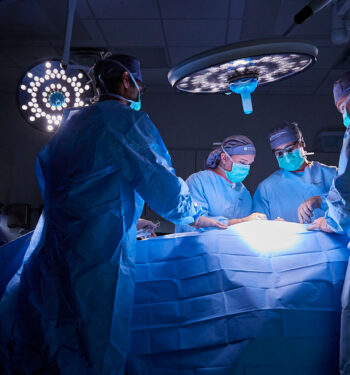
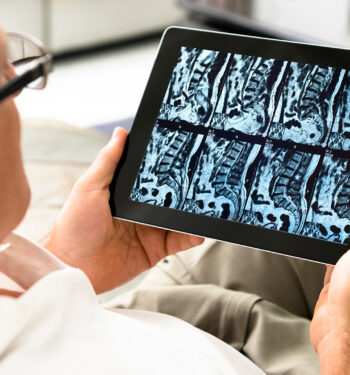
Goodman Campbell’s approach to functional neurosurgery reflects the most advanced standard of care. Before surgery, we perform detailed MRI imaging to precisely map the brain. During the procedure, we use an asleep DBS surgery technique, meaning patients are fully under anesthesia. While older approaches required patients to be awake during surgery, advanced computer imaging now allows us to achieve the same level of precision with the patient fully anesthetized, making asleep DBS the modern standard.
Immediately following placement, we confirm positioning with a CT scan before the patient wakes up. Most patients stay one night in the hospital. Within the following weeks, the generator is placed in an outpatient setting, and the system is later activated during a follow-up visit, typically with the patient’s neurologist.
This modern, image-guided approach allows us to deliver precise results while improving comfort and overall experience. For many patients wondering when to consider DBS, the answer often comes down to whether symptoms are interfering with quality of life despite appropriate nonsurgical care.
How Can You Explore Parkinson’s Disease Treatment With Our Team in Indianapolis?
We understand that exploring surgical care is a significant decision. Our goal is to make that process clear, supportive, and grounded in expertise every step of the way.
At Goodman Campbell Brain and Spine, we are a global leader in brain and spine care known for our neurosurgical training and clinical research. Patients who come to us gain direct access to one of the most experienced, progressive neurosurgical teams in the country — right here in Indiana.
If you’re ready to learn more about Parkinson’s disease treatment options or deep brain stimulation in Indianapolis, we’re here to help. Appointments with Goodman Campbell functional neurosurgeon Mark Hoeprich, MD, take place at Ascension St. Vincent – Indianapolis Functional Neurosurgery. To request an appointment with Dr. Hoeprich, call 317-338-9660.