If you’re living with chronic back pain, neck pain, or ongoing spine pain, it’s natural to wonder whether you need interventional pain management vs. spine surgery. Many patients we see are stuck in the middle, unsure if their current treatment is enough or if it’s time to consider something different.
The decision between pain management or spine surgery isn’t about choosing the “least invasive” option. Rather, it’s about identifying the root cause of your spine condition and matching it with the right solution.
What Does an Interventional Pain Physician Do for Chronic Back and Neck Pain?
An interventional pain management physician focuses on reducing pain through minimally invasive procedures. These include epidural steroid injections, nerve blocks, radiofrequency ablation, and spinal cord stimulation, all designed to interrupt pain signals and reduce inflammation.
These interventional pain management services can be highly effective for managing symptoms. However, it’s important to understand their role: They are not a structural spine compression treatment to change the physical makeup of your spine. Such structural conditions include a pinched nerve, cervical myelopathy, or spinal cord compression. Interventional pain management treatments are also not appropriate for conditions involving significant nerve damage or spinal cord involvement.
What Spine Conditions Respond Well to Interventional Pain Management?
Interventional pain management for back pain works best when the underlying anatomy is stable. Examples of this type of situation include:
- Mild to moderate herniated discs without severe nerve compression
- Facet joint pain
- Sciatica without neurological deficits
- Early-stage degenerative spinal conditions
In these cases, nonsurgical treatments can reduce pain and improve function, allowing the patient to heal without the need for immediate back surgery. Many patients benefit from a combination of injections, guidance from a physical therapist, and time.
When Is Spine Surgery the Right Choice?
Deciding when to undertake spine surgery comes down to structure. Neurosurgery is the right option when a physical problem, such as compression, cannot be resolved any other way.
At Goodman Campbell, we treat a vast range of back and spine conditions such as:
- Herniated disc
- Spinal stenosis
- Spondylolisthesis causing instability
- Sciatica with neurological involvement
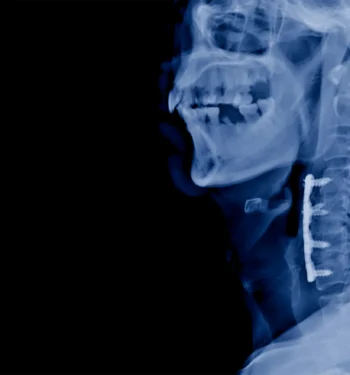
Procedures like microdiscectomy, a common spine surgery for herniated disc, directly relieve pressure on the nerve. Remember that surgery is a structural solution, not a last resort, and frequently what is needed to help obtain the right diagnosis. It is also, oftentimes, the most direct path to lasting relief, with a defined recovery time and measurable outcomes.
What Are the Warning Signs of Nerve Damage or Compression That Require Surgery?
Certain symptoms signal it’s time to move beyond conservative care and ask the question, “Do I need back surgery?” These include:
- Progressive weakness or numbness in the arms or legs
- Loss of bladder or bowel control
- Worsening pain despite treatment
- Imaging that shows significant nerve compression or damage
These are not symptoms to wait on, but rather, indicate the need for a timely evaluation by a spine specialist.
How Do You Choose Between Nonsurgical Treatments and Spine Surgery?
The most important first step is an accurate, comprehensive diagnosis — one that includes advanced imaging and a thorough clinical evaluation by a spine specialist who can assess both surgical and nonsurgical paths. Without that level of clarity, it’s difficult to make an informed decision.
At Goodman Campbell, our collaborative, comprehensive approach allows us to evaluate you, diagnose your condition, and guide you to the right treatment path that best fits your needs and goals.
Depending on your symptoms and diagnosis, your care may begin with interventional pain management focused on reducing pain, improving function, and helping identify the source of your symptoms through diagnostic and therapeutic injections. In other cases, you may first meet with a spine surgeon if imaging and clinical findings suggest that surgery should be considered as part of your treatment plan.
Because our providers work together, many patients benefit from both specialties during their care. A spine surgeon may refer a patient to pain management for diagnostic nerve blocks, therapeutic injections, or nonsurgical treatment. Likewise, a pain management specialist may refer a patient to a spine surgeon when symptoms, imaging findings, or treatment response suggest that a surgical evaluation is appropriate.
The advantage of this integrated approach is that you don’t have to determine which specialist you need before seeking care. Whether you begin with a spine surgeon or an interventional pain management physician, our team can coordinate the next steps and ensure you receive the right treatment at the right time.
Does Physical Therapy Play a Role Before or After Back Surgery?
Yes. Physical therapy is often part of both nonsurgical and surgical care.
Before back surgery, physical therapy may help improve strength, flexibility, posture, and overall function. For some patients, it can reduce symptoms enough to avoid or delay surgery. Even when surgery is ultimately recommended, participating in physical therapy beforehand can help prepare the body for recovery and improve postoperative outcomes.
After surgery, working with a physical therapist can support healing, restore mobility, rebuild strength, and help patients safely return to daily activities.
While physical therapy is highly effective for many spine conditions, it cannot correct certain structural problems, such as significant nerve compression or spinal instability. In those cases, surgery may be necessary to address the underlying cause, while physical therapy remains an important part of the overall treatment and recovery process.
Why Should a Spine Specialist Evaluate You – Not Just Your Primary Care Provider?
Your primary care provider plays an important role, but spinal conditions often require a specialist. A spine specialist can assess imaging, symptoms, and function together to determine whether you need continued conservative care or escalation.
At Goodman Campbell, we offer a key advantage: Both interventional pain management specialists and neurosurgeons practice within the same organization. This allows for an integrated, team-based approach to care with seamless internal referrals when needed. Rather than navigating separate systems, your evaluation is coordinated across specialties, ensuring recommendations are based on your specific diagnosis and the full range of appropriate treatment options.
We are one of North America’s most accomplished back and spine specialty practices. Just as important, we draw on extensive patient outcomes data and a strong foundation of clinical research to guide decision-making, ensuring that recommendations are grounded in evidence, not guesswork. Patients and referring providers also have direct access to our team, ensuring clear communication and continuity of care.
How to Take the Next Step
If you’re asking when to see a spine surgeon, the answer is simple: when you’re unsure what’s actually causing your pain.
The best next step is a diagnostic evaluation. Call our team or request an appointment at:
https://www.goodmancampbell.com/contact/request-appointment/
You’re not committing to surgery. You’re getting clarity — and a path forward that’s built around the real cause of your pain.