Living with chronic pain can feel like an ongoing cycle, especially when treatments only offer temporary relief. At Goodman Campbell, we approach this differently. Our interventional pain management services focus on identifying and treating the structural source of pain, helping patients explore non-opioid alternatives for chronic back and nerve pain that are designed for lasting results.
For many patients dealing with chronic back pain, nerve-related symptoms, or ongoing discomfort, the goal isn’t just short-term pain relief. Rather, it’s finding a sustainable way to manage chronic pain without relying on oral medications. Through advanced, minimally invasive techniques, we help patients regain function, restore mobility, and move forward with confidence.
What Does “Interventional” Mean for Chronic Back and Nerve Pain?
Interventional care is built around a simple but important idea: Treat the source of pain, not just the sensation.
In many cases, chronic pain conditions stem from physical issues such as compressed nerves, inflamed tissue, or degenerative changes in the spine. These structural problems send signals through the nervous system, ultimately reaching the brain as pain. Interventional treatments are designed to interrupt or correct those pain signals at their origin.
Using image-guided, minimally invasive techniques, we can precisely target the area causing discomfort, whether that’s a nerve root, joint, or disc. This approach allows us to deliver effective pain management that addresses both acute and chronic pain, including subacute pain, without relying on oral medication-based solutions.
Good candidates often include patients who:
- Have chronic low back pain or back pain that hasn’t improved with conservative care.
- Seek chronic back pain treatment without opioids.
- Would like to avoid or delay surgery while still pursuing meaningful relief.
How Is Interventional Care Different From General Pain Management?
Traditional approaches often focus on managing symptoms broadly. Interventional care takes a more precise path.
Our interventional team uses targeted procedures to identify and treat what is physically causing the pain, whether that’s nerve compression, inflammation, or joint dysfunction. This is especially important for patients whose pain has persisted despite prior treatment attempts.
At Goodman Campbell, this care is guided by interventional pain management physicians who specialize in conditions of the spine. This depth of expertise allows us to evaluate complex spine conditions more thoroughly and identify root causes that may otherwise go unrecognized or undertreated.
What Non-Opioid Interventional Treatments Are Available for Chronic Back Pain?
When patients ask about non-opioid treatment options for acute and chronic back pain, they’re often looking for clarity: What actually works?
Our approach centers on minimally invasive procedures that target the source of pain and help restore function. These include:
- Nerve blocks for back pain
- Epidural steroid injections for back pain
- Radiofrequency ablation spine procedures
- Spinal cord stimulation
Each option is carefully selected based on your condition, symptoms, and long-term goals. These are not one-size-fits-all treatments. They are tailored solutions designed to help relieve chronic pain or acute pain and improve quality of life.
What Is Radiofrequency Ablation and How Does It Disrupt Pain Signals?
Radiofrequency ablation (RFA) is a highly targeted procedure used to treat certain types of chronic back pain, particularly those related to joint or nerve irritation.
During RFA, controlled electrical energy is applied to specific nerve fibers responsible for transmitting pain. This energy disrupts the nerve’s ability to send pain signals through the central nervous system, effectively reducing the sensation of pain.
RFA is commonly used for:
- Facet joint-related back pain
- Persistent nerve pain treatment situations involving ongoing discomfort
- Conditions involving localized inflammation
Because the procedure focuses on the exact nerves causing symptoms, it can provide longer-lasting pain control compared to more generalized approaches. Relief may last for months, and in some cases, longer, making it a valuable option for patients seeking non-opioid pain treatment.
When Is Spinal Cord Stimulation the Right Option for Nerve Pain?
For patients with persistent or complex nerve pain, spinal cord stimulation (SCS) can offer a longer-term solution.
This technology involves placing a small device near the spinal cord that delivers gentle electrical signals. These signals modify how pain is perceived before it reaches the brain, helping reduce the intensity of symptoms.
SCS is often considered for:
- Sciatica or nerve compression
- Chronic pain following prior spine procedures
- Conditions where other treatment options have not provided sufficient relief
Unlike temporary interventions, spinal cord stimulation is designed as an ongoing therapy — one that can significantly improve daily comfort and function for the right patient.
How Do Nerve Blocks and Injections Help Manage Chronic Pain at the Source?
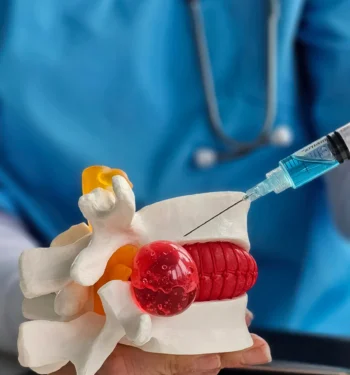
Targeted injections and nerve blocks for back pain are among the most commonly used nerve pain treatment options, and for good reason: They are designed to treat pain at its source, not broadly across the body.
Using advanced imaging, our team guides treatment to the exact location of the structural issue, whether that’s a compressed nerve from a herniated disc, inflammation from spinal stenosis, irritation causing muscle spasms, nerve-related symptoms such as sciatica, or pain originating within the spine itself, such as vertebrogenic pain.
These treatments can:
- Reduce inflammation
- Interrupt pain signals
- Provide short-term pain relief that supports longer-term recovery
Because they are delivered with pinpoint accuracy, these interventions do more than temporarily relieve symptoms. They directly target the underlying cause of pain, helping patients manage pain in a more meaningful, lasting way.
When Is Minimally Invasive Surgery the Right Next Step for Back Pain Relief?
While many patients find relief through interventional care, there are times when a structural issue requires a more direct solution.
Conditions such as severe disc herniation or significant nerve compression may not fully respond to procedures alone. In these cases, minimally invasive spine treatment may provide a more definitive path forward.
One example is microdiscectomy, a targeted procedure used in herniated disc treatment to remove the portion of the disc pressing on a nerve. This approach is designed to:
- Relieve pressure on affected nerves
- Restore function
- Provide durable, long-term relief
Importantly, surgery is very rarely our first recommendation. But when it is the right option, it often delivers the most effective and lasting outcome, especially for patients who first explored alternatives for sciatica treatment without surgery but ultimately need a structural correction.
What Role Does Physical Therapy Play in a Non-Opioid Pain Management Plan?
Interventional care as a non-opioid option for chronic back and nerve pain works best as part of a comprehensive strategy.
In many cases, interventional pain management goes hand in hand with physician therapy for chronic back pain, exercise therapy, and guided physical activity. An integrated approach helps strengthen the body, improve mobility, and reduce the likelihood of recurrence.
Rather than focusing solely on the episode of pain, physical therapy addresses how the body moves and functions, helping patients build resilience over time.
For many patients, this combination of interventional procedures and movement-based therapy form the foundation of a sustainable, non-opioid treatment approach.
How Do We Build the Right Pain Management Plan for Each Patient?
Every patient’s experience with pain is different. That’s why our process is built around careful evaluation and individualized care.
We begin with a thorough review of your medical history, imaging, and symptoms. From there, our team develops a tailored pain management plan that prioritizes:
- The option that is the least invasive yet still effective
- Long-term outcomes, not temporary fixes
- Addressing the root cause of pain
Because we treat everything from common degenerative conditions to the most complex spine cases, we’re able to adapt our approach to each patient’s needs. Our outcomes data and clinical experience inform every recommendation, ensuring that each step is purposeful and grounded in evidence.
Just as importantly, our patients have direct access to their care team. We believe that communication matters, and understanding your options is a key part of achieving meaningful relief.
Take the Next Step Toward Lasting Pain Relief
If you’ve been living with chronic pain or are experiencing acute pain that is impacting your quality of life, exploring non-opioid options can be an important step toward finding real, lasting relief.
Learn more about interventional pain management Indiana treatment options at Goodman Campbell and schedule a consultation. We’re here to help you move forward with clarity, confidence, and a plan built around you.