The most effective approach is a targeted, cause-based plan that reduces inflammation around the sciatic nerve, relieves pressure on the affected nerve roots in the lumbar spine, and controls severe pain while the tissue heals. For most people, this means a combination of guided physical therapy, posture and movement correction, and anti-inflammatory strategies for lasting pain relief. In cases of severe sciatica or persistent symptoms, epidural steroid injections can quickly reduce inflammation and help with relieving pain so normal movement becomes possible again.
For a full overview of sciatica symptoms, causes, and care options, visit our sciatica condition overview.
If you’re living with sciatica pain, you know how disruptive the sciatica symptoms can be—whether it’s sharp, shooting discomfort down the leg or a constant ache that limits daily activity. For many people searching for sciatica treatment in Indiana, lasting relief can feel like trial and error, but the key is identifying the exact source of nerve compression and choosing a treatment plan that addresses it directly.
While some patients respond well to conservative treatment such as physical therapy and medication, others may need advanced neurosurgical care to relieve nerve compression and restore function. At Goodman Campbell Brain and Spine, patients have direct access to one of the most accomplished neurosurgical and interventional pain specialist teams in the world, bringing advanced expertise to Indiana communities.
What Is Sciatica and Why Does Treatment Success Depend on the Underlying Cause?
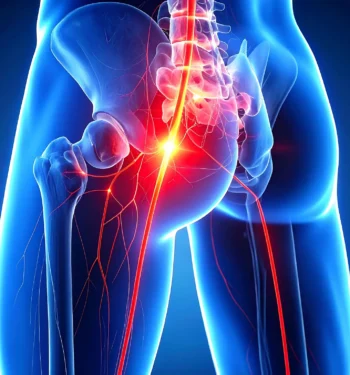
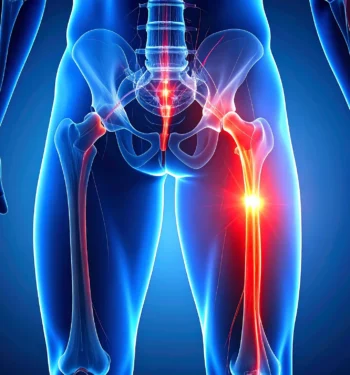
“Sciatica” isn’t a single condition. It’s a symptom of irritation or compression of the sciatic nerve, which runs from your lower back through your hips and down your legs. The pain can feel sharp, burning or radiating, often accompanied by muscle weakness, tingling or numbness.
Because sciatica pain stems from different issues within the spinal canal, identifying the root cause is key to finding a truly effective solution. Neurosurgeons specialize in pinpointing where and how the nerve roots are affected — whether by a herniated disc, spinal stenosis, or another structural problem.
To understand the most common causes of sciatic nerve pain, see our What Causes Sciatica Pain?
What Spine Conditions Cause Sciatica Pain?
Several spine conditions can trigger sciatica symptoms by irritating the nerves in the lower spine that become the sciatic nerve:
- Herniated disc: When the soft inner portion of a disc pushes through its outer layer, it can press directly on nearby spinal nerves, causing pain that radiates down the leg.
- Spinal stenosis: Narrowing of the spinal canal reduces space for the nerves, often resulting in leg pain, numbness or nerve pain that worsens when standing or walking.
- Degenerative disc disease: As discs naturally wear down, vertebrae may shift or compress nerves.
- Spondylolisthesis: A slipped vertebra can misalign the spine, creating tension and compression around the sciatic nerve.
- Trauma or injury: Accidents, falls or repetitive strain can damage discs or ligaments.
- Cauda equina syndrome: A rare but serious emergency in which nerve compression at the base of the spine affects bowel or bladder control, requiring immediate medical attention.
Why Does Pregnancy Cause Sciatica?
Pregnancy can change posture and pelvic alignment, placing additional pressure on the sciatic nerve in the lumbar spine. Most pregnancy-related sciatica is temporary and can be managed with gentle physical therapy and posture adjustments. However, if severe pain persists, a specialist can rule out underlying structural issues.
What Are the Most Successful Conservative Treatments for Sciatica?
Most sciatica patients begin with conservative treatment designed to reduce inflammation and restore function. For mild to moderate cases, these methods can significantly relieve pain and improve mobility. Common approaches include:
- Activity modification and rest: Offers short-term relief while avoiding prolonged inactivity.
- Anti-inflammatory medications: To reduce swelling and irritation around the nerve.
- Heat and ice therapy: Alternating temperatures to relax muscles and decrease inflammation.
- Physical therapy: Targeted exercises to improve spinal stability, flexibility and nerve mobility.
- Epidural steroid injections: Used when pain persists, providing temporary pain relief while the patient continues rehabilitation.
These approaches often relieve sciatica, especially when it is caused by minor nerve compression or inflammation. However, if symptoms persist despite several weeks of conservative care, further evaluation is essential.
How Effective Is Physical Therapy for Treating Sciatica?
Physical therapy plays a crucial role in recovery. Customized programs focus on strengthening core muscles, improving posture, and increasing flexibility to relieve pressure on the sciatic nerve. Therapists may guide you through extension-based exercises for herniated disc pain or flexion-based movements for spinal stenosis — both of which target the underlying nerve roots compression causing sciatica symptoms.
Therapists may guide you through extension-based exercises for herniated disc pain or flexion-based movements for spinal stenosis. Regular therapy not only reduces current back pain and leg pain, but also helps prevent recurrence.
However, when chronic pain or severe pain persists despite diligent therapy, it may be a sign that further evaluation is needed to correct the underlying anatomical problem. A spine specialist at Goodman Campbell can provide you with a clear diagnosis and treatment plan to promote healing and comfort.
When Is Surgery the Most Successful Treatment for Sciatica?
Sciatica surgery can be highly successful for patients who have exhausted conservative treatment without improvement, or whose imaging shows significant nerve root or nerve compression. Surgery aims to relieve pressure on the affected spinal nerves, reduce inflammation, and restore normal nerve function.
Surgical treatment may be indicated if you experience:
- Persistent leg pain or nerve pain lasting more than 6–8 weeks.
- Muscle weakness or progressive numbness.
- Severe symptoms that affect walking, balance or bladder/bowel control.
- Imaging that confirms a compressive lesion such as a herniated disc or spinal stenosis.
When performed by fellowship-trained neurosurgeons, surgery often provides significant and lasting relief.
What Will Permanently Make Sciatica Go Away?
Lasting pain relief from sciatica pain comes from directly addressing the cause of sciatic nerve compression. For some, that means rebuilding strength through therapy; for others, it requires removing the source of compression through microsurgical techniques. At Goodman Campbell, neurosurgeons carefully evaluate each case using advanced imaging and evidence-based diagnostics to ensure you receive the treatment best suited to your condition.
At Goodman Campbell, our neurosurgeons carefully evaluate each case using advanced imaging and evidence-based diagnostics. This approach ensures you receive the treatment best suited to your condition, whether that’s a conservative treatment plan or surgical intervention. In this way, we help you truly relieve sciatica pain and reclaim your quality of life.
How Do Neurosurgeons Treat Sciatica Caused by Herniated Discs?
When a herniated disc causes significant sciatica pain, surgery may be recommended to remove the damaged disc material pressing on the nerve roots. Microdiscectomy is one of the most common procedures — minimally invasive, involving a small incision, and allowing most patients to quickly return to normal activity.
In cases where there’s instability or recurrent herniation, a spinal fusion surgery may be needed to permanently stabilize the spine. This procedure connects two or more vertebrae, relieving nerve compression and preventing future motion at the damaged segment.
Because Goodman Campbell’s surgeons specialize in both simple and complex procedures, our patients benefit from a range of advanced techniques that reduce recovery time and optimize outcomes.
How Do You Choose the Right Sciatica Treatment Specialist?
Choosing the right specialist is essential when seeking sciatica pain relief. Neurosurgeons have the most extensive training in diagnosing and correcting disorders of the spinal cord, lumbar spine, and nerve roots. Goodman Campbell neurosurgeons complete seven to eight years of residency — more than any other surgical specialty — focusing on the nervous system and severe sciatica conditions.
What Is the Difference Between a Neurosurgeon and an Orthopedic Surgeon for Spine Care?
While both types of specialists perform spine surgery, their training and focus differ significantly. Orthopedic surgeons train broadly in bone and joint disorders, including some spine work. Neurosurgeons, by contrast, spend their years of specialization studying the nervous system, performing many more procedures involving the spinal cord and nerve roots.
This distinction matters for patients with sciatica symptoms, where small differences in anatomy can determine whether pain resolves completely. Neurosurgeons are deeply familiar with both microscopic anatomy and nerve-sparing techniques, which leads to more precise decompression and a lower risk of recurrence.
What Success Rates Can You Expect From Different Sciatica Treatments?
Success rates vary based on the cause and severity of sciatic nerve or nerve roots compression:
- Conservative treatments: Effective for mild sciatica pain, particularly when paired with lifestyle changes and physical therapy. Most patients see meaningful pain relief within 4–6 weeks.
- Epidural steroid injections: Highly effective for relieving pain in the short term — epidural steroid injections can reduce inflammation around the nerve roots and provide relief that lasts weeks to months, allowing rehabilitation to progress.
- Microdiscectomy: Studies show significant pain relief for most patients with lumbar spine herniation — high satisfaction and low recurrence rates for appropriately selected cases.
- Spinal fusion: Effective for patients with instability or advanced degeneration; provides lasting structural stability and relief from severe sciatica in the lumbar spine.
- Overall surgical outcomes: When performed by fellowship-trained neurosurgeons, surgery for severe pain from sciatica symptoms often provides significant and lasting pain relief.
How Do Patient Outcomes Data Help Predict Treatment Success?
One reason patients from across the region trust Goodman Campbell is our commitment to transparency and research. Our practice maintains one of the nation’s most robust patient-reported outcomes databases, tracking recovery, function, and satisfaction metrics over time.
This evidence-based approach ensures your care plan isn’t based on guesswork or one physician’s opinion. Instead, it’s guided by real-world results from thousands of cases. With direct access to specialists and efficient scheduling throughout Indiana, patients receive expert care in a timely manner.
The Most Successful Sciatica Treatment Begins With the Right Diagnosis
Ultimately, the most successful treatment for sciatica starts with an accurate diagnosis from a specialist who understands the spine’s full complexity. That’s why care at Goodman Campbell Brain and Spine begins conservatively and progresses to advanced neurosurgical intervention only when needed.
Whether your sciatica stems from a herniated disc, spinal stenosis, or another source of nerve pain, Goodman Campbell’s neurosurgeons are here to help you find lasting relief and return to the activities you love.
Schedule Your Consultation
If you’re experiencing persistent sciatica or leg pain, it’s time to see a specialist. Goodman Campbell offers direct access to neurosurgeons, interventional pain management physicians, convenient locations, and world-class sciatica treatment in Indiana, so you can move forward confidently and reclaim your quality of life. Contact Goodman Campbell to request an appointment.