If you’re dealing with sciatica, you’ve probably heard conflicting advice about whether walking helps or hurts. The short answer: Whether walking is good for sciatica depends on your specific condition and how you walk, but for most people, gentle walking can actually provide pain relief and support healing.
Understanding when walking is good for sciatica pain and when it might make things worse can help you better manage your condition. Let’s explore how walking affects sciatic nerve pain and how to approach it safely.
Is Walking Good for Sciatica Pain?
Yes, walking is good for sciatica for most people experiencing mild to moderate symptoms. Walking promotes blood flow to the affected area, which delivers oxygen and nutrients that support healing while flushing out inflammatory chemicals. This gentle movement helps prevent muscle stiffness that develops from prolonged inactivity.
Walking also triggers your body’s natural pain relief mechanisms by releasing endorphins — your body’s built-in pain relievers that help reduce pain and improve your mood.
What Are the Benefits of Walking With Sciatica?
Adding a simple daily walk to your routine can make a meaningful difference in managing sciatica and supporting overall spinal health.
- Strengthens core and leg muscles: Regular walking builds the muscles that stabilize your spine, helping reduce strain and pressure on the sciatic nerve.
- Improves posture: Walking with proper form promotes healthy spinal alignment, which can minimize nerve compression and ease sciatica pain.
- Reduces pressure on the sciatic nerve: Better muscle support and alignment work together to relieve stress on irritated nerves.
- Supports a healthy weight: Maintaining a healthy weight through walking decreases the load on your spine and lower back.
Is It Better to Rest or Walk with Sciatica?
When you’re experiencing sciatica pain, it’s common to think that complete rest is the fastest way to recover. While short periods of rest can help during intense flare-ups, too much inactivity often makes sciatica symptoms worse by increasing stiffness and placing more pressure on the lower spine. In many cases, gentle movement is more effective for chronic low back pain management, as it improves circulation, keeps the joints mobile, and helps reduce sciatica nerve pain without overloading the back.
So, is walking good for sciatica? For most people, light and controlled sciatica pain walking can support healing, improve posture, and strengthen the muscles that protect the spine. The key is to move at a comfortable pace and stop if you notice worsening pain, sharp radiating discomfort, or increased numbness. Paying attention to proper form and choosing flat, supportive surfaces can help you avoid sciatica pain walking while still getting the benefits of safe, consistent activity.
What Is Sciatica and Why Does It Cause Pain?
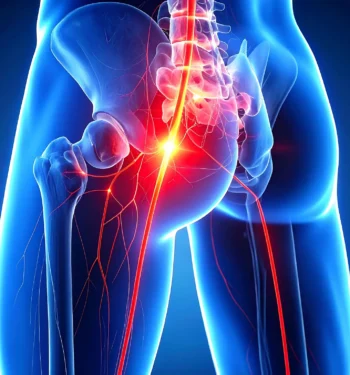
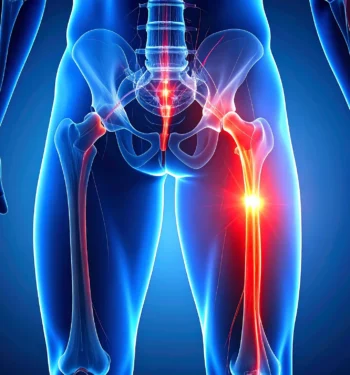
Sciatica occurs when the nerve roots that form your sciatic nerve, the longest nerve in your body, become irritated or compressed, most often in the lower back. This compression can create radiating pain that travels from your lower back through your buttocks and down one or both legs, sometimes accompanied by numbness, tingling, or shooting pain.
How Does the Sciatic Nerve Become Compressed?
Several conditions can compress the nerve roots that form the sciatic nerve, with a herniated disc being the most common culprit. When the soft cushioning between your vertebrae bulges or ruptures, it can press directly against the nerve root. Spinal stenosis (narrowing of the spinal canal) also creates pressure on the nerve roots, particularly in older adults. Other causes of compression include bone spurs or direct compression of the sciatic nerve, such as with piriformis syndrome or prolonged sitting.
What’s the Worst Thing You Can Do for Sciatica?
Complete bed rest is often the worst approach for sciatica. While it might feel instinctive to avoid movement when you’re experiencing nerve pain, prolonged inactivity weakens your core muscles, increases stiffness, and can actually prolong recovery. Your body needs controlled movement to heal effectively.
When Should You Avoid Walking With Sciatica?
You should avoid walking when experiencing severe, acute sciatica pain that significantly limits your mobility or causes unbearable discomfort with each step. Immediately stop walking if you notice progressive weakness in your leg or foot, especially “foot drop,” or difficulty lifting the front part of your foot. During or after walking, if your pain increases dramatically, rather than improving gradually, reassess your approach. Consulting with your healthcare provider is always a good idea if what you’re trying isn’t helping.
How Should You Walk if You Have Sciatica?
Proper walking posture makes all the difference when managing sciatica pain while walking. Stand tall with your shoulders back and relaxed, keep your head level, and engage your core by gently pulling your belly button toward your spine. Avoid leaning forward or to one side, as poor posture shifts weight unevenly and increases nerve compression.
Take shorter, more controlled steps rather than your normal stride length. Land on your heel and roll through to your toes smoothly, avoiding jarring impacts.
How Much Should You Walk With Sciatica?
Unless your doctor recommends otherwise, it’s typically safe and smart to start with short walks of 5–10 minutes several times per day rather than one long session. This approach keeps movement beneficial and prevents overexertion. Pay attention to your body’s signals — if pain increases during your walk, stop and rest.
Gradually increase your walking duration as symptoms improve, adding a few minutes each week. Walking on flat, even surfaces is ideal when you’re starting out.
What Is the Fastest Way to Cure Sciatica?
There’s no instant cure for sciatica, but a comprehensive approach guided by a healthcare professional provides the fastest relief. Effective conservative measures include applying heat to your lower back to increase blood flow and relax tight muscles, while gentle walking helps you maintain mobility and supports healing.
Physical therapy offers targeted strengthening exercises that address the underlying causes of your nerve compression. A physical therapist can identify movement patterns and muscle imbalances contributing to your condition. For moderate to severe cases, interventional pain management specialists may recommend spinal injections to reduce inflammation directly around the affected nerve roots.
What Is the One Best Exercise for Sciatica?
The knee-to-chest stretch often provides immediate relief by gently opening the spaces where nerve roots exit your spine. Lie on your back, slowly bring one knee toward your chest, hold it with both hands for 20-30 seconds, then switch sides. This simple movement can help relieve sciatic nerve pain by reducing compression.
However, the “best” exercise varies by individual. Weak core muscles might benefit most from gentle core exercises, while tight hip flexors respond better to hip stretches.
When Should You See a Specialist for Sciatica?
Goodman Campbell can begin conservative sciatica treatment with you or review your progress if other therapies haven’t provided comfort. Experts suggest contacting a neurosurgery specialist if your sciatica symptoms persist beyond 4 weeks despite conservative treatment, or if pain medication and physical therapy aren’t providing adequate relief. Research shows that most sciatica cases improve with conservative treatment within 6 weeks, but persistent symptoms suggest underlying structural issues that may require more advanced intervention.
Seek immediate evaluation if you experience progressive leg weakness, loss of sensation, or changes in bladder or bowel function. These indicate significant nerve compression that could lead to permanent damage.
At Goodman Campbell, we treat both simple and complex spine conditions with advanced spine expertise, offering more specialized training than orthopedic or other approaches. Our patients gain access to one of the most accomplished neurosurgery teams in the world, backed by a collaborative approach, commitment to advancing research in our field, and extensive patient outcomes data.
If sciatica pain is limiting your life, call Goodman Campbell at 317-396-1300 or visit our spine care page to learn how our neurosurgeons can help you find lasting relief.