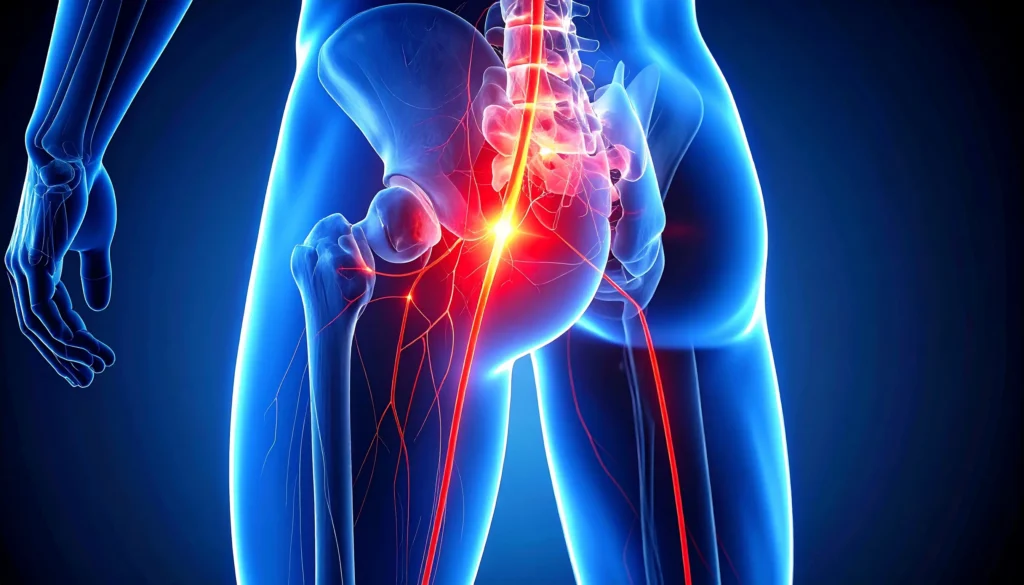
Sciatica can feel overwhelming. With it, you might experience sharp leg pain, numbness, weakness, or burning sensations that can interrupt daily life. Many patients wonder early on: How effective are nonsurgical treatments for sciatica, and can meaningful relief really happen without an operation? The reassuring truth is that most people with sciatica improve through conservative treatment, especially in the first several weeks. In fact, many patients begin noticing improvement in just a few weeks with conservative care.
For adults exploring whether nonsurgical options can be effective, evidence shows that physical therapy, medications, and epidural steroid injections often provide significant relief before surgery is ever needed. And when patients ask how effective nonsurgical treatments for sciatica really are, the data consistently shows that the majority recover without surgery. This is especially true when their care is guided by spine specialists who understand both back pain treatment strategies and nerve-related symptoms.
Can Sciatica Heal Without Surgery?
In most cases, yes. Sciatica is typically caused by irritation or compression of the sciatic nerve roots, often due to a herniated disc, spinal stenosis, or inflammation in surrounding tissues. Whether someone is experiencing acute back pain, lumbar radiculopathy, or sciatica symptoms linked to the piriformis muscle, the body often improves as inflammation settles.
Clinical practice guidelines support starting with conservative treatment, because most patients recover gradually with the right plan and attentive follow-up. Our spine specialists at Goodman Campbell focus on conditions of the spine with personalized treatment that promotes healing. They can ultimately help relieve spine-related nerve pain, and contribute to reducing leg pain intensity and patterns when they are linked to the spine and interfere with daily life. Priority is also paid to restoring mobility while monitoring for any signs of additional severe pain, progressive weakness, or red-flag symptoms.
How Do Physical Therapy and Exercise Help Sciatica?
Physical therapy is one of the most effective first-line treatments for lumbar radiculopathy and spine-related leg pain. Targeted exercises reduce pressure on the nerve root, improve core stability, and promote healing in cases of a herniated lumbar disc (also known as lumbar disc herniation).
Therapists use stretching, strengthening, and mobility work to decrease pain intensity and improve function. Many patients with sciatica begin experiencing meaningful improvement within weeks of consistent physical therapy, especially when paired with home exercises.
Why Do Epidural Steroid Injections Work for Nerve Pain?
For patients whose nerve pain limits daily activities, epidural steroid injections and other steroid injections can reduce inflammation around the irritated nerve root. These injections can offer weeks to months of relief, making them an effective tool for both acute sciatica and chronic sciatica.
At Goodman Campbell, our interventional pain management physicians perform epidural steroid injections, selective nerve blocks, and other targeted procedures that help reduce swelling, decrease leg pain, and restore function. These approaches are supported by randomized controlled trial data demonstrating reduced leg pain and improved quality of life for many patients.
What Is the Most Successful Treatment for Sciatica?
The answer depends on each patient’s symptoms, imaging results, and response to conservative care. For most people, the most successful treatment begins with:
- Physical therapy
- Medication for sciatica (aimed at nerve pain rather than general “painkillers”)
- Interventional pain management options such as steroid injections
This integrated approach often provides sufficient sciatica relief to avoid or delay surgical intervention.
How Effective Are Conservative Treatments for Chronic Sciatica?
Even patients with longer-lasting symptoms can benefit from structured, evidence-based nonsurgical treatment. Although chronic sciatica may take more time, many patients still experience substantial improvements in pain intensity, function, and daily activity levels.
Our team carefully evaluates each patient for any signs of adverse events, worsening leg pain, or progressive neurological symptoms. When conservative options are maximized without enough relief, our neurosurgeons may recommend surgery.
Is Surgical or Nonsurgical Treatment Better for Sciatica?
It’s not an either-or decision. At Goodman Campbell, our neurosurgeons and interventional pain management specialists work collaboratively. Surgery is reserved for cases where nerve compression remains significant or symptoms fail to improve despite appropriate conservative treatment.
When surgery becomes the best option, we may consider a microdiscectomy, a minimally invasive procedure that removes the portion of the disc pressing on the nerve root. Many patients experience rapid improvement in leg pain afterward.
What Does Research Show About Reducing Leg Pain Without Surgery?
Research consistently shows that a large majority of patients improve with nonsurgical care. Conservative treatment often provides relief sufficient to delay or avoid surgery altogether, even for those with a herniated disc causing notable nerve pain.
How Long Does It Take for Conservative Treatment to Work?
Many patients begin improving within 4–6 weeks, and recovery often continues over several months. Staying consistent with physical therapy, medication management, and interventional care gives the sciatic nerve the best chance to heal.
How Does Goodman Campbell Approach Nonsurgical Sciatica Treatment?
Goodman Campbell is one of North America’s largest and most progressive neurosurgical practices, with subspecialized expertise and multiple locations across Indiana, including Indianapolis, Carmel, Noblesville, Greenwood, and Avon.
Our model is unique: interventional pain management physicians and neurosurgeons work side-by-side, ensuring every patient receives a comprehensive evaluation and that all reasonable conservative options are exhausted before considering surgery.
If you’re experiencing persistent leg pain, back pain, or sciatica symptoms, you don’t have to navigate the uncertainty alone. Call us or schedule an appointment to talk with our spine care team. We’re here to help you find the relief you deserve.