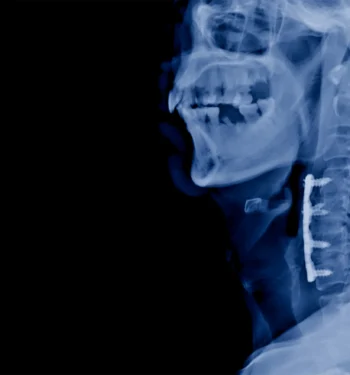
For most patients, pain related to anterior cervical discectomy and fusion falls into the category of “real, but manageable.” Though perhaps not entirely absent, ACDF nerve pain after surgery is typically less severe (and less disruptive) than the nerve pain that initially drove them to seek help in the first place. This is good news, especially as patients weigh the risks and benefits of whether such a procedure is right for them.
How Do the Anterior and Posterior Approaches Compare When It Comes to Pain?
Which specific cervical fusion approach is utilized can have a significant impact on pain levels during and after surgery. Indeed, cervical fusion performed anteriorly (meaning the surgical incision is made at the front of the neck, not the back) can result in levels of postoperative muscle pain that are less intense. This is because during an ACDF procedure, soft tissues and muscles are gently moved aside, versus being cut through as in posterior cervical surgeries.
Patients who undergo the less intrusive ACDF procedure are frequently surprised by how manageable their pain is, especially in comparison to what they may have been expecting going into the surgery.
What Types of Pain Are Normal After ACDF Surgery?
Patients can generally expect a few different “types” of pain after receiving ACDF surgery. These can include:
- Neck and incision soreness: Neck pain after cervical fusion is both very expected and likely short-lived. Since the incision into the neck itself is quite small, incision healing is usually relatively quick.
- Throat soreness and swallowing difficulty: Throat pain after ACDF is very common within the first week or two after surgery. It occurs as a direct result of the ACDF approach temporarily moving the esophagus, and typically resolves on its own within a couple of weeks.
- Upper back and shoulder pain: Shoulder pain after ACDF surgery may be surprising since it’s not located in the same area as where the surgery was performed. Fusion surgery generally alters the mechanics of attached muscles, meaning that time may be required for adjustment and result in temporary discomfort. Do not be alarmed if back/shoulder pain is present — it’s a common and temporary discomfort problem, one that usually resolves on its own.
- Arm pain and tingling that persists or briefly worsens: Nerve roots that were compressed for months (or even years) usually require time to heal after decompression, resulting in arm pain after cervical fusion. While some patients do report experiencing a temporary increase in symptoms before they ultimately improve, it’s important to remember that this is a common and recognized byproduct of the healing process, not a complication.
When Should You Be Concerned About Pain After ACDF?
While ACDF is a very safe and tolerable procedure, like any major surgery, there are a few “red flag” symptoms that patients should be aware of post-procedure. These can include signs of infection at the incision site, new or rapidly worsening weakness or numbness, difficulty breathing, or problems swallowing.
At Goodman Campbell, our team of experienced neurosurgeons is available should any unexpected symptoms arise. At all points before, during, and after the surgery, patients have direct access to their care team.
For more information on what you can expect while healing and what sort of timeline you can expect, visit our ACDF overview page, which can be found here.
How Does ACDF Pain Compare to Presurgery Pain?
It’s reasonable to assume that if you are looking into undergoing ACDF, you’re likely already living with chronic nerve compression pain. While the specific “form” such pain can take varies — from burning, shooting pain, to muscle numbness, to even just weakness that isn’t responding to conservative care — the end result is often the same: significant interference with everyday life.
The good news? For many patients, nerve pain relief can be found quickly, usually within the first few days after surgery. In fact, in some cases, arm pain that was considered “severe” presurgery is noticeably reduced by the time the patient leaves the hospital. So while short-term surgical soreness is expected, it’s important to know that ACDF recovery pain is typically easier to manage than the presurgical chronic pain.
Complete nerve healing takes time — sometimes weeks to months, depending on how long the nerve was compressed prior to surgery. But the ultimate prognosis after surgery is typically positive, one that sees gradual improvement and relief, which is preferred by many patients compared to living with the same ongoing pain.
Why Does Choosing an Experienced Neurosurgeon Matter?
ACDF requires careful surgical technique in a part of the neck where the spinal cord and nerve roots are in close proximity to the surgical site. Neurosurgeons specialize in disorders affecting the brain, spinal cord, and peripheral nerves, and their training includes an in-depth understanding of neural anatomy — an important area of expertise when performing cervical spine procedures such as ACDF.
Having a neurosurgeon who can bring that depth of expertise and experience into every aspect of your ACDF procedure — from planning to execution — is important to ensure a safe, effective outcome with minimal tissue disruption. That’s where Goodman Campbell comes in.
Goodman Campbell is a global leader in brain and spine care, as well as a center for neurosurgery training and research in the United States. Our patients have direct access to their care team throughout their recovery, meaning that you will be supported and cared for each step of the way.
To get started with Goodman Campbell, request a consultation here or call us at 317-396-1300.