For many adults living with chronic pain or experiencing acute pain, exploring interventional pain management services can feel like a big step. It’s natural to have questions, especially about what to expect after a procedure and whether side effects will impact daily life. Our goal is to provide clear, honest answers so patients can move forward with confidence.
What Is Interventional Pain Management?
Interventional pain management focuses on identifying and treating the underlying cause of pain using targeted, minimally invasive procedures, rather than simply masking symptoms.
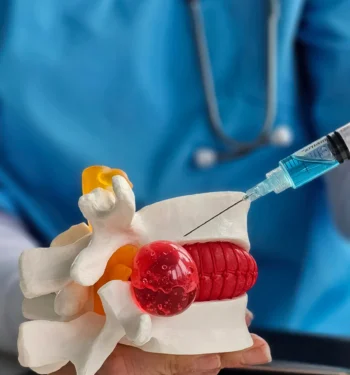
Our interventional pain management team offers a range of interventional pain procedures, including epidural steroid injections (such as cervical epidural steroid injections, lumbar epidural steroid injections, and transforaminal epidural steroid injections), facet joint injections, medial branch nerve blocks, radiofrequency ablation, peripheral nerve blocks, peripheral nerve stimulation, the Intracept® Procedure, spinal cord stimulation, and other interventional spine procedures.
These minimally invasive procedures are designed to interrupt pain signals, reduce inflammation, and restore function. They often provide effective pain relief without the need for more invasive procedures like spine surgery.
What Side Effects Are Most Common After Interventional Pain Procedures?
Most side effects of interventional pain management are mild and temporary. Because these procedures are minimally invasive (and performed on an outpatient basis), immediate adverse events are typically limited and short-lived.
Patients often return home the same day and resume normal activities within a short period. While every case is different, the overall risk profile is low. This is especially true when procedures are performed by an experienced neurosurgical team.
What Should Patients Expect Right After a Procedure?
After interventional pain procedures, it’s common to experience temporary, localized effects near the treatment area. These may include:
- Mild soreness or bruising at the injection site
- Temporary numbness or weakness due to the local anesthetic
- Slight changes in blood pressure, including vasovagal reactions
- A brief increase in discomfort before longer-lasting pain relief begins
These responses are expected and typically resolve quickly as the body adjusts following the procedure.
Are There Less Common Risks Patients Should Know About?
While uncommon, more serious adverse effects can occur. These may include infection, bleeding into soft tissue, nerve irritation, epidural hematoma, or allergic reactions to a local anesthetic or contrast material.
These adverse events are rare, and careful attention to risk factors helps minimize them. Our team at Goodman Campbell performs a thorough physical exam, reviews each patient’s history, and uses imaging guidance to ensure precise treatment delivery. When performed by experienced spine specialists, interventional pain procedures are considered safe and well-tolerated.
How Does Our Team Help Reduce These Risks?
At Goodman Campbell, patients have access to a world-class, comprehensive team of spine specialists, right here in Indiana. Our interventional pain management physicians and neurosurgeons have highly specialized training in the spinal cord, nerve pathways, and pain signals; training that goes beyond what is typically included in orthopedic programs.
We use imaging-guided precision, individualized care plans, thorough pre-procedure physical exams, and close follow-up to reduce risk and improve outcomes. This level of expertise allows us to treat both simple and complex spine conditions with confidence and accuracy, while also providing direct access to our care team throughout the process.
Do Interventional Pain Procedures Provide Long-Lasting Relief?
While results vary by procedure and individual, many patients experience longer-lasting pain relief compared to conservative pain management approaches. Because interventional pain management treats the underlying cause of pain rather than simply masking pain signals, outcomes tend to be more durable and meaningful over time.
Relief may last for months, and in some cases longer, depending on the procedure. Treatments such as spinal cord stimulation or radiofrequency ablation can provide extended benefits, often helping patients avoid or delay spine surgery. When interventional techniques alone are not sufficient, our interventional pain management physicians collaborate with our neurosurgical team to determine whether a surgical approach is the most appropriate next step to fully address the condition.
When Should You Talk to Someone About Interventional Pain Management?
Interventional pain management may be appropriate for those living with chronic pain, especially neck pain or back pain, that hasn’t improved with conservative care. If you’re unsure whether your symptoms have reached that point, our guide on when to seek interventional pain management walks through how pain levels are measured and what patterns signal it’s time for a specialist evaluation.
When pain begins to interfere with daily life, work, or mobility, it may be time to explore options that focus on the root cause and long-term function.
To learn more or take the next step, we encourage you to schedule a consultation.