Kate Hannon and Aidan Rezner reflect on a year of research, learning, collaboration, and growth as part of the Goodman Campbell Brain and Spine Gap Year Student Program.
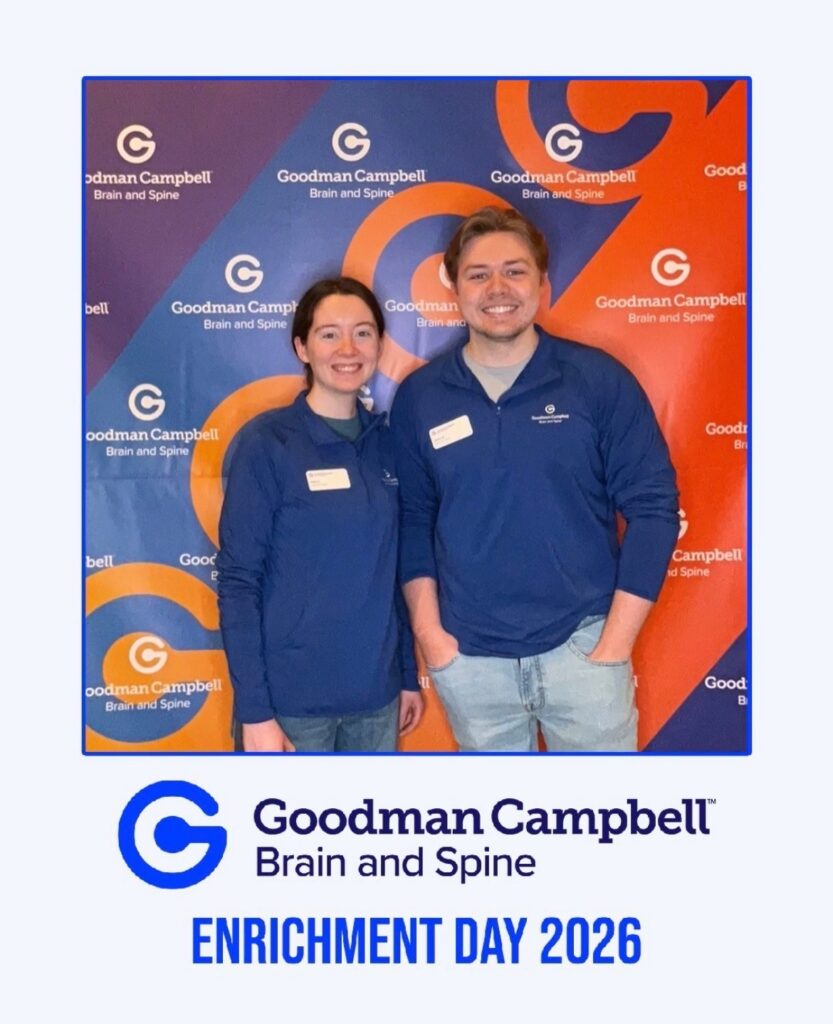
For the second year of the GCBS Gap Year Student Program, we once again had the privilege of working alongside two exceptional future physicians: Kate Hannon and Aidan Rezner. What began as an opportunity for aspiring medical students has quickly become an impactful part of our organization. From presenting at national conferences to gaining hands-on exposure to patient care and neurosurgery, Kate and Aidan embraced every opportunity with curiosity, compassion, and professionalism. We are excited to share more about their journeys, experiences, and future plans as they reflect on their time at Goodman Campbell Brain and Spine. We sat down to reflect on their experience this year and asked each of them the following questions.
Have you always been interested in the medical field?
Kate
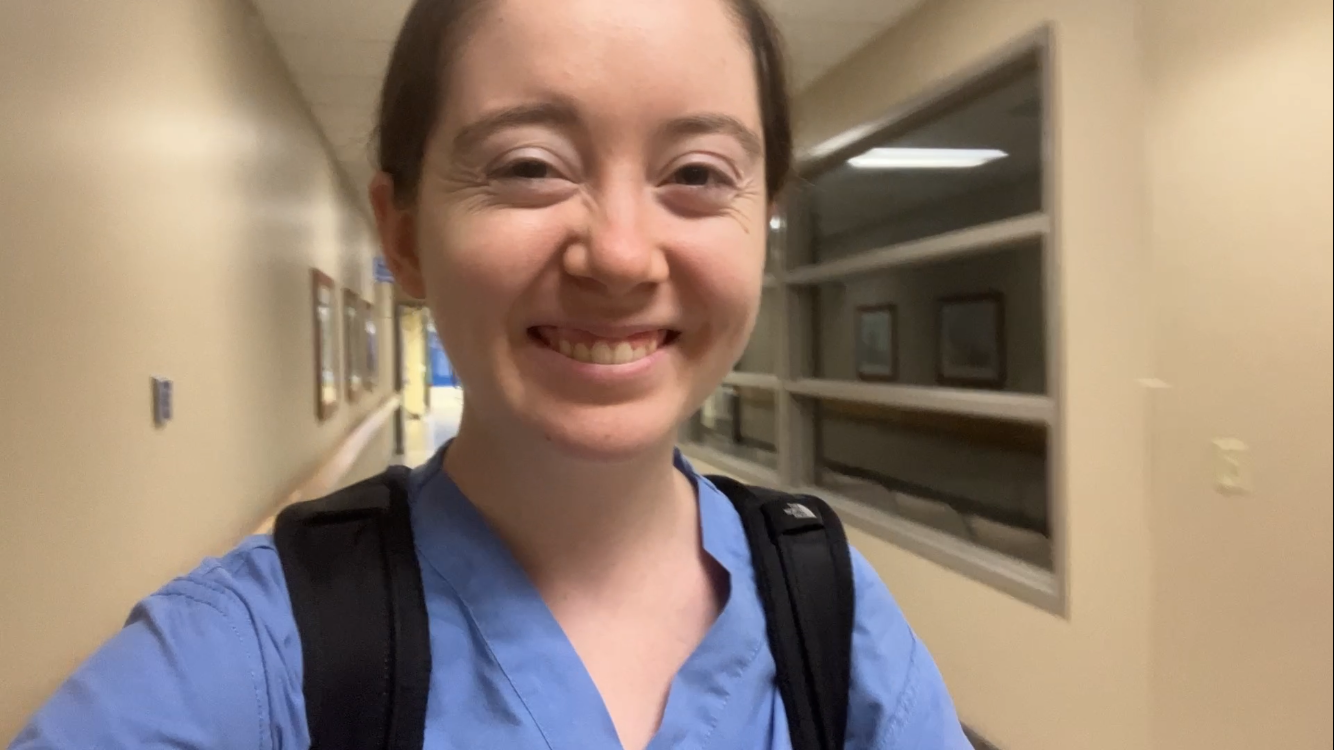
“I wouldn’t say I’ve always been interested in the medical field, but I started to develop a bit of a fascination in middle school, around the time when two of my grandparents were suffering from dementia and I got a first-hand look into medicine and caregiving. Late in high school was when I began seriously considering a career in medicine. It’s a long and challenging road, but I couldn’t see myself in any other field.”
Aidan
“As far back as I can remember, I’ve always wanted to be a doctor, though it’s hard to pinpoint exactly where that passion began. While no one in my family works in medicine — my mom is a high school teacher and my dad is a bartender — I’ve always been fascinated by the human body and how it works. I still remember learning about the excretory system in fifth grade and thinking it was the coolest thing I had ever studied. Over time, that curiosity evolved into a deeper appreciation for medicine as a profession uniquely centered on helping others through some of their most vulnerable moments. The opportunity to walk alongside patients in their health journey and help them regain their fullest selves is something I find incredibly meaningful, and I would be honored to be part of that work in the future.”
What areas of medicine interest you most?
Kate
“For several years, I’ve been most interested in pediatric oncology. There are lots of specialties I have yet to explore, though, so I’m keeping an open mind and I look forward to learning more.”
Aidan
“One of my first mentors in medicine was a gerontologist. I first met her in high school when I was delivering groceries as part of a shopping service I started during the pandemic, and she opened my world to the great need for doctors interested in geriatric medicine and the care of the aging population. I have spent much of my undergraduate career hoping to better understand the unique privilege of caring for older adults, and it is a mission I hope to continue in my career as a physician. I would love to work in the treatment and care of Alzheimer’s disease and related dementias. That work perhaps lends itself most neatly to neurology, but ultimately I am open to any specialty where I feel I can best fulfill my mission of upholding dignity and best possible outcomes in the elderly population.”
What goals did you have prior to starting your gap year?
Aidan
“I am incredibly grateful to have taken a gap year as I feel my knowledge about medicine, research, and surgical care has grown exponentially. In my time at Notre Dame, my research focused on qualitative studies involving personhood at the end of life.
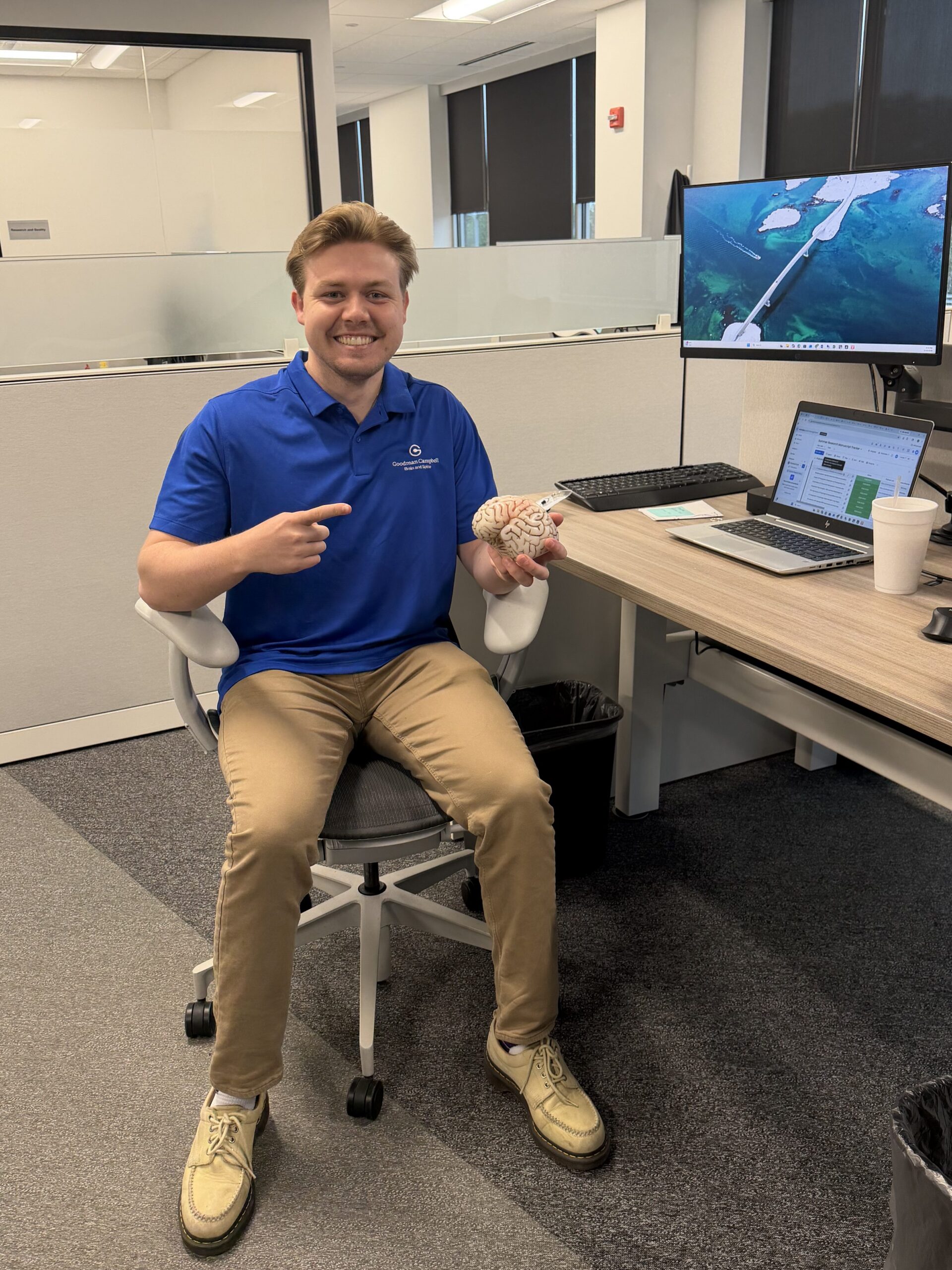
That work was deeply meaningful, and I wanted to supplement it with insight into neurosurgery as well as quantitative research involving patient outcomes. Being able to shadow physicians during complex cases and hear about their rationale behind surgical choice has been deeply informative and I will take that knowledge with me into my schooling. The ability to perform complex statistics and write clinical manuscripts has been an added benefit and one that I am so appreciative to have learned.”
Kate
“Medical school applications are focused on having the highest quality and quantity of experiences that you can at the time of application. Without a gap year, you need to squeeze those into your first three years of college, which isn’t easy. I’ve picked up so many more examples that contribute to my “Why Medicine?” between the summer before senior year of college and now, and a gap year allowed me to highlight those experiences in my application.”
Why did you apply to the GCBS Gap Year Student Program?
Aidan
“Initially, I was drawn to Goodman Campbell because the field of neurosurgery felt like a new and exciting opportunity. Being close to my brother and girlfriend at Notre Dame was an added benefit too! Now, I believe GCBS is perhaps the most seamless and professional organization that I have ever been a part of. Working with physicians that care so deeply about their patients has filled me with motivation and gratitude. I believe GCBS is deeply committed to patient care and has shaped the kind of doctor I want to be: highly competent and placing the patient at the forefront of every decision. Truthfully, I did not know what I was walking into when I accepted this role, but I am so glad I did!”
Kate
“The GCBS Gap Year Student Program was one of several advertised to Notre Dame pre-med students, and right off the bat I was excited by how it would allow me to live within driving distance of my family in the Chicago area. I’m so happy that I ended up here, because all of the people and the overall culture at GCBS is incredible.”
What have you accomplished during your time here?
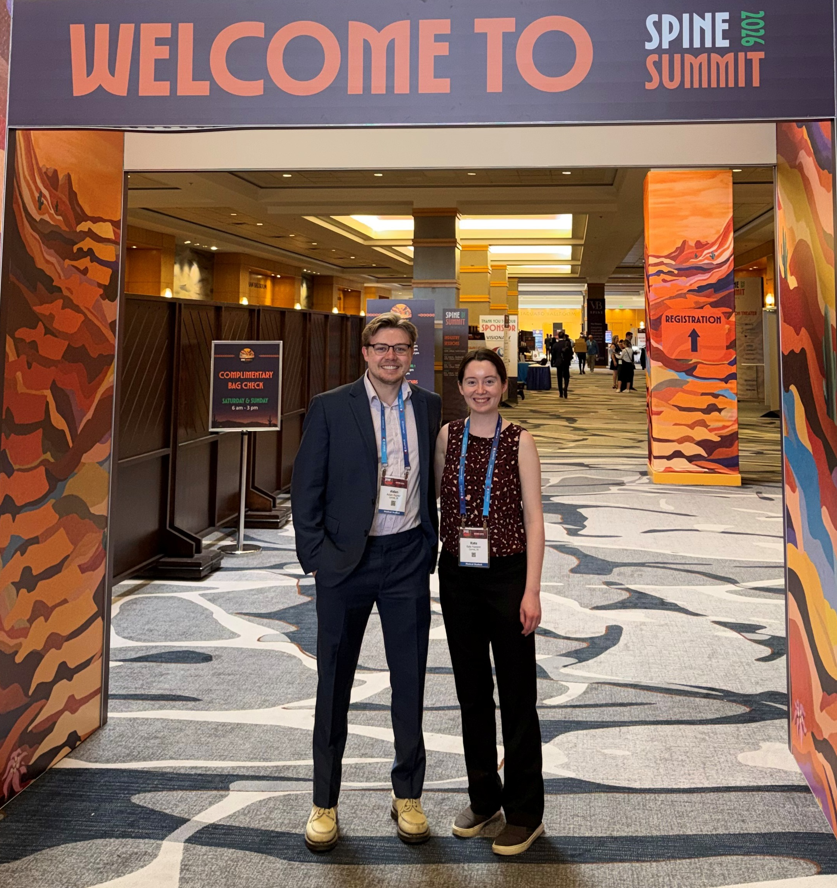
Kate
“My designated project which started during the summer and was accepted for publication in March, looked at the relationship between cervical spine surgery for adjacent segment disease (in other words, having a second neck surgery above or below an existing fusion) and swallowing difficulties after surgery.
Another big project was a collaboration with the Spine CORE™ group and investigated factors contributing to delayed changes in patient surgical satisfaction.
- Other dysphagia manuscripts included looking at:
- smoking
- blood thinners
- bone morphogenetic protein
- Outcome related manuscripts included:
- outpatients vs. inpatients
- elderly vs. younger patients
- primary surgery vs. lumbar adjacent segment disease revision
- durotomies in various lumbar surgical techniques
I also helped handle manuscript revisions for past summer interns who are busy with medical school. It’s all a group effort, and I am so grateful to Aidan, Dr. Eric Potts, Dr. Vince Alentado, all of the other surgeons, Heather Cero, Rachel Sheets, Kathy Flint, and the previous interns who have played a huge role in all of these projects.”
Aidan
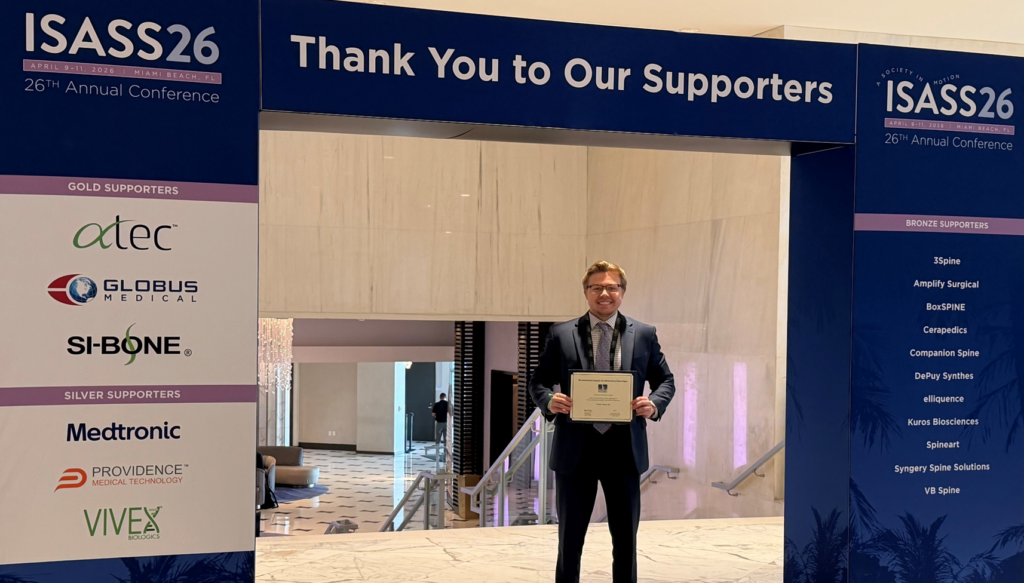
“This is a difficult question to answer, there are so many! I believe we are at over 35+ accepted abstracts and manuscripts for the year. I have contributed to projects ranging from satisfaction rates at 5 years postoperatively to investigating the role of preoperative smoking on outcomes following spine surgery.
Perhaps the project I am most proud of is our paper concerning 2-year outcomes in patients 75 and older following ACDF that was recently accepted to JNS Spine. Bridging my interest in geriatric medicine with neurosurgery had always been one of my goals when I entered this program, and I am so thankful I was able to lead/contribute to a project that establishes beneficial outcomes for older adults who have met health optimized clearance for surgery, particularly in an age group where conservative care strategies tend to be the established norm.”
What is your favorite memory during your time at GCBS?
Kate
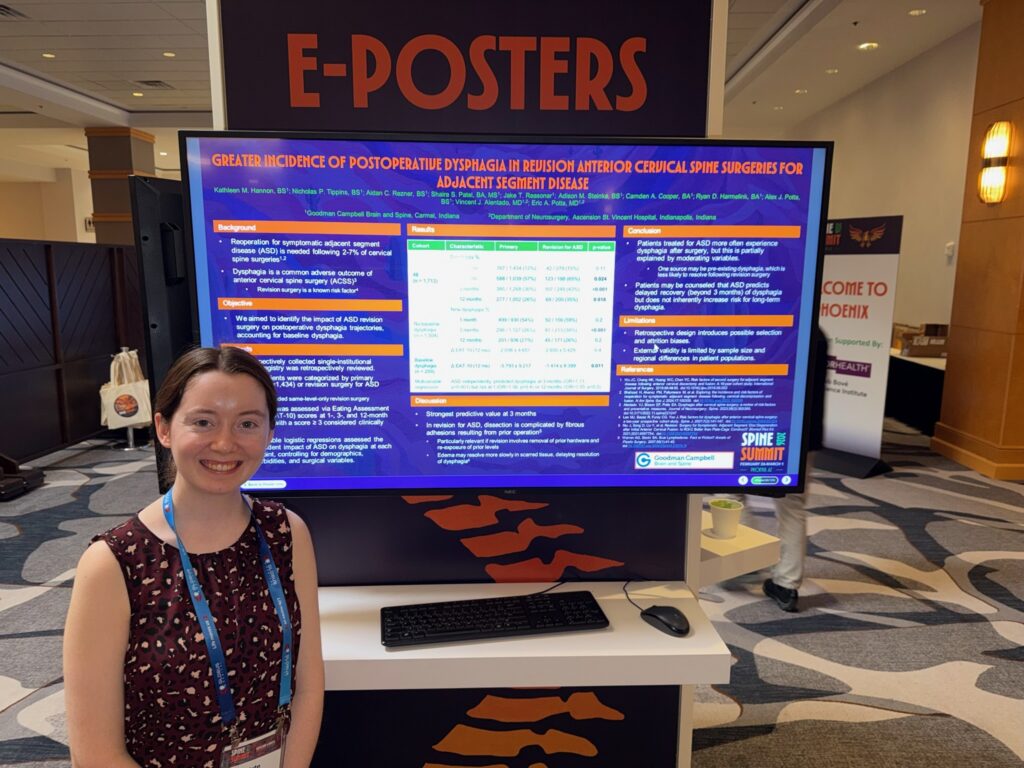
“Spine Summit! It was a lot of fun to reunite with some of the summer interns, cheer each other on as we presented our work, and also hear from countless neurosurgeons whose names I’d previously just read in papers.”
Aidan
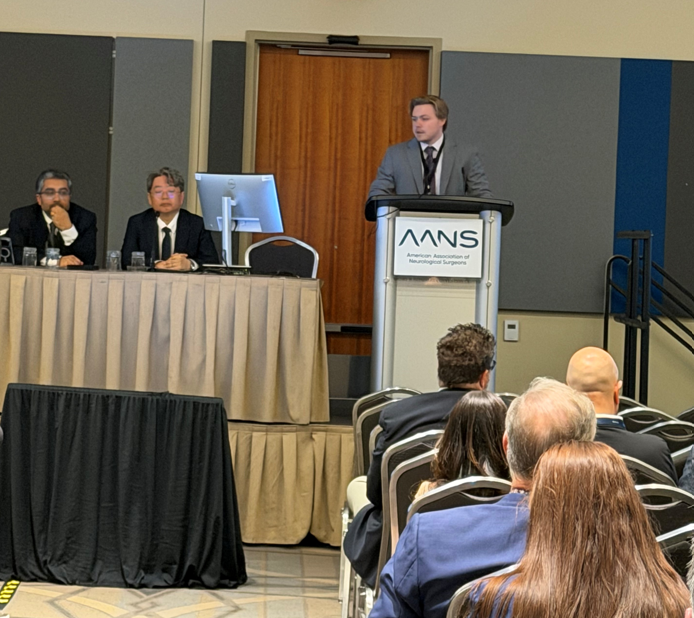
“It has to be the conferences! Being able to watch the other research students present their hard work at national neurosurgery conferences has been such a joy. Spine Summit in Phoenix this year was especially fun as a large number of medical students from the summer research program attended. It was great getting to know everybody a little bit better outside of work while also hearing from other neurosurgeons around the world about advancements in the field. We practiced our presentations around a fire outside the hotel lobby one night, and everyone was so supportive in providing affirmations and constructive feedback. It was such an incredible bonding event.”
What are your future plans once completing your gap year?
Kate
“I’ll be starting medical school at Indiana University in the fall!”
Aidan
“I am applying to medical school this upcoming cycle, so I hope to be with GCBS a bit longer. I plan to stick around to help onboard the new gap year interns and then transition into either a clinic facing role or help out in the research division. I loved my time here so much that I decided to stick around for a little bit longer.”
What do you enjoy doing when you are not working?
Aidan
Kate
“Outside of work, I have picked up Peloton riding (my apartment supplies one!) and more recently film! My girlfriend loves movies and has a subscription at AMC, so we have seen more movies in the past year than perhaps my whole life. I truly did not know what I was missing and I am so happy to be close to her so we can go to the theatre often.”
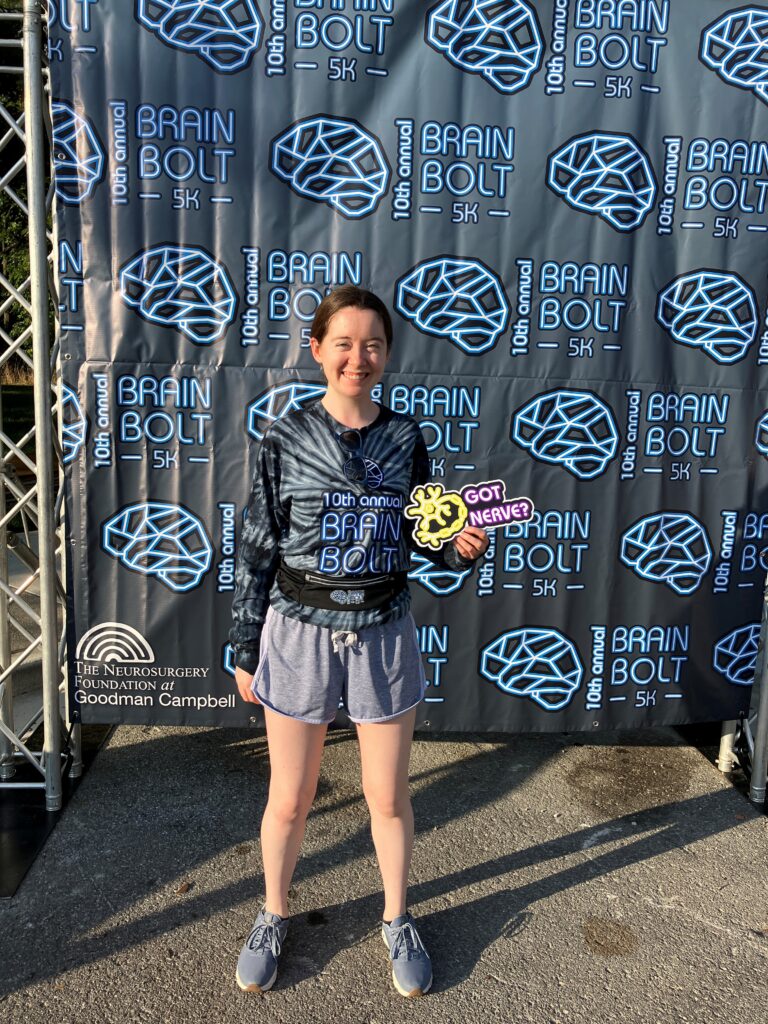
“My apartment is super close to the Monon Trail, and I love to go for walks there every day after work while listening to music or calling my friends and family. In the fall, you’ll find me anxiously watching Notre Dame football games every weekend. I also have a lot of fun volunteering at a local food pantry one evening a week!”
Would you recommend the GCBS Gap Year Student Program to future students and why?
Aidan
“I absolutely would. I firmly believe that there is no program in the country that will provide the level of preparation and experience in clinical research that this job has. I honestly had no clue how important research is for determining entry into residency programs (spoiler: it is) and now I am walking out of this year with enough contributions to be competitive in just about any field. My CV has nearly tripled in length and it is all thanks to the wonderful physicians, Heather Cero (Goodman Campbell Director of Clinical Research) and Rachel Sheets (Goodman Campbell Quality Manager), for encouraging us to take the lead on projects and drive them to completion. I remember Dr. Alentado describing our registry data as the strongest in the country and I stand behind him on that statement fully. GCBS does an exceptional job with this program. I am also so thankful for my gap year partner, Kate, who has been a devoted colleague in this work and deserves all of the credit in the world. She is a rockstar!”
Kate
“Absolutely! I went into this program without fully understanding just how important published research is, not only to medical school applications but also — perhaps more importantly — to applications for residency down the road. There is nowhere else where you will have access to such high-quality data, making the research we do so successful and meaningful. Outside of research, there are so many built-in opportunities to learn from the experts here, such as shadowing, observing weekly case meetings, and attending educational lectures geared toward neurosurgery residents.”
What is something interesting about yourself that many people may not know?
Kate
“My go-to fun fact is that I’m a synesthete, which means each letter and number has an “assigned” color. I see these in my mind’s eye whenever I hear, read, or think of words. Synesthesia was actually the topic of my senior thesis in college! In case you were curious, here are my colors for GCBS:”

Aidan
“My Dad’s family lineage is Australian and he is the youngest of 10 so I have a huge family! I am from California, so it is always nice to go home and see my many aunts, uncles, and cousins.”
Thank you Kate and Aidan for all of the hard work and enthusiasm you brought in each day. Your passion for medicine, dedication to learning, and commitment to improving patient outcomes made this another incredibly successful year for the program.