When sciatica pain strikes, the discomfort in your affected leg can disrupt your entire day. You might have heard conflicting advice about whether to reach for an ice pack or a heating pad for relief. The truth is that both heat therapy and cold therapy have their place in managing sciatic nerve pain, but timing matters. Understanding when to use each approach can make the difference between finding pain relief and making your pain worse.
Up to 40% of Americans experience sciatica at some point in their lives, and most cases are resolved with conservative sciatica treatment approaches. While at-home therapies can provide comfort for many people, persistent or severe pain signals that your sciatic nerve roots may be compressed by an underlying spinal condition requiring neurosurgical evaluation rather than symptom management alone.
Understanding How Heat and Cold Affect the Sciatic Nerve
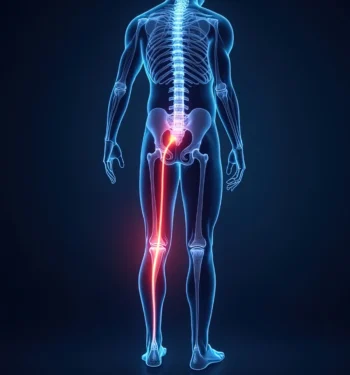
Your sciatic nerve becomes irritated when spinal structures compress or pinch the nerve roots in your lower back. This compression can trigger inflammation, swelling, and muscle spasms, contributing to the sharp, burning sensation traveling down your leg.
Cold therapy works by constricting blood vessels, which reduces blood flow to the inflamed area. This decrease in circulation limits swelling, slows nerve conduction to numb the painful area, and helps reduce inflammation. Cold essentially calms down the inflammatory response your body launches when nerve roots become irritated.
Heat therapy takes a different approach by dilating blood vessels and increasing circulation. This brings oxygen and nutrients to tense muscles, relaxes muscles that have gone into spasm, and improves tissue flexibility. Heat doesn’t directly address inflammation, which is why timing matters.
When Should You Use Cold Therapy for Sciatica?
Apply cold therapy during the first 48-72 hours when sciatica pain starts or during acute flare-ups of chronic sciatic pain. This initial inflammatory phase causes the most intense swelling and discomfort. Starting with ice during this window prevents unnecessary inflammation from developing.
You’ll recognize acute symptoms by sharp, intense pain that has just begun or suddenly worsened. The pain may feel like an electric shock down your leg, accompanied by significant muscle tension in your lower back.
How Does Cold Therapy Reduce Sciatic Nerve Pain?
Cold therapy provides pain relief through several mechanisms working simultaneously. It decreases the speed at which pain signals travel through your nervous system, creating a numbing effect. By constricting blood vessels, ice prevents excessive fluid leakage into surrounding tissues, which otherwise causes swelling that can further compress your sciatic nerve.
Ice also reduces muscle spasms by cooling muscle fibers, interrupting the pain-spasm cycle. When inflammation decreases, pressure on the nerve root lessens, providing relief while you’re determining whether professional medical intervention is needed.
How Do You Safely Apply Cold Therapy?
Ice packs, frozen gel packs, or a bag of frozen vegetables wrapped in a thin towel work effectively. Always place a protective barrier between the cold source and your skin to prevent frostbite. Apply cold to your lower back and rear pelvis where the sciatic nerve roots originate, not down your leg where you feel the pain.
Use cold for 15–20 minutes at a time, allowing at least 2 hours between applications. For wider areas of discomfort, ice massage can be effective. Freeze water in a paper cup, tear away the top half, and massage the exposed ice directly on your lower back in circular motions for 3–6 minutes until numbness occurs.
When Should You Use Heat Therapy for Sciatica?
Heat therapy becomes beneficial after the initial 72-hour inflammatory period has passed. Heat works best for addressing the residual muscle tension and stiffness that persist after acute inflammation resolves. If you’re experiencing chronic sciatic pain with ongoing tightness rather than sharp, new pain, heat can help prepare your muscles for gentle stretching.
How Does Heat Therapy Help Sciatic Pain Relief?
Heat increases circulation, bringing fresh blood flow with oxygen and nutrients to tight muscles in your lower back. This improved circulation helps flush out metabolic waste products that accumulate in tense tissue. Heat also activates sensory receptors that can override some pain signals, providing comfort without addressing the underlying nerve root compression.
By relaxing muscles that have tensed around your sciatic nerve compression, heat therapy can indirectly reduce some pressure on nerve structures. However, this relief remains temporary if the root cause involves structural issues like a herniated disc or spinal stenosis.
What Are the Best Ways To Apply Heat for Sciatica?
Heating pads, hot water bottles, warm towels, or adhesive heat wraps all deliver effective warmth. Moist heat from warm baths or steamed towels penetrate deeper into tissues than dry heat, making it particularly effective for widespread back pain and sciatic pain.
Apply heat for 15–20 minutes at a time, 2–3 times daily. The heat source should feel comfortably warm, not hot. Low-level heat wraps can be worn under clothing for continuous gentle warmth throughout the day.
Is Heat or Cold Better for the Sciatic Nerve?
Cold therapy proves more effective for treating sciatica during acute phases because it directly addresses the inflammation compressing your sciatic nerve. Heat can actually increase swelling if used too early, potentially making your sciatica worse by creating more pressure on already compressed nerve structures.
The evidence supports starting with ice and progressing to heat as your condition evolves. However, while both modalities offer temporary comfort, neither addresses underlying spinal conditions causing nerve pain. A professional evaluation is the best way to identify whether structural problems exist related to your sciatic pain.
Can You Alternate Heat and Cold for Sciatica Pain Relief?
Contrast therapy, alternating between heat and cold, can be effective once the initial inflammatory period has passed. This approach creates a pumping action that may help flush out swelling while delivering fresh nutrients to the area. Try 20 minutes of heat followed by 20 minutes of cold, always ending with cold to reduce inflammation.
Some patients find this alternating approach provides superior sciatica relief compared to using either therapy alone.
When Should You See a Neurosurgeon Instead of Using Heat or Cold?
Home therapies offer temporary symptom management, but certain signs indicate your sciatica requires neurosurgical evaluation. Goodman Campbell welcomes patients at any point in their experience with sciatica, whether your symptoms are relatively new or have been a persistent issue. If you experience muscle weakness in your leg or foot, or if numbness progresses rather than improves, we recommend you schedule an appointment.
Severe pain that worsens over time, difficulty controlling your bladder or bowels, or pain that significantly disrupts your sleep and daily activities all signal potential serious lumbosacral nerve root or sciatic nerve compression, requiring immediate professional attention. These symptoms suggest structural problems such as herniated discs, spinal stenosis, or other conditions that conservative treatments cannot resolve.
At Goodman Campbell, our neurosurgeons specialize in identifying and treating the root causes of sciatica, not just managing symptoms. We diagnose underlying spinal conditions causing nerve pain and develop comprehensive treatment plans that may include physical therapy, interventional procedures, or sciatica surgery when necessary. Our patients benefit from direct access to their care team and efficient scheduling for evaluation.
If you are an existing patient, call Goodman Campbell at (317)-396-1300 to schedule a consultation with our neurosurgical team. New patients can request an appointment online. We look forward to caring for you by evaluating your sciatic nerve pain and developing a treatment plan that addresses the underlying cause, not just your symptoms.