You may be a good candidate for spinal cord stimulation if you have chronic nerve-related pain that hasn’t responded to conservative care and you’re open to a short trial period first.
If you’ve been living with chronic pain and searching for answers, you may have come across spinal cord stimulation (SCS) as a potential treatment option. However, many patients we meet are unsure whether they’re even a spinal cord stimulation candidate.
At Goodman Campbell, our goal is to make that clearer. Through our interventional pain management services, we help patients understand when this advanced option may be appropriate — and when it’s not. Our team combines the expertise of interventional pain management physicians and neurosurgeons to evaluate both simple and complex spine-related conditions.
What Is Spinal Cord Stimulation?
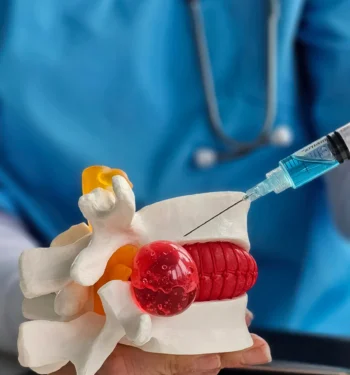
Spinal cord stimulation is a form of neuromodulation that works by interrupting pain signals before they reach the brain. A small device, called a spinal cord stimulator, delivers gentle electrical impulses to the nervous system, helping reduce the perception of pain.
Rather than masking symptoms, SCS targets how pain signals are processed. It’s typically considered only after more conservative treatments — such as physical therapy, nerve blocks, and injections — have not provided lasting pain relief. Explore a more comprehensive overview of spine care treatments at Goodman Campbell.
How Does an Interventional Pain Physician Evaluate Candidacy?
When you meet with an interventional pain physician at Goodman Campbell, we take a comprehensive look at your medical history, treatment history, and overall health. We evaluate your pattern of chronic pain symptoms, the type of persistent pain you’re experiencing, and how it affects your daily life.
A psychological evaluation is also part of the process, ensuring that a candidate for spinal cord stimulation is well positioned for success. These steps help us determine if we recommend spinal cord stimulation and whether it aligns with your goals for chronic pain relief.
Viable candidates for spinal cord stimulation can find themselves in a variety of circumstances before considering the procedure. Below are five common situations.
Sign 1: You’ve Exhausted Conservative Treatment Options
Spinal cord stimulation is not a first step. Most patients we see have already worked through more conservative treatments, including physical therapy and injection-based therapies (e.g., epidural steroid injections, nerve blocks, etc.)
If you’ve exhausted conservative treatment options without meaningful or lasting improvement, you may be a stronger spinal cord stimulation candidate. At Goodman Campbell, our team ensures that appropriate nonsurgical options have been fully explored before moving forward.
Sign 2: You Have Failed Back Surgery Syndrome or Persistent Post-Surgical Pain
Conditions like failed back surgery syndrome (FBSS) — persistent pain following spinal surgery — are among the most common reasons we recommend spinal cord stimulation.
Also known as post-laminectomy syndrome, this type of refractory pain often involves ongoing chronic back pain, sciatica, or leg pain after surgery. In many cases, additional surgery does not resolve the issue. Spinal cord stimulation offers a minimally invasive procedure that can provide meaningful pain relief without reopening the spine. When structural issues remain, Goodman Campbell may perform a microdiscectomy, but generally, SCS is utilized to address cases where further surgery isn’t the right next step.
Sign 3: Your Pain Is Neuropathic or Related to Complex Regional Pain Syndrome
Spinal cord stimulation is particularly effective for neuropathic pain, which originates from nerve damage.
This includes conditions such as:
- Peripheral neuropathy
- Sciatica
- Complex regional pain syndrome (CRPS)
These conditions often involve numbness, tingling sensations, and abnormal pain signaling. Because SCS works directly on those pain signals, it can be a powerful tool when other treatments fall short.
What Types of Conditions Does Spinal Cord Stimulation Treat?
At Goodman Campbell, we commonly use SCS for failed back surgery syndrome, CRPS, peripheral neuropathy, sciatica, peripheral neuropathy, and other forms of chronic pain that are not amenable to further surgical correction.
Spinal cord stimulation relieves chronic nerve-related pain; it does not open a narrowed spinal canal or correct structural compression. When stenosis is the root cause, we first evaluate whether decompressive treatment is appropriate.
Sign 4: Chronic Pain Is Significantly Limiting Your Daily Life
When persistent pain begins to control your life — affecting sleep, work, movement, or social activities — it may be time to consider a different approach.
The goal of spinal cord stimulation isn’t just to reduce discomfort. It’s also to restore function, improve quality of life, and help you get back to the activities that matter most to you.
Sign 5: You’re Willing to Undergo a Spinal Cord Stimulator Trial
One of the most unique aspects of SCS is the spinal cord stimulator trial.
Before any permanent implantation, patients undergo a 5-10 day trial period (or trial run) using temporary leads placed in the epidural space. This allows you to experience the potential benefits firsthand.
During the trial, the temporary leads connect to an external trial stimulator you wear outside the body, typically for about 5 to 10 days. We generally consider the trial a success when it delivers roughly 50% or greater pain reduction, along with meaningful gains in function and comfort. Because nothing is permanently implanted at this stage, the trial and the device are removable and reversible.
If the trial is successful — meaning you achieve meaningful pain relief — we move forward with permanent placement. If not, the leads are removed. This built-in evaluation step makes SCS a lower-risk option and a strong indicator of long-term success.
Who Is Not a Good Candidate for Spinal Cord Stimulation?
Spinal cord stimulation is not the right fit for everyone, and part of a caring evaluation is recognizing when it should be avoided.
You may not be a candidate for spinal cord stimulation if you have an active infection, an unmanaged bleeding disorder, or a health profile that makes you a poor surgical risk. Other reasons we may recommend a different path include an inability to operate the device, an unresolved significant psychological condition, pregnancy, or a trial that did not provide meaningful relief.
In these situations, we work with you to explore safer, more appropriate options.
| Good Candidate | Not a Candidate |
| Chronic nerve-related pain that hasn’t responded to conservative care | Active infection |
| Failed back surgery syndrome or persistent postsurgical pain | Unmanaged bleeding disorder |
| Neuropathic pain, CRPS, or peripheral neuropathy | Inability to operate the device |
| A trial with roughly 50% or greater pain reduction | Unresolved significant psychological condition |
| A cleared psychological evaluation | Poor surgical risk or pregnancy |
| Reasonable surgical risk and realistic goals | A trial that did not provide meaningful relief |
What to Expect After the Trial
If your trial provides meaningful relief, we move forward with permanent implantation. During this minimally invasive procedure, we place the permanent leads and a small generator, which is typically positioned just beneath the skin. Programming is tailored to your pain pattern, and the settings can be adjusted over time as your needs change.
In appropriately selected patients, published evidence shows that many people maintain meaningful, durable pain relief and improved function after permanent implantation, which is why the trial period is such an important step in choosing the right candidates.
Is a Consultation the Right Next Step for You?
If you’re wondering whether you might be a candidate for spinal cord stimulation, that curiosity is a great place to start. At Goodman Campbell, our interventional pain physicians work closely with our neurosurgeons to ensure every patient receives a thoughtful, individualized evaluation. Just as important, both patients and referring providers have direct access to their Goodman Campbell care team, making it easier to ask questions, stay informed, and feel confident every step of the way.
We’re also proud to be a national leader in SCS research, including active trials in neuromodulation and leading enrollment in the Abbott T2P study across seven national sites — bringing advanced pain management options directly to our patients.
If you’re ready to take the next step, call us or request an appointment here.
Frequently Asked Questions
How Do I Know if I’m a Candidate for Spinal Cord Stimulation?
You may be a spinal cord stimulator candidate if you have chronic nerve-related pain that hasn’t responded to conservative care, your pain significantly limits daily life, and you’re willing to try a short trial period first. The best way to know is through a comprehensive evaluation with our interventional pain physicians, which includes your medical and treatment history and a psychological evaluation. This is how we determine which patients are the best candidates for spinal cord stimulation.
Who Should Not Get a Spinal Cord Stimulator?
Spinal cord stimulation may not be appropriate if you have an active infection, an unmanaged bleeding disorder, an inability to operate the device, an unresolved significant psychological condition, poor surgical risk, or pregnancy, or if a trial did not provide meaningful relief. Understanding who is not a candidate for spinal cord stimulation helps us guide you toward safer, more effective options.
Does Spinal Cord Stimulation Treat Spinal Stenosis?
No. Spinal cord stimulation relieves chronic nerve-related pain; it does not open a narrowed spinal canal or correct structural compression. When stenosis is the root cause, we first evaluate whether decompressive treatment is appropriate.
What Happens During the Spinal Cord Stimulator Trial?
During the spinal cord stimulator trial, we place temporary leads in the epidural space and connect them to an external trial stimulator you wear outside the body. You go about your normal routine so you can experience the potential relief firsthand. If it delivers meaningful pain reduction, we move forward with permanent implantation; if not, the leads are simply removed.
How Long Does the Trial Last?
The trial typically lasts about 5 to 10 days. Success is generally judged by roughly 50% or greater pain reduction, along with meaningful improvement in function and comfort.
Can Spinal Cord Stimulation Help Peripheral Neuropathy?
Yes. A spinal cord stimulator for peripheral neuropathy can be an effective option, and the therapy is cleared for painful diabetic peripheral neuropathy. Because SCS works directly on how pain signals are processed, it can help when other treatments have fallen short.
Is Spinal Cord Stimulation Reversible?
Yes. Spinal cord stimulation is designed to be reversible. The trial device is fully removable, and even a permanent system can be turned off or removed if it no longer meets your needs.