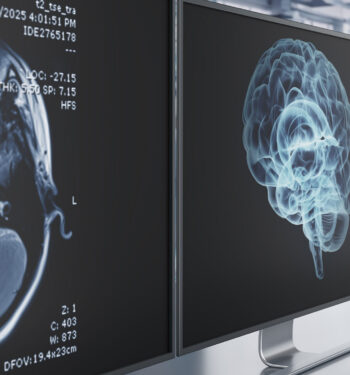
The LITT procedure side effects most patients experience are temporary and manageable, especially when the procedure is performed by an experienced neurosurgical team. Because laser interstitial thermal therapy is minimally invasive and MRI guided, it is often associated with a shorter recovery and lower complication rates than traditional open brain surgery.
Still, any brain procedure deserves careful consideration. If you are researching laser interstitial thermal therapy risks, understanding potential complications and what recovery typically looks like can help you feel more informed and confident as you explore treatment options.
What Is the LITT Procedure?
Laser interstitial thermal therapy (LITT) is a minimally invasive, MRI-guided neurosurgical procedure that uses laser energy to precisely target and destroy abnormal brain tissue. It may be used for brain tumors, radiation necrosis, or epileptic foci.
During the procedure, a neurosurgeon creates a small incision and inserts a thin laser fiber into the targeted area of the brain. Real-time MRI temperature-mapping allows the surgeon to actively monitor heat distribution throughout the procedure, helping protect nearby healthy tissue. For many patients, LITT offers an alternative to traditional open craniotomy.
Who Is a Candidate for the LITT Procedure?
LITT may be appropriate for patients with certain brain tumors, including recurrent gliomas, metastatic tumors, or tumors located deep within the brain. It may also be used in patients with drug-resistant epilepsy. LITT radiation necrosis treatment may be appropriate following prior radiation therapy.
Not every patient is a candidate. Tumor size, location, overall health, and treatment goals all play an important role in determining whether LITT is appropriate. A detailed neurosurgical evaluation is essential.
What Are the Most Common Side Effects of LITT?
Most minimally invasive brain surgery side effects after LITT are usually temporary and improve as the brain heals.
Patients commonly experience:
- Post-surgical headaches caused by temporary swelling around the treatment area
- Temporary fatigue or grogginess after anesthesia
- Mild, temporary neurological changes, such as short-term memory difficulty, slight weakness, or word-finding challenges. These symptoms are often temporary and typically improve on their own over days or weeks.
Most patients stay in the hospital overnight and return home the next day.
How Long Do LITT Side Effects Typically Last?
Most aspects of LITT brain surgery recovery improve within days to a few weeks. Follow-up appointments are typically scheduled after treatment around the 1-month and 3-month marks so the neurosurgical team can monitor healing and recovery progress.
Regular follow-up imaging and neurological evaluations help ensure that concerns are addressed proactively.
What Are the Serious but Rare Risks of the LITT Procedure?
Although uncommon, MRI-guided laser ablation complications can occur, and we believe it’s important for patients to understand those risks clearly and honestly. Less common but more significant risks of the LITT procedure may include:
- Bleeding (hematoma) at the treatment site
- Infection, as with any surgical procedure
- Cerebrospinal fluid (CSF) leak
- Unintended thermal spread, meaning heat from the laser affects nearby healthy tissue
- Rare permanent neurological changes, such as weakness, speech changes, or vision effects (in the majority of cases, these improve over time)
Importantly, real-time MRI guidance and continuous temperature monitoring are specifically designed to minimize unintended thermal spread and help protect healthy brain tissue throughout the procedure. These are not passive safety measures. They are active tools the neurosurgeon uses in real time to guide treatment with precision.
While every surgical procedure carries some degree of risk, complication rates associated with LITT are generally lower than those seen with traditional open craniotomy procedures, particularly because LITT is minimally invasive and requires a much smaller surgical opening.
Why Choose Goodman Campbell for the LITT Procedure?
At Goodman Campbell Brain and Spine, we are proud to be a global leader in brain and spine care and a respected center for neurosurgery training and clinical research in the United States.
Consistently regarded as among the best in the nation, we make it easier for more people to access truly specialized care from leaders in neurosurgery and related specialties in the communities where we see patients. In addition, both patients and referring physicians have direct access to our team throughout the treatment process.
To discuss whether LITT may be an appropriate treatment for your condition, schedule a consultation today.