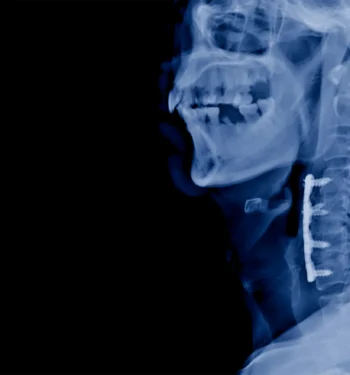
If you are considering Anterior Cervical Discectomy and Fusion (ACDF), you probably have some questions about what to expect, what to consider, and how major the surgery actually is. Let’s dive in.
Is ACDF Considered Major Surgery?
Yes, ACDF is considered major surgery. The procedure is performed near the spinal cord and nerve roots, requires general anesthesia, and involves a period of recovery afterward.
But “major surgery” does not necessarily mean unusually dangerous surgery. ACDF is one of the most commonly performed and well-studied spine procedures, with a strong safety record when performed by an experienced neurosurgical team. In fact, most patients undergoing ACDF are able to return home the same day.
ACDF is designed to address the structural source of symptoms. During the procedure, your surgeon removes a damaged disc that is compressing a nerve root or the spinal cord, and then stabilizes the affected area of the cervical spine through fusion.
What Are the Real Risks of ACDF Surgery?
It is reasonable to have questions about ACDF surgery risks, particularly because the procedure takes place close to the spinal cord and nerves.
As with any major procedure, anterior cervical discectomy and fusion complications are possible. Temporary difficulty swallowing, or dysphagia, is the most common early side effect. Some patients may also experience temporary hoarseness. Other potential cervical spine surgery risks include:
- Infection
- Bleeding
- Rare nerve injury
- Incomplete bone fusion, which may require future intervention
Serious complications are uncommon. The surgical approach — which involves the surgeon accessing the cervical spine through the front of the neck — is designed to reach the affected disc without disturbing the spinal cord or major muscle groups.
Your individual risk depends on several factors, including your overall health and the specifics of your cervical spine condition. Your surgical team can discuss these considerations with you before surgery so you understand the potential benefits and risks.
What Makes Surgeon Experience Important for Reducing ACDF Risks?
Because ACDF is performed close to the spinal cord, nerve roots, and surrounding vascular structures, your surgeon’s training and experience matter.
Neurosurgeons undergo extensive, specialized training focused on the brain, spine, spinal cord, and nervous system. This training is more extensive and specialized than orthopedic surgical training, particularly when it comes to operating around delicate neurological structures.
Choosing an experienced neurosurgeon for ACDF can help ensure that the complexities of your cervical spine condition are carefully evaluated and that your surgical plan accounts for the sensitive structures surrounding the treatment area.
What Does Recovery From ACDF Surgery Actually Look Like?
Recovery is an important consideration when thinking about undergoing ACDF. While individual timelines vary, the process generally involves gradually increasing activity while the neck and fusion heal.
Most patients can go home the same day or the day after surgery, depending on the extent of the procedure, their overall health, and how they are doing after surgery. During the first several weeks, patients typically have activity restrictions as the surgical site and neck heal. Physical therapy may begin around six weeks after surgery, although timing varies and some patients may not need formal physical therapy. Your surgeon will determine when rehabilitation is appropriate based on your progress.
Return to work also varies. Some patients with desk-based jobs may return to work within approximately 2 to 6 weeks, some with temporary restrictions. Jobs involving heavy lifting, repetitive neck movement, or other physical demands may require a longer recovery period. Although you may feel substantially better within weeks or months, the bone fusion itself takes considerably longer. Solid fusion can develop over several months and may take approximately 6 to 12 months to fully mature.
Your surgeon will monitor your recovery and provide individualized guidance about activity, work, and rehabilitation.
Is ACDF Surgery Worth It?
ACDF is a serious procedure in the sense that it requires preparation, anesthesia, and recovery. But for appropriately selected patients, it can help address the underlying structural cause of cervical nerve or spinal cord compression rather than simply managing symptoms.
The ACDF success rate and well-established safety profile can be reassuring for patients wondering, “Is ACDF surgery safe?” Your individual outcome, however, depends on your diagnosis, overall health, and other factors that your surgeon will evaluate.
For many patients, that balance is what makes ACDF worth considering. While surgery is never a decision to take lightly, treating the source of nerve or spinal cord compression may provide meaningful, lasting improvement in symptoms and function.
At Goodman Campbell, our globally recognized neurosurgery teams in Indiana and southeastern Wisconsin treat both straightforward and highly complex spine conditions. Our patients have direct access to their surgical team, and efficient scheduling can help you move seamlessly from evaluation toward answers and treatment — no separate referral needed.
If you are experiencing cervical spine symptoms, we can help you understand your diagnosis and treatment options. Call 317-396-1300 to speak with our team or request an appointment online.