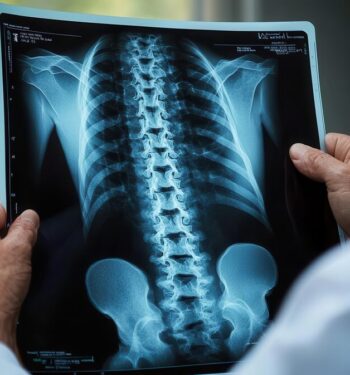
Hip pain is usually felt in the groin or the front of the thigh and rarely travels past the knee. Spine-related pain, by contrast, often burns or tingles and can radiate below the knee into the leg or foot. Because the hip and spine sit so close together, these symptoms overlap easily, so it is always best to confirm the true source with a specialist before starting treatment.
Why Is It So Hard to Tell the Difference Between Back and Hip Pain?
The hip joint and lumbar spine sit close together, and the nerves that branch from the spinal column travel directly through the hip region. That means a spine problem can create back pain that feels like hip pain, and true hip conditions can sometimes mimic spinal issues.
At Goodman Campbell, we often see patients with hip spine syndrome, where both areas contribute to symptoms. Guessing what the root of the issue is can delay healing. An accurate diagnosis is essential to identifying the root cause and building the right treatment plan.
Hip Pain vs. Back Pain: Quick Symptom Comparison
| Where It’s Felt | Type of Pain | Radiation Pattern | Worse With | Better With | Nerve Signs |
| Hip-origin pain: Groin, front of the thigh, or deep in the hip joint; sometimes the outer hip | Dull ache (often arthritis) or a sharp, catching pain (labral tear or impingement) | Stays local; may reach the knee but rarely below it | Walking, standing, weight-bearing on one side, rising from a chair | Rest and taking weight off the joint | Usually none — no numbness or tingling |
| Spine-origin pain: Lower back and buttocks, extending into the hip or leg | Burning, tingling, or shooting pain | Can radiate below the knee into the leg or foot | Sitting, bending, or twisting | Standing or walking | Numbness, tingling, or weakness |
What Are the Common Signs of True Hip Pain?
True hip pain typically presents in the groin area, front of the thigh, or deep within the hip joint. Patients often notice:
- Stiffness when standing up from a chair or getting out of a car
- Limited range of motion when bending or rotating the hip
- Pain that worsens with walking or standing
Common causes include hip arthritis, labral tears, hip impingement (particularly in active patients), and bursitis. A dull ache often points to arthritis, while a sharp pain may suggest a labral tear or impingement.
Does Hip Pain Always Stay in One Place?
Most hip-related pain stays localized to the groin area, outer hip, or front of the thigh. It may travel toward the knee, but rarely below it.
If your pain radiates past the knee, especially as pain that radiates down the leg, it’s more likely coming from the spine, not the hip. Weight-bearing pain on one side is another strong indicator of a hip issue.
What Symptoms Suggest the Pain Is Coming From the Spine?
When evaluating back or hip pain, spine-related symptoms often include:
- Lower back and hip pain or buttocks pain
- Burning, tingling, or shooting sensations
- Pain that worsens with sitting, bending, or twisting
- Relief when standing or walking
Conditions like a herniated disc, spinal stenosis, or spondylolisthesis can compress nerves, leading to spine-related hip pain. This is where a discussion of sciatica vs. hip pain becomes useful.
What Is Referred Pain and Why Does a Spine Problem Feel Like Hip Pain?
Referred pain occurs when the source of pain is different from where you feel it. For example, a pinched nerve in the lumbar spine can send signals into the hip region, buttocks, or leg.
Sciatica is a classic example of a symptom of underlying nerve compression. Unlike true hip conditions, nerve-related pain often includes numbness, tingling, or weakness.
Our interventional pain management services are uniquely positioned to diagnose and treat the actual source of pain, ensuring your treatment plan is built around the true cause. If a surgeon steers you toward this path, it helps to understand why your surgeon may refer you to pain management and what those diagnostic injections actually involve before your first visit.
Sciatica vs. Hip Pain: How to Tell Them Apart
Sciatica is one of the most common reasons hip and spine pain get confused. Sciatica describes a pattern of pain caused by irritation or inflammation of a nerve root in the lower spine, often related to conditions such as a herniated disc or spinal stenosis. Unlike many types of hip pain, which are often felt in the groin or front of the thigh, sciatic pain typically radiates from the lower back or buttock down the leg. It may extend below the knee to the foot and can be accompanied by numbness, tingling, burning, or shooting pain.
Hip pain, by contrast, is often felt as a deep ache in the groin or around the hip and may worsen with walking or other weight-bearing activities. Pain that radiates below the knee, particularly when accompanied by numbness or tingling, can be a clue that a spinal nerve is involved. and includes those nerve signs, the spine is the more likely source.
Sorting out whether pain is coming from the hip or spine matters because the treatments differ. Our interventional pain physicians can help relieve nerve-related pain and help pinpoint its likely source. When a herniated disc, bone, or other structural problem is irritating a spinal nerve, many patients can initially be treated with nonsurgical care. For patients who continue to have significant symptoms or develop certain neurologic problems, surgery such as a microdiscectomy may be recommended to directly decompress the affected nerve.
Getting an accurate diagnosis is the foundation of good lumbar spine care, and it is the first step in matching you with the right care among the spine conditions we treat.
How Do Doctors Pinpoint Where the Pain Is Coming From?
At Goodman Campbell, we focus on achieving a correct diagnosis through multiple means, including:
- A detailed physical examination
- Movement and range of motion testing
- Imaging such as MRI or X-ray
- Targeted diagnostic injections from our interventional pain management team
Imaging alone can be misleading, as many patients show abnormalities in both the hip and spine. That’s why a full clinical evaluation is so important.
Our interventional pain management services are uniquely positioned to diagnose and treat the actual source of pain, ensuring your treatment plan is built around the true cause.
Simple At-Home Checks to Locate Your Pain
These simple checks can give you clues about where your pain is coming from. They are not a diagnosis; think of them as a starting point for the conversation with your care team.
- Point to the pain. If you can place one finger on the sore spot in your groin or outer hip, it is more likely a hip issue. Pain that sits in a band across the lower back or shoots down the leg leans toward the spine.
- The figure-four check. Sitting or lying down, gently cross the ankle of the sore side over the opposite knee and let the knee ease outward. Deep pain in the groin often points to the hip.
- The walking test. Notice whether your pain flares with weight-bearing steps (more hip-like) or with sitting and bending forward (more spine-like).
- The cough or sneeze test. If coughing, sneezing, or bearing down sends a jolt down your leg, that suggests nerve irritation in the spine.
When to Worry: Red-Flag Symptoms You Should Not Ignore
Most back and hip pain improves with time and conservative care, but a few symptoms are warning signs that need urgent attention. Seek emergency care right away if you notice:
- Loss of bowel or bladder control, or new trouble urinating
- Numbness in the saddle area; the inner thighs, groin, or buttocks
- Progressive or sudden weakness in one or both legs
- A fever alongside your back pain
- Unexplained weight loss
- Back or hip pain that follows significant trauma, such as a fall or accident
Together, the first three can signal cauda equina syndrome, a rare but serious condition and a true medical emergency.
Do not wait to see if these symptoms pass. Call your doctor or go to the nearest emergency room.
When Should Conservative Treatments Give Way to a Specialist?
For many conditions that cause back and hip pain, conservative treatments such as rest, physical therapy, and activity modification can help. It’s time to seek expert care if you experience:
- Pain lasting more than a few weeks
- Worsening or severe pain
- Symptoms such as numbness or weakness
- Pain that clearly moves or radiates
These signs often point to a deeper structural issue.
At Goodman Campbell, we specialize in identifying the true source, not just masking symptoms. Whether you need interventional pain management or, in some cases, minimally invasive surgery, our goal is lasting pain relief and getting you back to the life you love by addressing the root cause of the pain.
When to See a Spine Specialist
Getting to the root cause of your pain leads to better outcomes and can reduce the risk of further injury.
Our team at Goodman Campbell is here to help you move forward with clarity and confidence. Request an appointment online or call 317-396-1300.
Frequently Asked Questions
Can Hip Pain Cause Lower Back Pain?
Yes. When a hip problem changes the way you stand or walk, it can put extra strain on the lower back, and the two areas can feed into each other, the pattern we call hip-spine syndrome. Sorting out how much comes from each area is part of an accurate diagnosis.
How Do I Know if My Pain Is From My Hip or My Spine?
Hip pain tends to sit in the groin or front of the thigh and rarely travels below the knee, while spine-related pain often burns or tingles and can shoot down the leg. Nerve signs like numbness or tingling point toward the spine. The only way to be sure is an accurate diagnosis from a specialist.
Can Hip Pain Be Mistaken for Back Pain?
Absolutely. Because the hip joint and lumbar spine sit so close together and share overlapping nerves, hip pain can feel like back pain and back pain can feel like hip pain. This is why imaging alone can be misleading and a full clinical evaluation matters.
Does Sciatica Come From the Hip or the Back?
Sciatica starts in the spine, not the hip. It happens when a nerve in the lower back is compressed, often by a herniated disc or spinal stenosis, and sends burning or shooting pain through the buttock and down the leg.
Can Hip Impingement Cause Back Pain?
It can contribute. Hip impingement can limit how the hip moves, which may shift stress to the lower back and produce secondary back pain. A specialist can sort out how much of the pain is coming from each area.
When Should I See a Specialist for Hip and Back Pain?
If your pain lasts more than a few weeks, worsens, radiates, or comes with numbness or weakness, it is time to see a specialist. Any red-flag symptoms, loss of bowel or bladder control, saddle numbness, or progressive leg weakness — mean you should seek urgent care right away. As a global leader in brain and spine care, our accomplished neurosurgery team offers direct access and quick scheduling. Request an appointment online or call 317-396-1300.